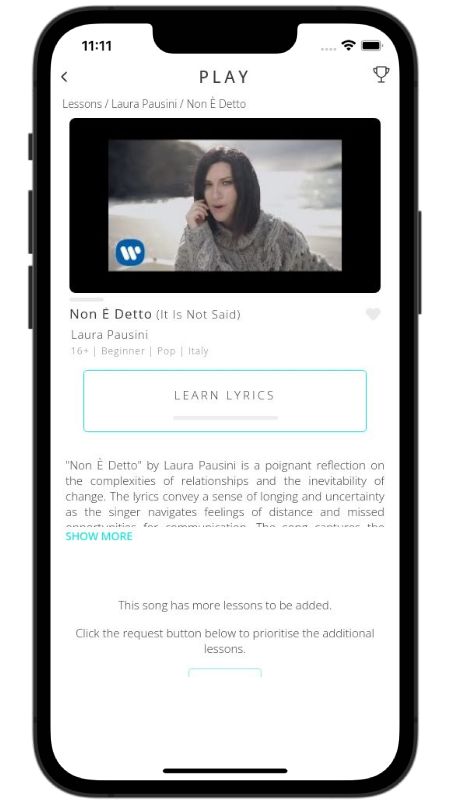
Non È Detto Lyrics in English by Laura Pausini
Casomai is a versatile Italian word that means 'just in case' or 'in case'. It's more nuanced than a simple 'if' and implies a hypothetical situation or a precaution.
In Laura Pausini's song, she uses it to express a lingering hope or a cautious trust in a memory: "mi fido della forza di un ricordo casomai" (I trust in the strength of a memory, just in case). This word adds a layer of emotional depth, suggesting a fragile hope or a contingency plan for the heart, making it both interesting and memorable.
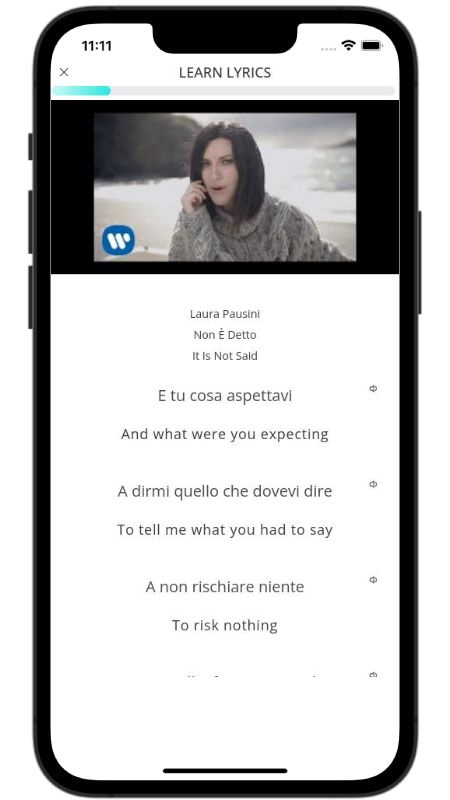
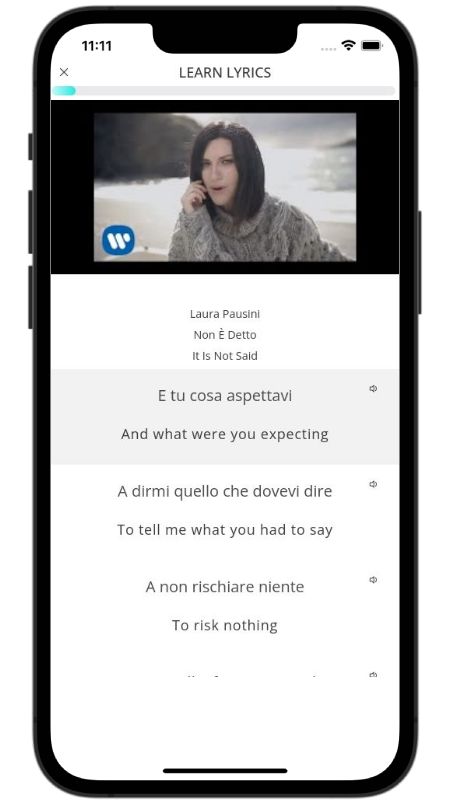
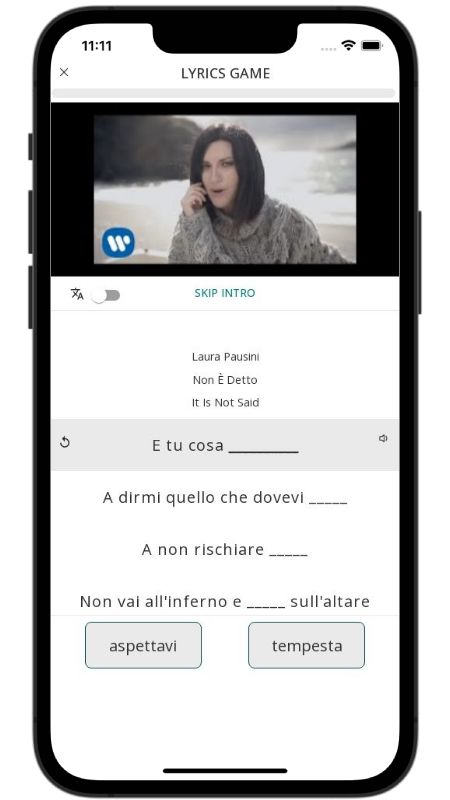
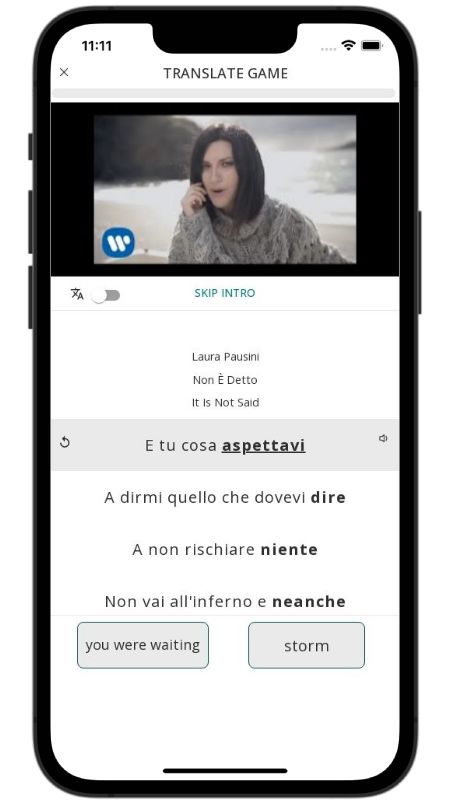
This song is a masterclass in saying goodbye when things have just… stopped. Laura Pausini isn't screaming or crying; she's describing a relationship that has become politely distant, where two people are just "sopportarci con educazione" (tolerating each other politely). She calls out her partner's hesitation, asking what he was waiting for. By playing it safe, she says, "Non vai all'inferno e neanche sull'altare" (You don't go to hell, but you don't get to the altar either). It's a blunt and brilliant way to describe a relationship that's stuck in the middle, going nowhere.
The chorus is built around the phrase "Non è detto," which means "It's not a given" or "It's not certain." She sings, "E non è detto che mi manchi sempre" (And it's not a given that I'll always miss you), acknowledging that feelings can change suddenly. But then she flips it, admitting, "E non è detto che non provo niente" (And it's not a given that I feel nothing). She's leaving, with a train to the airport and a flight to catch, but she's also honest about the complicated feelings involved. It's not a clean break, but a realistic one.