Inolvidable Lyrics in English by Laura Pausini
Tatuaje means 'tattoo'. It's an interesting and visually striking word that isn't commonly found in every love song, making it stand out.
In this song, Laura Pausini uses it metaphorically to describe the lasting impact of a person's voice and joy: "Siguen en mí, son todavía / Como un tatuaje de mi piel" (They remain in me, they are still / Like a tattoo on my skin). This beautiful imagery conveys a deep, permanent, and unforgettable presence, making the word incredibly evocative and memorable.
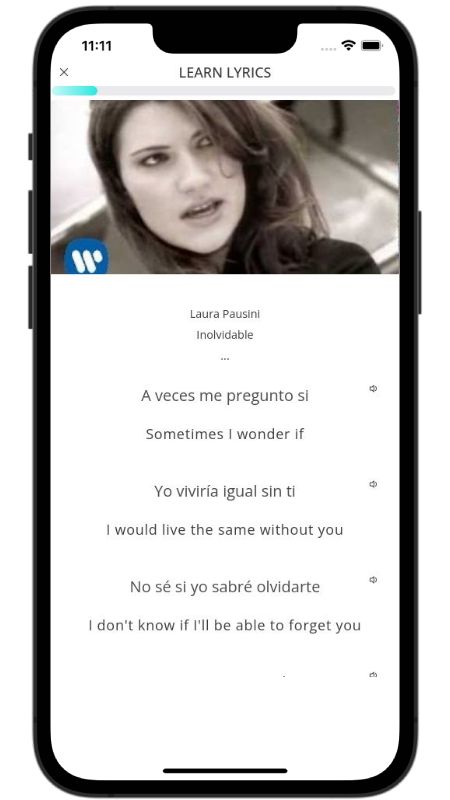
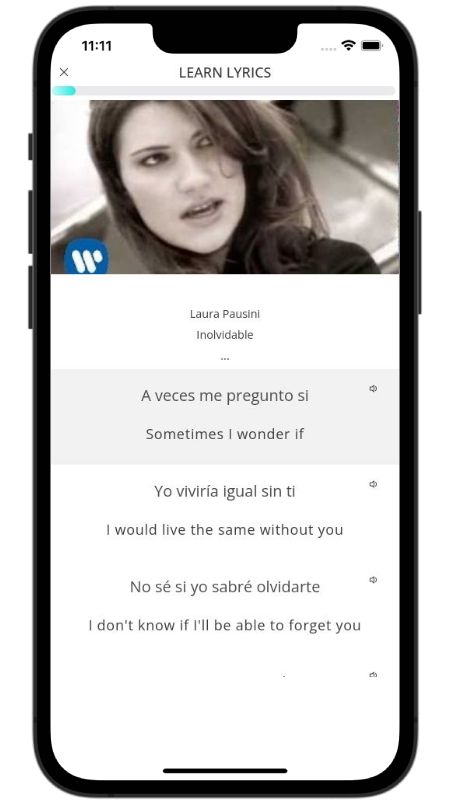
Italian pop star Laura Pausini tackles a fierce, obsessive kind of longing in Inolvidable. She starts by questioning if life would carry on without this person: A veces me pregunto si / Yo viviría igual sin ti ("Sometimes I wonder if I would live the same without you"). The verdict comes right away. She cannot shake the memories, describing the missing person's voice and joy as permanently etched into her body: Como un tatuaje de mi piel ("Like a tattoo on my skin"). It is a dramatic, all-consuming comparison, showing that letting go is completely off the table.
Notice the sudden shift from remembering someone gone to desperately pleading with them. Even while admitting sé que tú no estás ("I know you are not here") and sé que no vendrás ("I know you won't come"), she keeps repeating Tú no me dejes más / Nunca me dejes ("Don't leave me anymore / Never leave me"). She even claims to feel their kiss on her lips right now (Sobre mis labios siento / Tu forma de besar). The word inolvidable simply means "unforgettable," but by framing them as Inolvidable nada más / Y nada menos ("Nothing more and nothing less than unforgettable"), she treats this memory less like nostalgia and more like a permanent spell she has no plans to escape.