Tout Va Bien Lyrics in English by Orelsan
Treillis refers to military-style camouflage clothing, also known as fatigues. It's a specific and evocative word that you likely wouldn't learn in a typical French class.
In the song, Orelsan uses this word to create a powerful contrast. He describes men in treillis (soldiers) holding hands and playing in a circle, a childish and innocent image that clashes with the harsh reality of war the word implies. This clever juxtaposition is central to the song's theme of masking difficult truths.
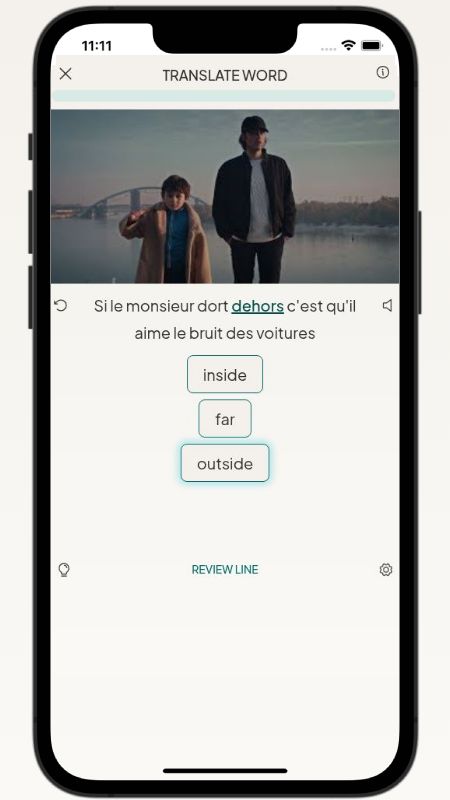
French rapper Orelsan pulls off something brilliant here: he tells a string of comforting lies to a child to hide the harshest parts of the world. Instead of explaining homelessness, he rhymes that Si le monsieur dort dehors, c'est qu'il aime le bruit des voitures ("If the man sleeps outside, it's because he likes the sound of cars"). If that man freezes or dies, the narrator insists he is just playing statues, or moved away to sip beer under a palm tree. The chorus repeats Tout va bien, petit ("Everything is fine, kid"), but you know everything is definitely not fine.
He uses the exact same trick for domestic violence and war, inventing childish fairy tales to mask brutality. When bruises appear on a neighbor, he claims elle a joué dans la peinture ("she was playing in paint"), and that sunglasses on a rainy day hide nothing sinister. For combat, the lies get completely absurd: bullets carry vaccines, collapsing buildings are just making stars, and soldiers in military camouflage—en treillis—vanish hand-in-hand in a joyful circle dance. It is dark, clever songwriting that shows how adults wrap terrible realities in bubble wrap.