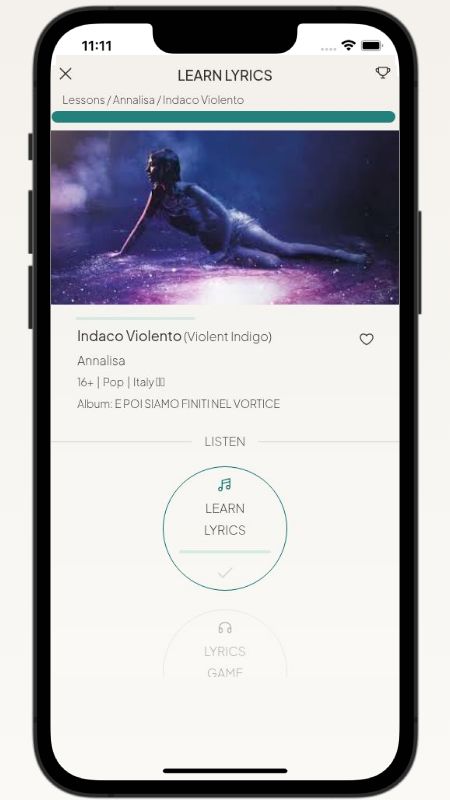
Indaco Violento Lyrics in English by Annalisa
Indaco means 'indigo', a deep, rich blue-purple color. It's a less common color to feature so prominently in a song, making it intriguing.
In "Indaco Violento," Annalisa uses "indaco" to describe a powerful, almost overwhelming feeling or atmosphere. It's not just a color; it represents a state of being, a vibrant and intense emotional space that is both beautiful and violent, like the sea in winter.
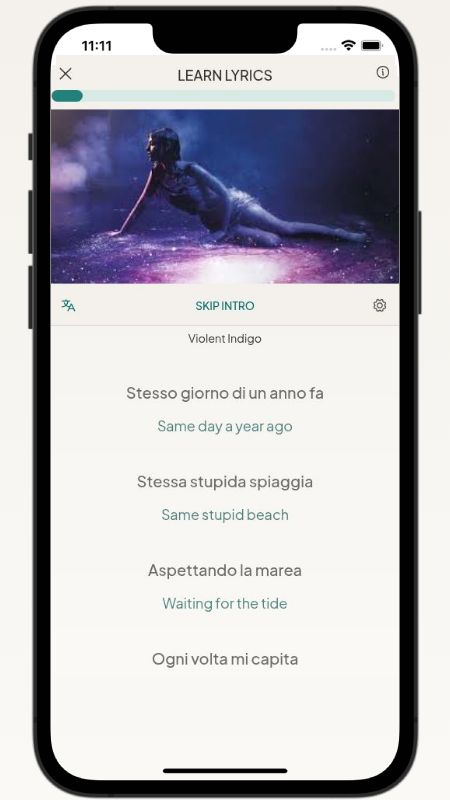
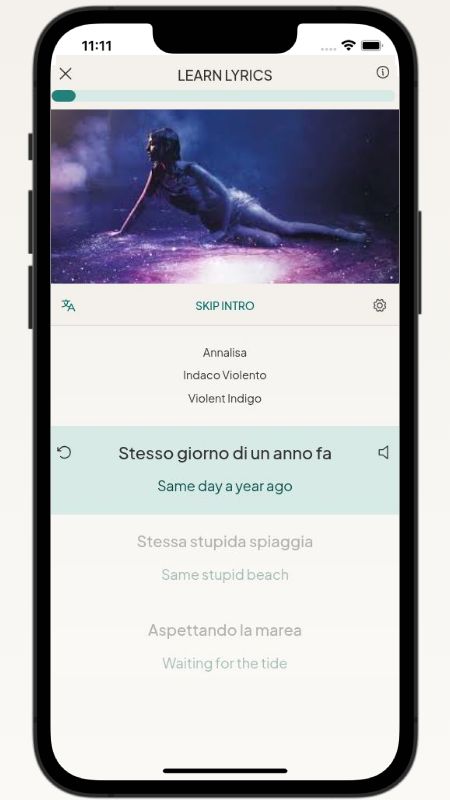
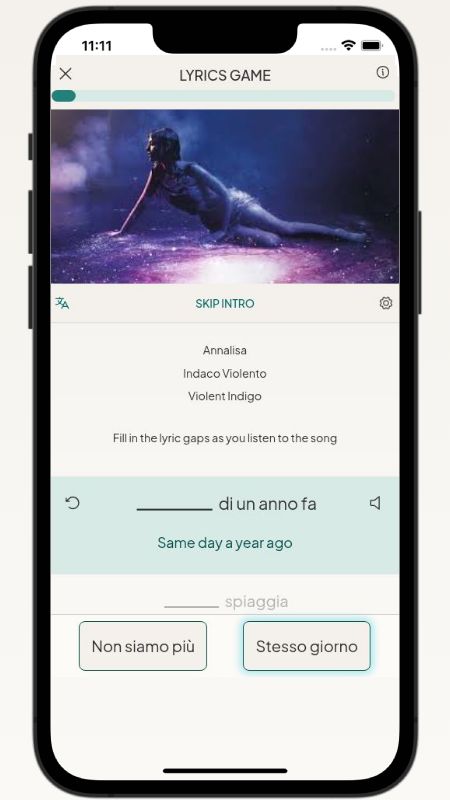
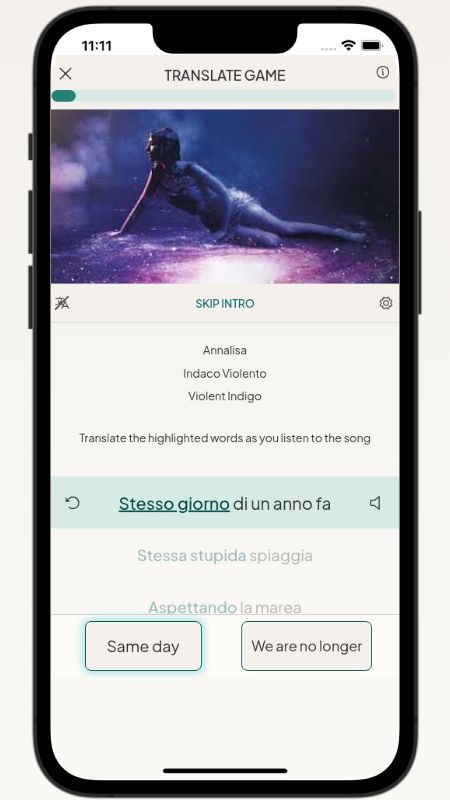
"Indaco Violento" is about a relationship the singer keeps returning to, even though she knows it hurts her. The opening lines set the scene: the same day, a year later, the same beach, waiting for the tide, like nothing has changed and nothing ever will.
She admits she can't stand him, and that he seems to want to see her burn even more than before. She should have told him to walk away, but his look still strikes her, still shakes her. That pull is the "indigo" of the title: the deep blue-purple of the sky and sea at the point where day and night blur together, standing in for a feeling she can't fully name or control, "like a center of gravity" she doesn't realize she's missing until it's gone.
The chorus turns that feeling physical: they're not in a hotel anymore, they're among strawberries, lit up, caught inside a whirlpool of happiness they don't have even a moment to understand. It's beautiful and violent at once, "indaco violento", because the same intensity that feels like joy is also what keeps hurting her.
The bridge widens the image out to the sea in winter: rough, dark, the same violent indigo. It's a song about a love that behaves like weather, something you can't reason with and can't quite look away from either.