Ton Ombre Lyrics in English by MPL
Canif translates to "penknife" or "pocketknife". It's a somewhat old-fashioned and specific word that isn't commonly found in song lyrics, making it quite unique and memorable.
In the song, it's used in the line "L'homme au canif, bien affûté, pour partager le pain" (The man with the sharp penknife, to share the bread). This imagery evokes a sense of humble, everyday life and the simple act of sharing, adding a touch of rustic charm to the narrative.
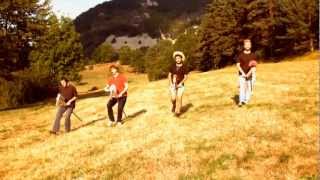
Have you ever felt like the world just keeps turning, no matter how tired you are? MPL's "Ton Ombre" [Your Shadow] really gets into that feeling. The song follows a man who's been working hard his whole life, from the line "Le grand nuage que voilà et bien tu vois, il attendra / Car il a fait sa part du boulot" [The big cloud you see there, well, you see, it will wait / Because it has done its part of the job] to the image of him with "Le bâton à la main" [a stick in his hand]. He's always doing his part, even if it's just for "une petite part du gâteau" [a small piece of the cake].
It's a really touching look at a life lived with dignity, even when it's tough. He's seen it all, from love – "Il a vu dans ses yeux marron / Que c'était la femme de sa mort / La maman de son grand garçon" [He saw in her brown eyes / That she was the woman of his death / The mother of his big boy] – to the passage of time, with "Tous ces après-midis d'été / Réduits en cendre" [All those summer afternoons / Reduced to ashes]. Even as he ages, he keeps his true smile and speaks his mind, "L'homme qui pisse le nez au ciel / Quand d'autre regardaient leurs pieds" [The man who pees with his nose to the sky / When others looked at their feet]. The song ends with a quiet understanding: "La vie ne sait pas dire merci / Il l'a compris, tant pis" [Life doesn't know how to say thank you / He understood that, too bad]. It's a beautiful, melancholic reflection on a life well-lived, even if it's unthanked.