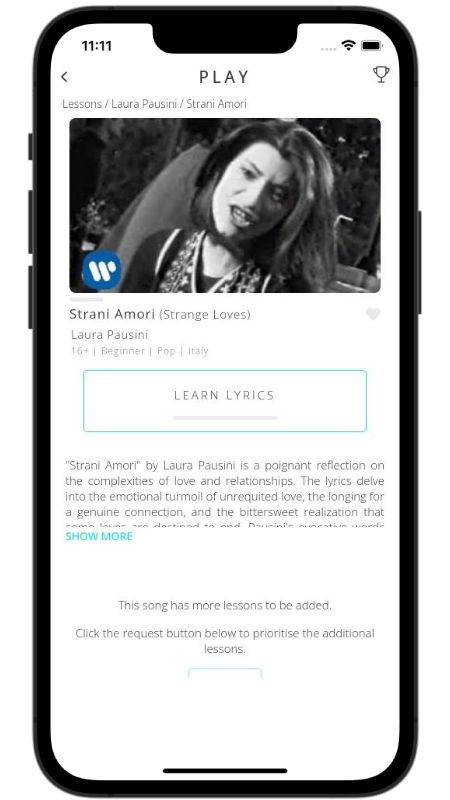
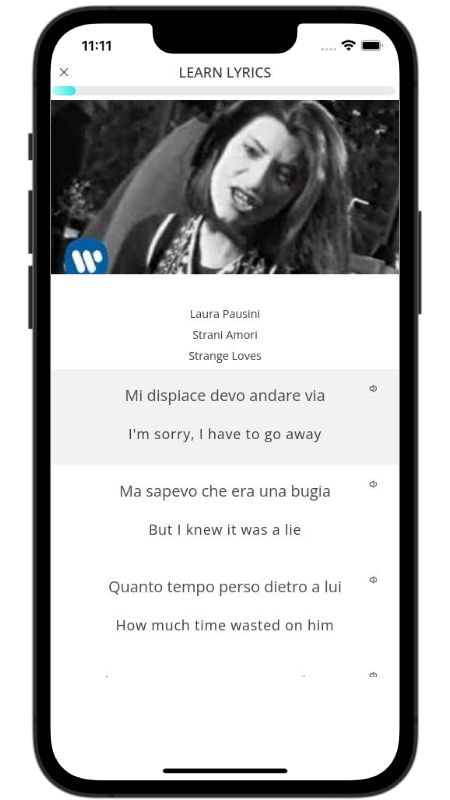
Strani Amori Lyrics in English by Laura Pausini
Lividi literally means "bruises". It's a powerful, emotional word that you don't often find in a love song.
In this iconic ballad, Laura Pausini sings about the things young lovers share: "Sogni e lividi da dividere" (Dreams and bruises to share). This beautiful line perfectly captures the bittersweet nature of the 'strange loves' she describes—they bring wonderful dreams but also leave you with emotional bruises. It's a poetic way to describe the marks that a passionate, difficult love can leave on your heart.
Ever sat curled up on the floor like a ball of yarn waiting for someone to call? Laura Pausini nails that exact teenage drama in "Strani Amori" (Strange Loves). The song kicks off with a tired realization: "Quanto tempo perso dietro a lui / Che promette e poi non cambia mai" (How much time wasted chasing after him / Who promises and then never changes). She describes sitting by the landline phone, praying the line is free, feeling that familiar knot in her gut: "Con il cuore nello stomaco / Un gomitolo nell'angolo" (With my heart in my stomach / A ball of yarn in the corner). In Italian, calling yourself un gomitolo paints a wonderfully vivid picture: you are curled into a tight, miserable knot while the room goes cold around you.
Yet, this is not just a song about self-pity. Laura looks at how messy and contradictory growing up can be. These early romances leave behind "sogni e lividi" (dreams and bruises), trapped in the "labirinto della nostalgia" (labyrinth of nostalgia) as you read old letters you cannot bring yourself to throw away. The best part is the turnaround at the very end. After all the back-and-forth about whether this romance is worth saving, she cuts the cord: "Questa volta l'ho promesso a me / Perché ho voglia di un amore vero / Senza te" (This time I promised myself / Because I want a true love / Without you). It turns those turbulent youthful blunders into a clean, necessary exit.