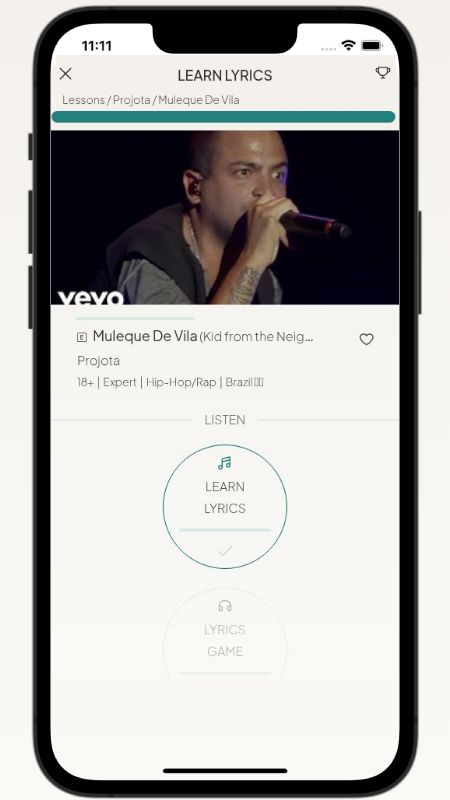
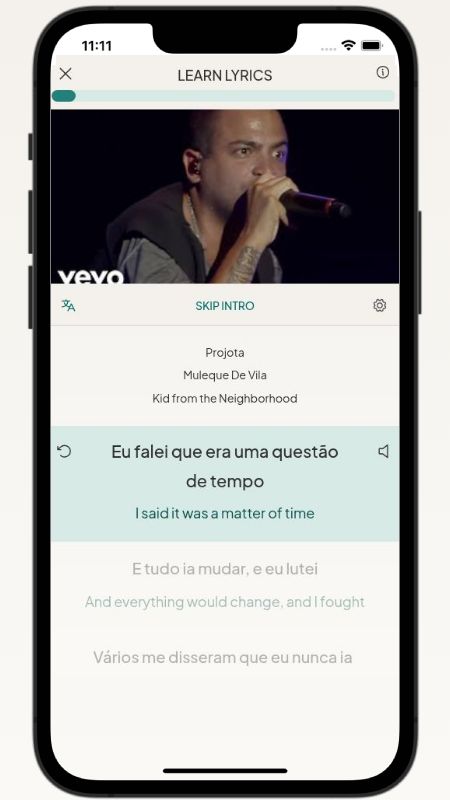
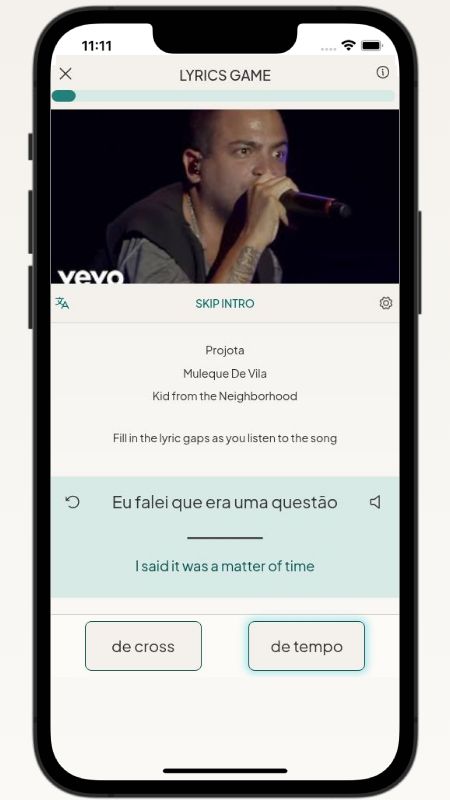
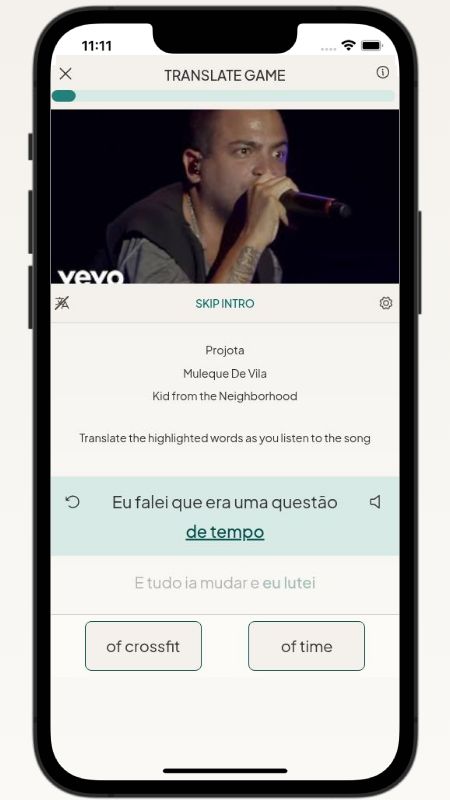
Muleque De Vila Lyrics in English by Projota
Vacila comes from the verb vacilar, which means to hesitate, waver, or falter. It's a common word in Brazilian Portuguese slang, often used to mean "don't mess up" or "don't be foolish."
In "Moleque de Vila," Projota repeatedly uses "não vacila" as a powerful mantra, urging the "kid from the hood" (moleque de vila) not to give up or make bad choices. It's a call to stay strong and focused, making it a central and impactful word in the song's message.
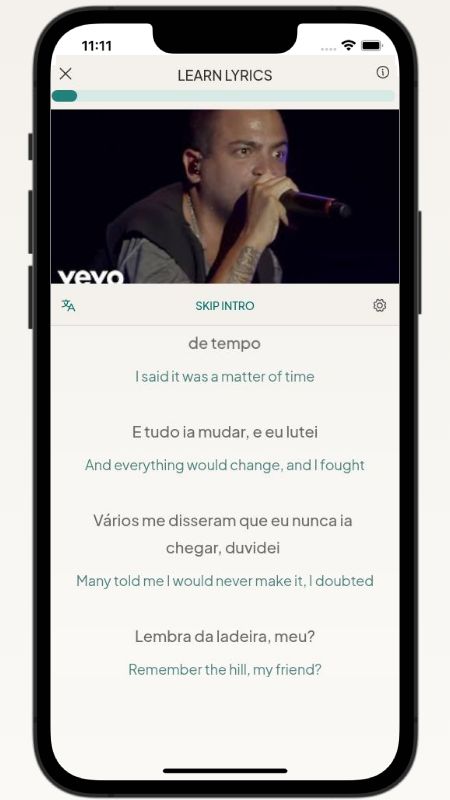
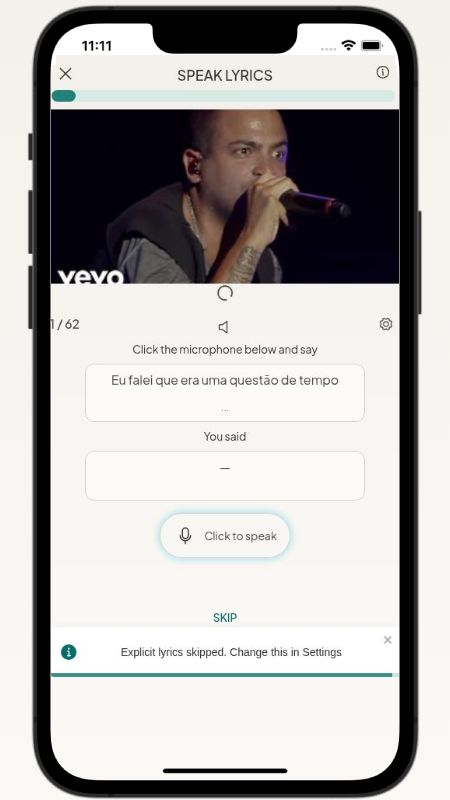
"Muleque De Vila" is Projota looking back at the whole road he walked to get here. He opens by reminding us he always said it was only a matter of time, that plenty of people told him he would never make it, and that he doubted himself too. The hill he mentions, the Friday nights, the friend who is God and the second-best friend who is himself: that is the neighbourhood he came up in, and he never pretends it was easy.
The middle of the song is a list of receipts. He sold CDs hand to hand at the bus station, freezing, fifty thousand of them. He shivered through Curitiba and came home with a gold DVD. He was booed, humiliated, attacked, insulted and threatened, and then applauded, honoured and given awards. He names the friends and rappers who came up beside him, because the point is that none of it happened alone.
Then the song goes quiet. He wakes up crying, wondering whether his mother is still watching him from above, still listening, still proud. It is the softest moment on the track, and it sits right next to a verse about how little respect people show their parents now.
The title line is the advice he gives back to the kid he used to be. Muleque de vila means a kid from the neighbourhood, and "não vacila" means don't slip, don't drop your guard, don't waste it. Go on, do not be afraid of the worst, everything is going to change, and you are going to change the world around you. Crying does not make him less of a man, and hunger did not kill him. He made friends with it and kept going.