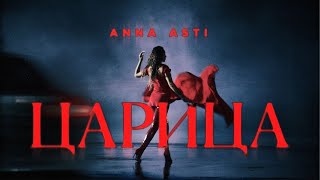
Кара translates to 'retribution' or 'punishment'. It's a powerful and dramatic word that isn't used in everyday conversation, making it stand out.
In the song, ANNA ASTI sings, "Я твоя кара" (I am your retribution). This line is incredibly impactful, as the protagonist declares herself to be the consequence of her ex-lover's actions, adding a layer of intense emotion and a sense of poetic justice to the narrative. It's a memorable word that captures the song's themes of past relationships and their lingering effects.
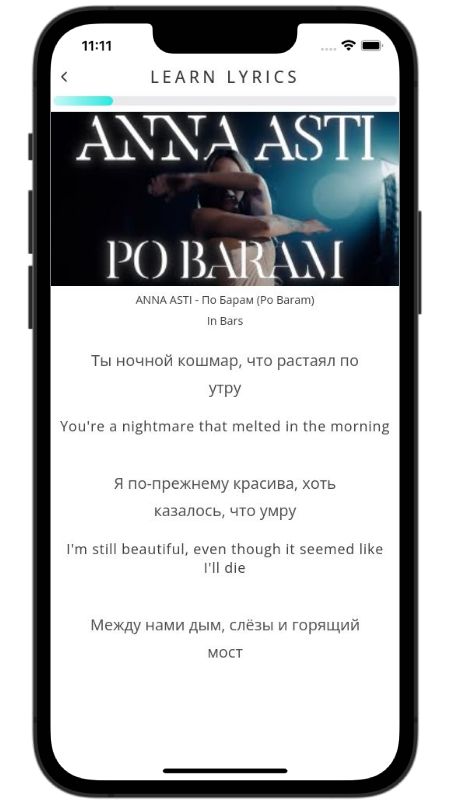
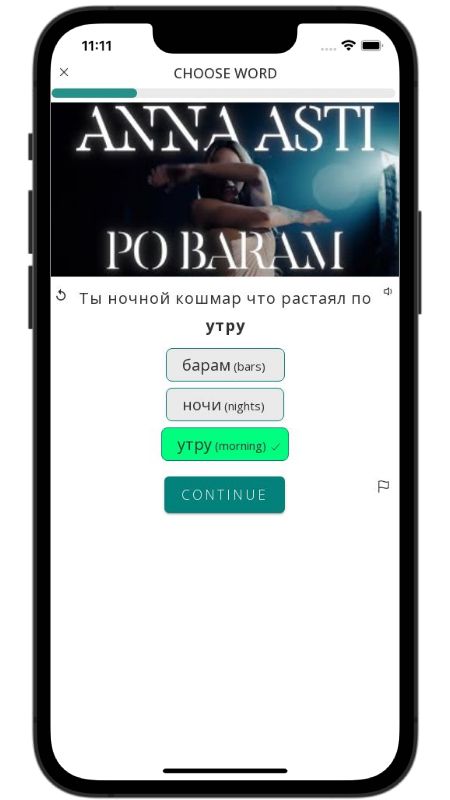
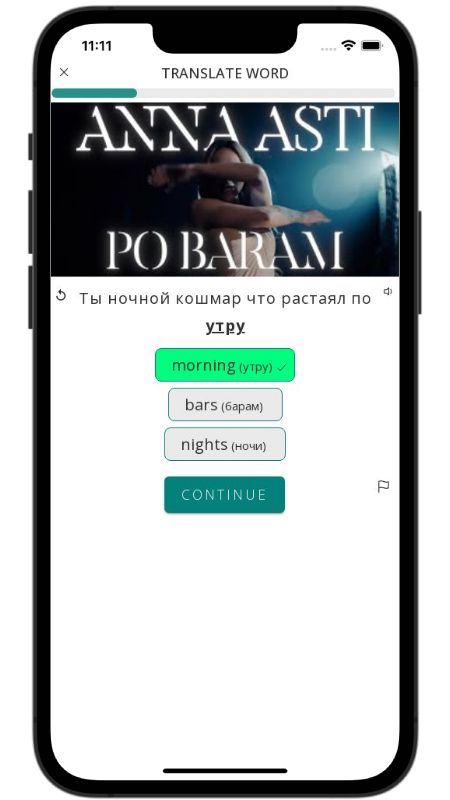
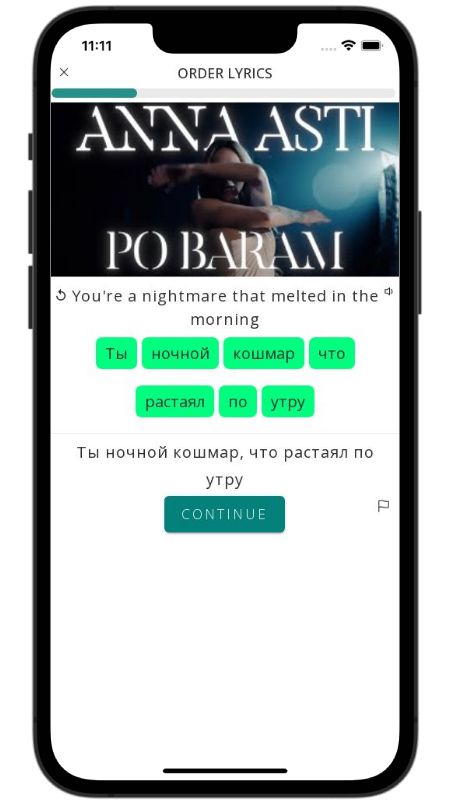
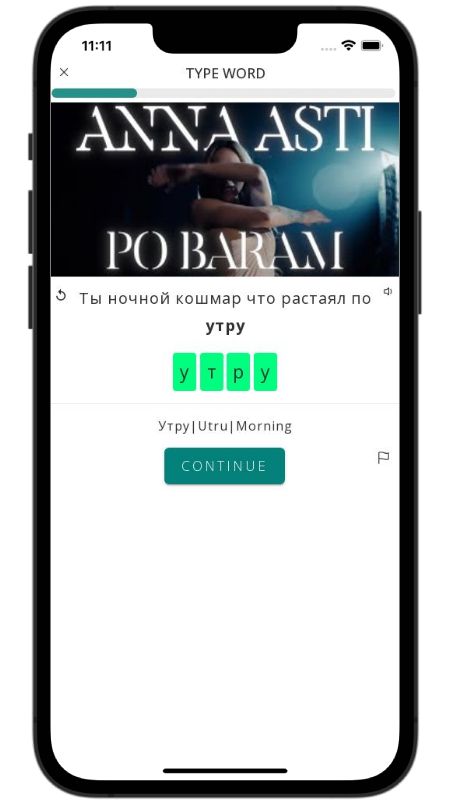
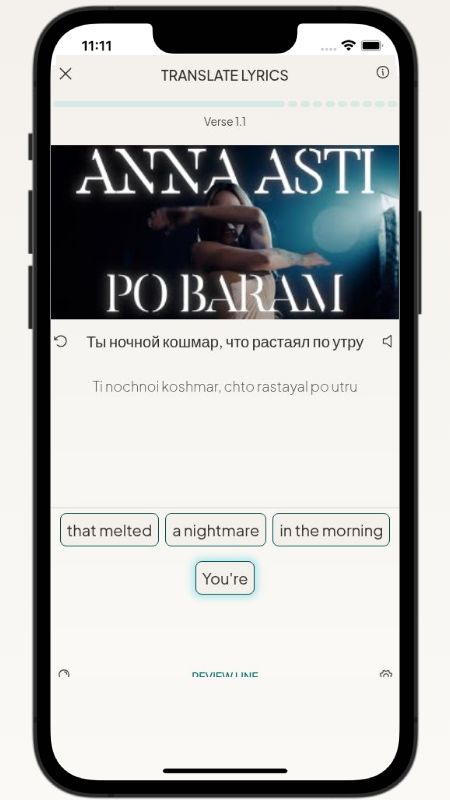
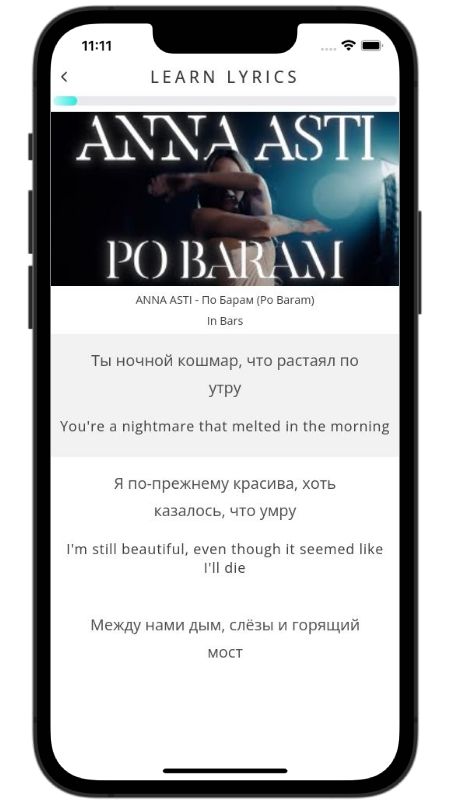
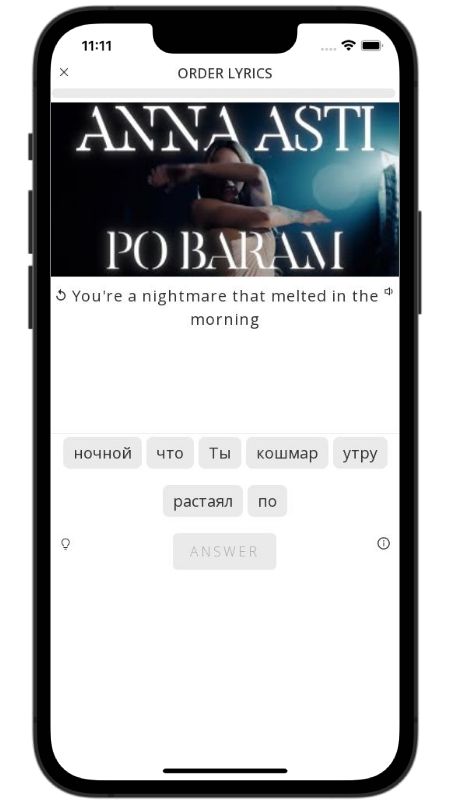
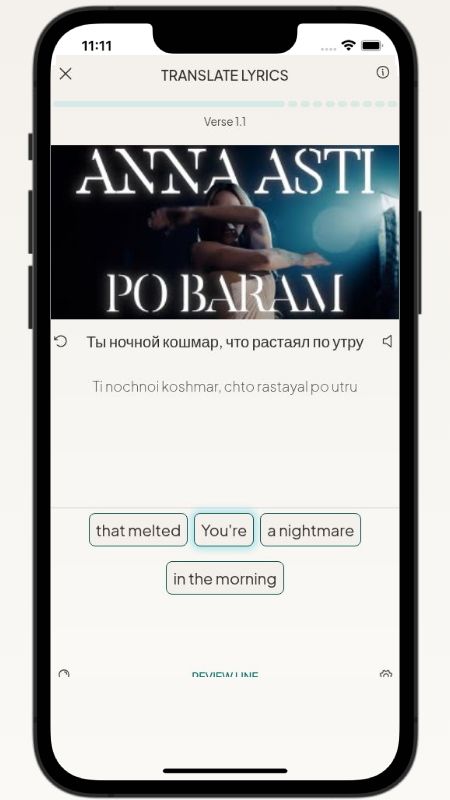
Ever watched an ex spiral while you just sit back and feel completely fine? That is the exact energy of ANNA ASTI’s pop banger "По Барам" (Across the Bars). She starts off brushing off the drama immediately: "Ты ночной кошмар, что растаял по утру" ('You’re a nightmare that melted away by morning'). While he is stuck getting drunk, trying to trace her steps, and waiting in his car outside her window, she has moved on. She hides her location and deletes their past—literally tossing old memories out: "Все наши фото не в архиве, а в корзине" ('All our photos aren’t archived, they’re in the trash bin').
Her message to him is cold, funny, and deeply satisfying. She crowns herself his ultimate payback: "Я твоя кара / Я твоя карма" ('I am your punishment / I am your karma'). When he is out at night, he tries flirting with women who look just like her ("ты найдёшь в толпе мой типаж" - 'you’ll find my type in the crowd'), but it is only an illusion. The sharpest line in the whole track is not even aimed at him, though. She directs her pity straight at his next flame: "Мне очень жалко твою новую девчонку" ('I feel so sorry for your new girl'). She knows the miserable routine of endless calls and moody mornings ("утро в миноре" - 'a morning in a minor key') that the poor girl is about to endure.
Did you know?
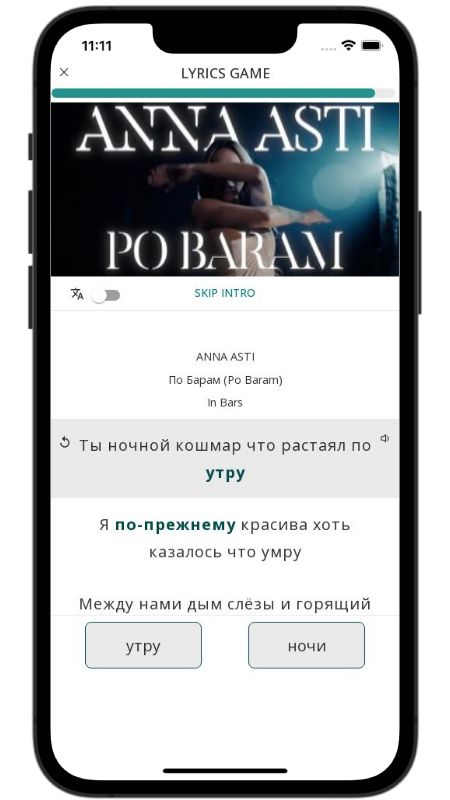
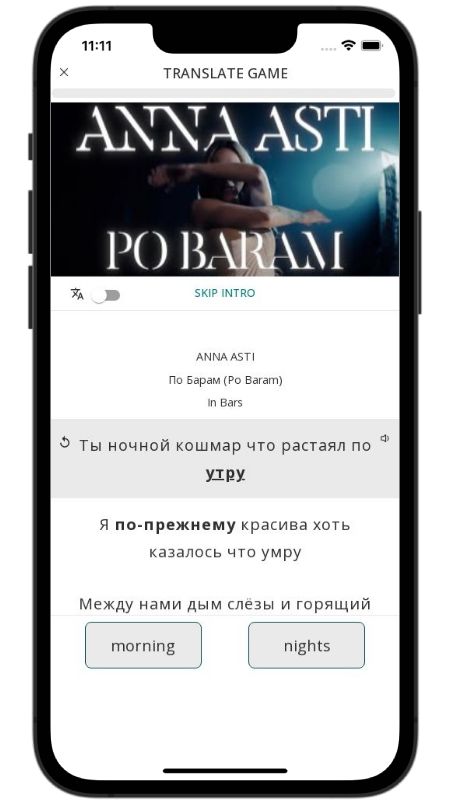
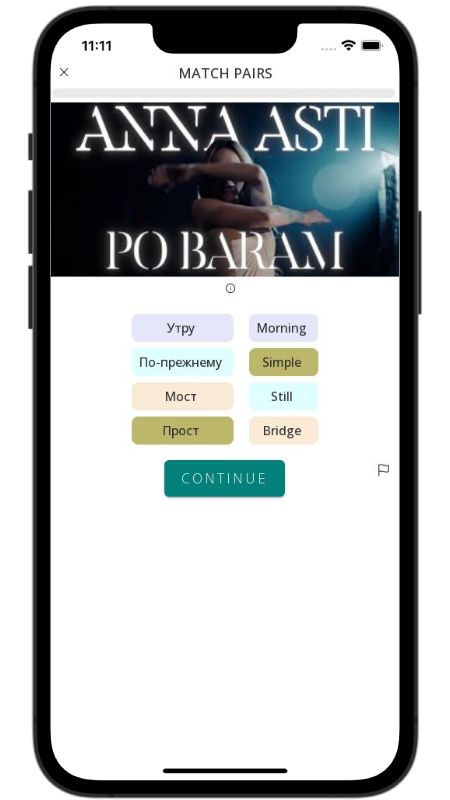
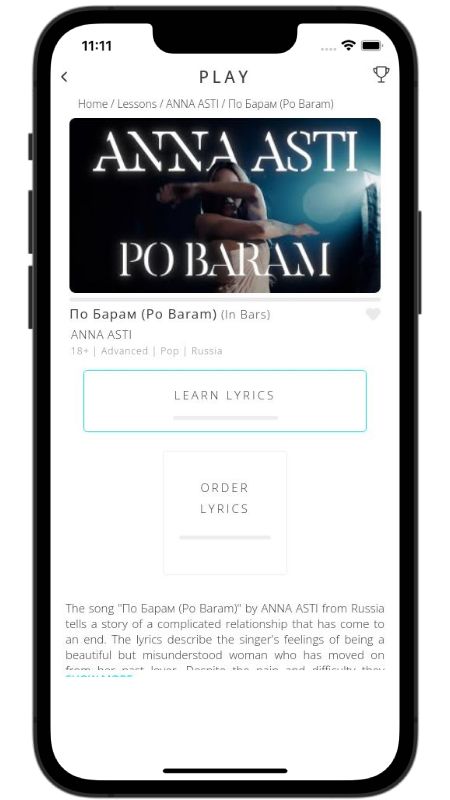
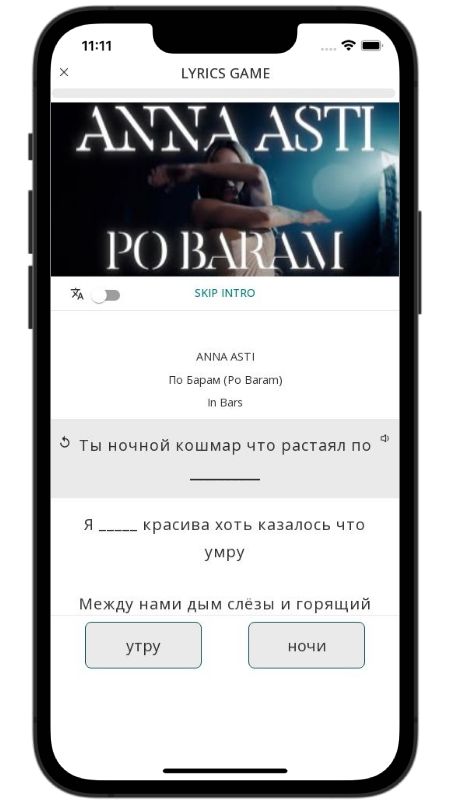
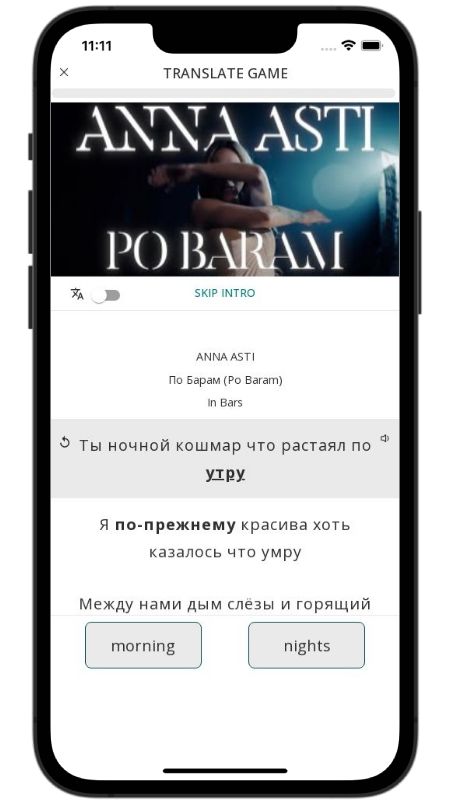
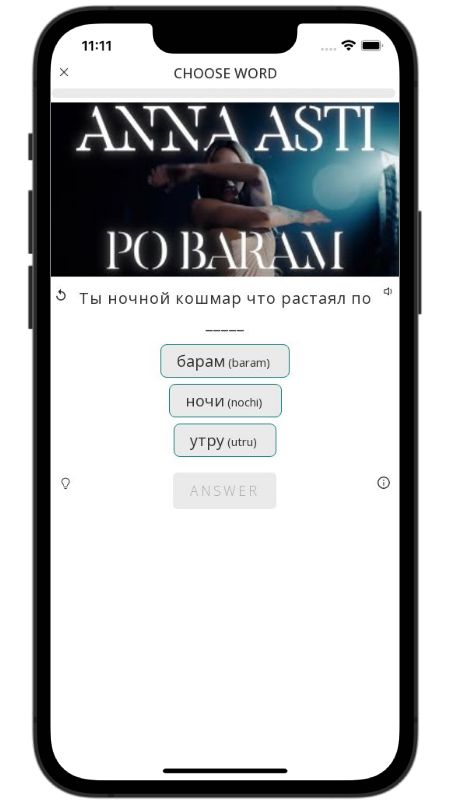
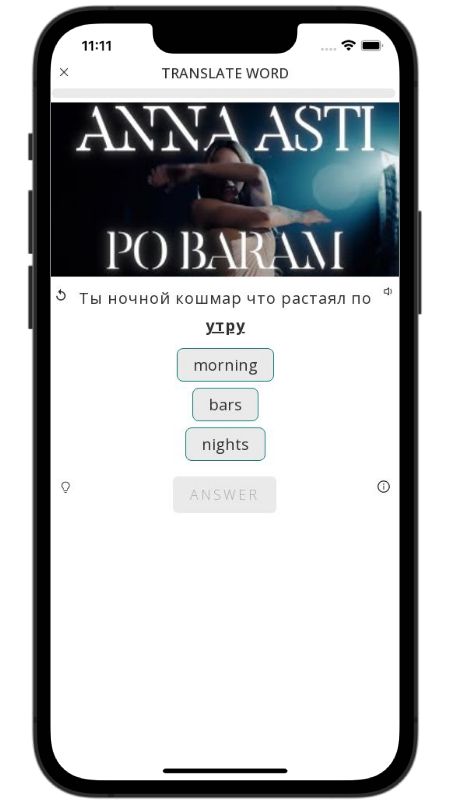
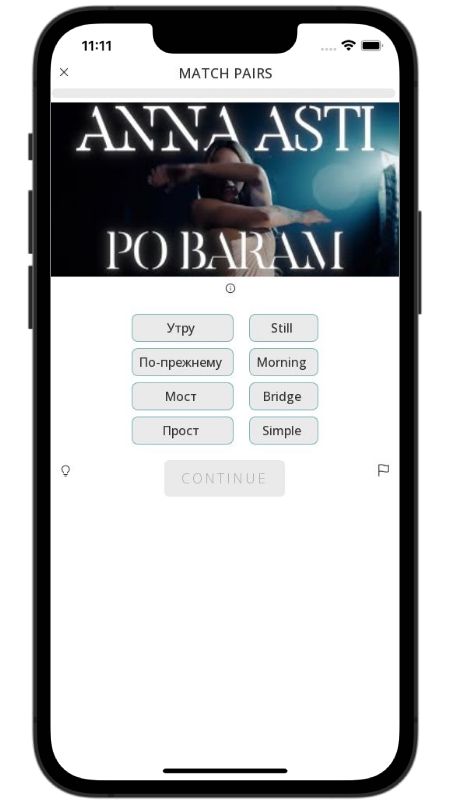
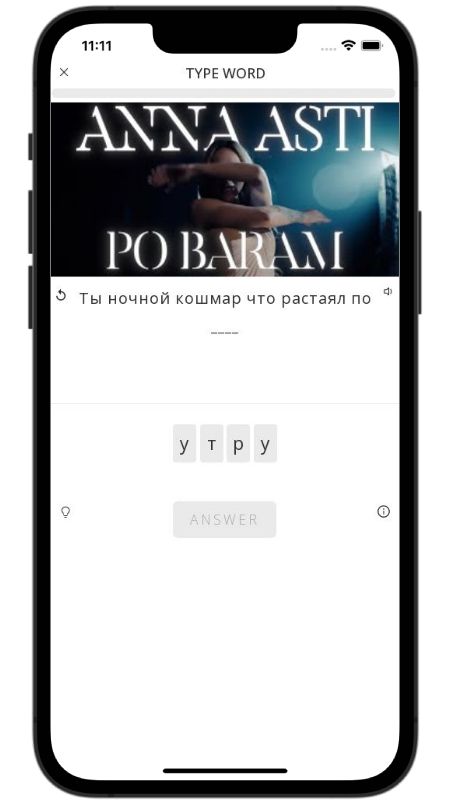
In addition to reading lyric translations, you can now learn Russian with music and lyrics from your favorite artists.
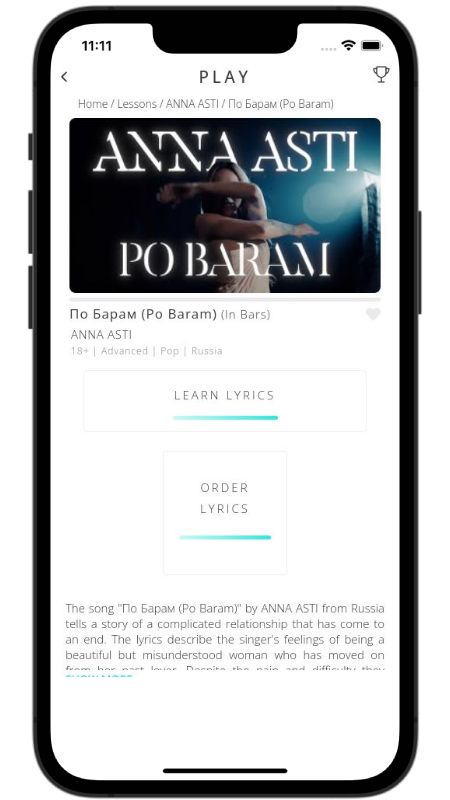
Yes, including По Барам (Po Baram) by ANNA ASTI!
No more boring lessons. You can now learn with engaging and culturally relevant lyrics from the best artists.