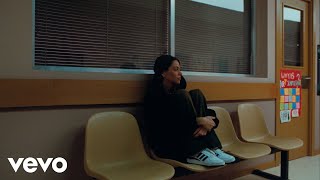
Tinta 90 Lyrics in English by TINI
Cautiverio translates to "captivity" or "confinement." It's a strong and evocative word that isn't commonly found in everyday song lyrics, making it stand out.
In "Tinta 90," TINI uses this word to describe a profound sense of emotional entrapment, singing, "Más duele el eco de estar sola en cautiverio" (The echo of being alone in captivity hurts more). This metaphor powerfully conveys the feeling of being trapped within one's own struggles and loneliness, even amidst external success.
TINI writes about hiding a depressive episode behind a normal face. She opens naming it directly: "Esa vergüenza que sentía por ser una depresiva secreta" (That shame I felt for being a secret depressive), then describes the daily performance of "Fingir estar bien todo el día" (Faking I'm okay all day) while, as she puts it, "Por fuera nunca llovió, por dentro hay una tormenta" (Outside it never rained, inside there's a storm). The title comes from that same image — crying so much it stains everything, "se tiñe con la tinta 90" (it gets tinted with 90-ink), the dark that spreads once nobody's watching.
The chorus turns the nights into a single unbroken one: "Perdí la cuenta de las noches que lloré" (I lost count of the nights I cried) followed by "Y que nunca amaneció" (And that dawn never came) — the hook repeats it like the night keeps looping. A scar gets a tattoo drawn over it, "Sin darme cuenta, me tatué la cicatriz" (Without noticing, I tattooed the scar), something private turned into proof she survived it: "Hoy la miro y sé que aún sigo aquí" (Today I look at it and know I'm still here). The bridge drops the metaphors and just names the isolation — a hotel room, "Y me quemé mirando el fuego y el humo que no me dejan ver" (And I burned myself staring at the fire and smoke that won't let me see) — before the chorus returns and the dawn still doesn't come.