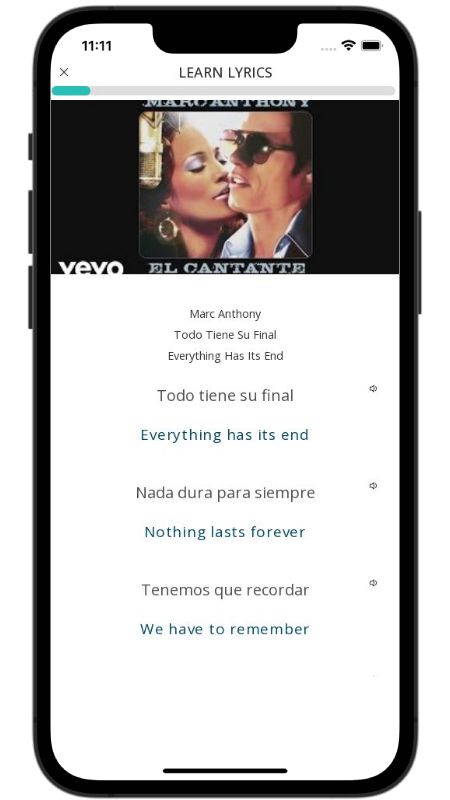
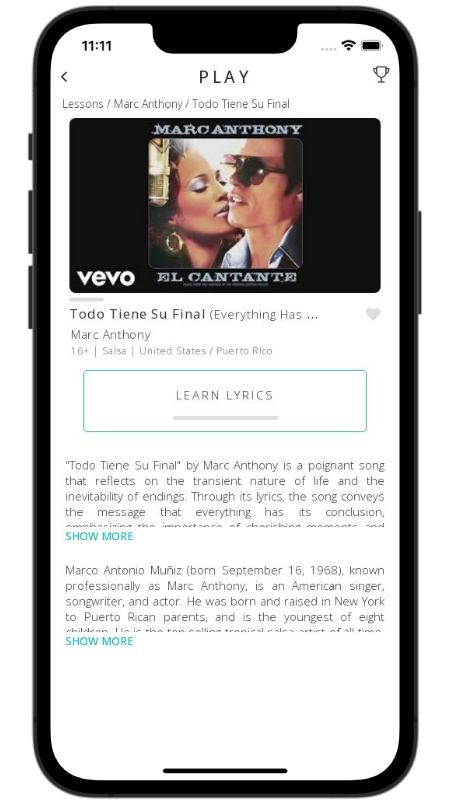
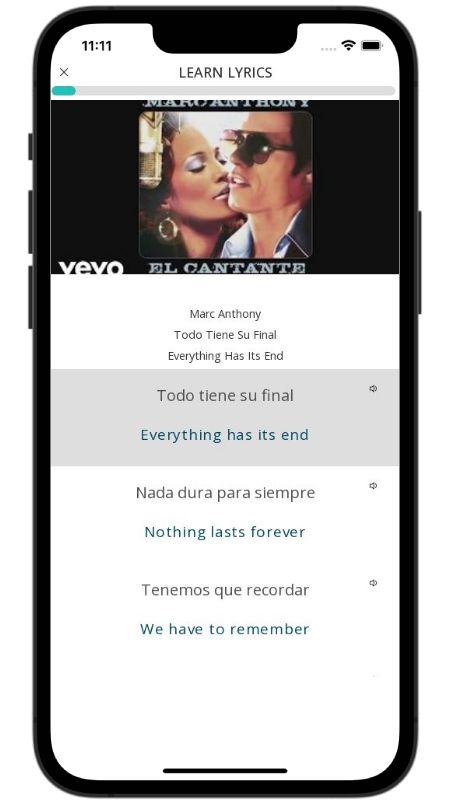
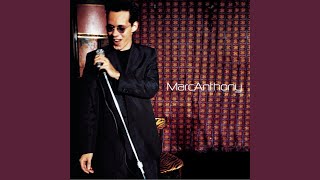
Todo Tiene Su Final Lyrics in English by Marc Anthony
Velorio is the Spanish word for a wake or viewing, a gathering of family and friends before a funeral. It's a culturally specific word that carries a lot of emotional weight.
In the song, Marc Anthony sings the powerful line, "Si no me quieres dímelo ahora / A mi velorio no venga a llorar" (If you don't love me, tell me now / Don't come to my wake to cry). He uses this dramatic word to demand sincerity from a lover, telling them not to show fake sadness after things are over. It's a raw and unforgettable moment in this classic song about finality.
Marc Anthony delivers a hard truth with an unstoppable salsa rhythm in Todo Tiene Su Final: absolutely nothing lasts forever. The song looks at life through everyday realities, opening with the image of a beautiful carnation that blooms, shows off its beauty, and withers away ("Como el lindo clavel / Sólo quiso florecer / Enseñarnos su belleza / Y marchito perecer"). He also brings up the tragic fate of a world champion who gives his whole life to reach the top, only to lose what he loves most and fade back into the crowd ("En las masas otro más" [In the masses, just another face]). When it comes to romance, he is equally blunt. If a relationship is doomed, he wants the honest truth right away, warning his lover not to show up crying at his wake ("A mi velorio no venga a llorar no no" [Don't come crying to my wake]).
Instead of getting stuck in grief, the message quickly shifts into pure resilience. Marc drops into sharp street talk, telling the listener to "Echa pa'lante" (Keep moving forward / Push ahead). He shares the painful memory of losing his own mother ("Yo perdí lo más querido cuando perdí a mi mamá"), using that loss as proof that you have to keep walking. He tells you to never step back, not even to build up momentum ("Ni pa' coger impulso"), and scolds anyone acting timid with a fiery "Echa pa'lante cobarde / Anda y ve búscate el pan" (Move forward, coward / Go on and earn your bread). It is an honest, tough-love reminder that endings are inevitable, so you might as well keep your head high and stay on your feet.