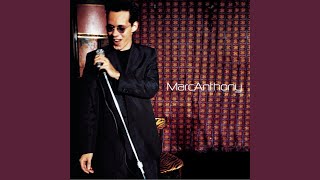
Preciosa Lyrics in English by Marc Anthony
Hidalguía is a beautiful, old-world word that translates to "nobility" or "chivalry". It comes from the historic Spanish phrase hijo de algo ("son of something"), which was used to describe a member of the lesser nobility.
In this powerful anthem, the lyrics celebrate Puerto Rico's rich heritage by mentioning "la noble hidalguía de la madre España" (the noble chivalry of mother Spain). This single, elegant word captures the island's deep-rooted connection to its Spanish history and aristocratic past, making it a truly special vocabulary discovery.
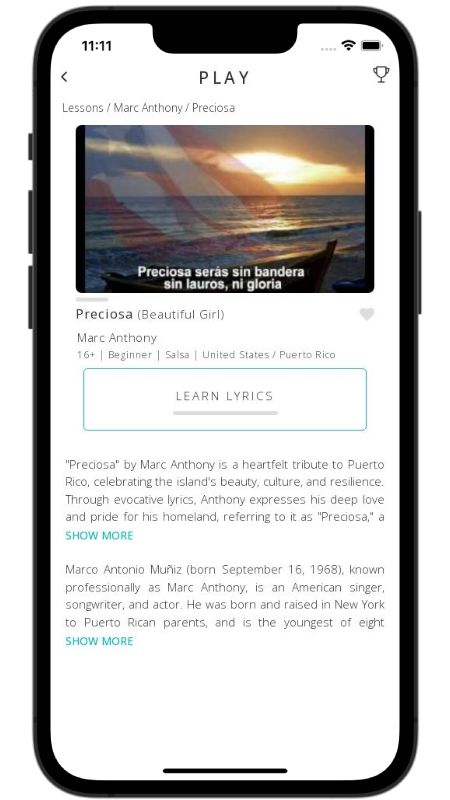
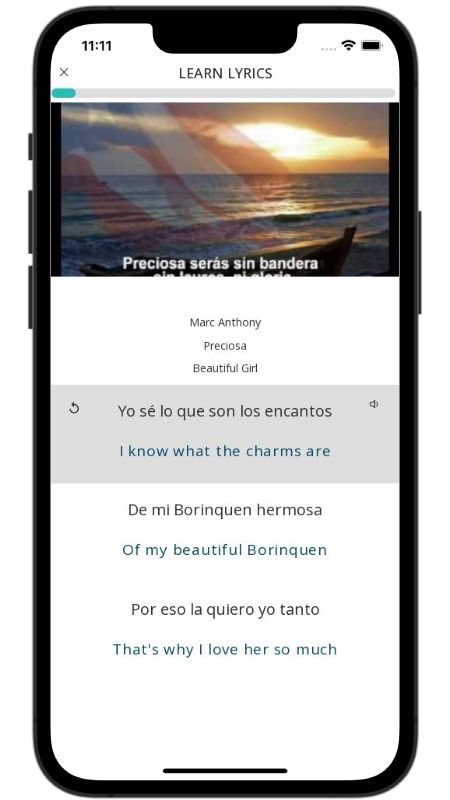
Marc Anthony turns this salsa classic into a massive love letter to Puerto Rico, using the island's indigenous Taíno name, Borinquen. Right from the start, he calls the island "Preciosa" ("Precious"), praising everything from the crashing waves to the "hembras trigueñas" ("sun-kissed, brunette women") and fragrant roses. He lays out the island's mixed heritage directly: it carries the "noble hidalguía de la madre España" ("noble nobility of mother Spain") alongside the "fiero cantío del indio bravío" ("fierce song of the brave indigenous warrior").
The song takes a bold, defiant turn when he sings that the island remains beautiful even when mistreated: "No importa el tirano te trate con negra maldad" ("No matter if the tyrant treats you with black malice"). Toward the end, Marc Anthony gets deeply personal about his identity, shouting "Yo seré puertorriqueño por donde quiera que ande" ("I will be Puerto Rican wherever I go") because of his parents' heritage. He even dedicates the tune to "ese noble jibarito Raphael" (referencing Rafael Hernández, the legendary Puerto Rican songwriter who wrote the track), using the word jíbaro, which means a traditional countryside folk farmer.