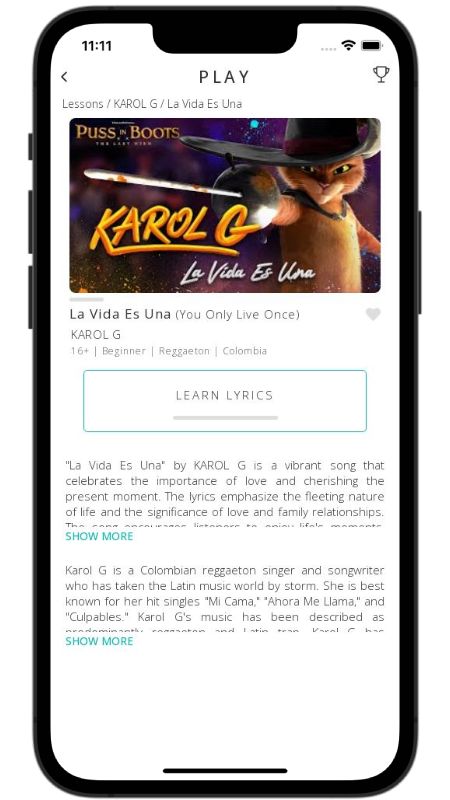
La Vida Es Una Lyrics in English by KAROL G
Viejos literally translates to "old ones" or "old people". However, in many Spanish-speaking countries, it's a very common and affectionate slang term for "parents".
In the song, KAROL G sings "Solo el amor que me dan mis viejos" (Only the love that my parents give me). This is a beautiful example of how a simple word can carry a lot of cultural warmth and meaning, different from its direct translation.
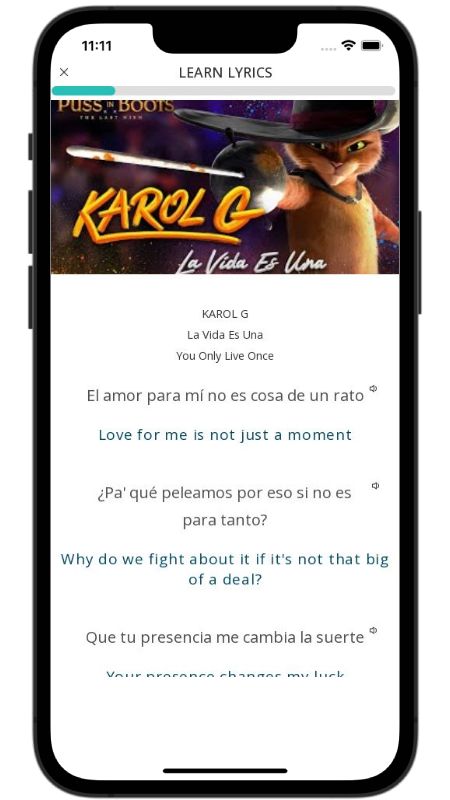
KAROL G wrote a party song about death, and she does not hide it. The hook comes straight from the title line: "La vida es una, lo dice la muerte" [You only live once, death itself says so]. Before that she picks a fight with arguing itself: "¿Pa' qué peleamos por eso si no es para tanto?" [Why do we fight about that if it's not that serious?]. Pa' is the clipped, everyday way to say para [for], so ¿pa' qué? is a casual "what's the point?", and no es para tanto is a handy phrase for "it's not a big deal".
The verse that sticks is the plainest one: "Porque el día que falte nada me llevo / Solo el amor que me dan mis viejos" [Because the day that I'm gone I take nothing with me / Only the love that my folks give me]. Mis viejos literally means "my old ones", but it is an affectionate word for your parents, not an insult. Then the chorus drops the philosophy entirely: "Quiero que muevas tu cintura / Que la vida es una locura" [I want you to move your waist / 'Cause life is madness], followed by a run of "hula" that means nothing at all. It's a bit silly after a line about dying, and I think that's the point.