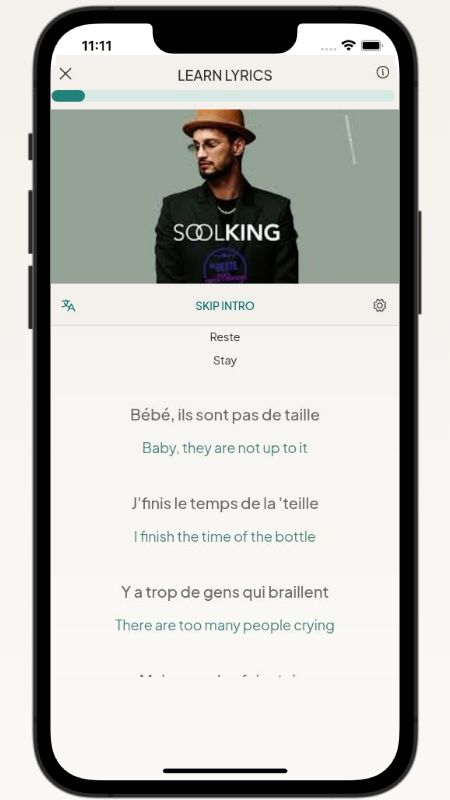
Reste Lyrics in English by Soolking, Heuss L'enfoiré
Mektab (or maktub) is an Arabic word that has been adopted into French slang, meaning 'destiny' or 'fate'. It carries a sense of predetermination and inevitability.
In the song, the artist sings, "J'ai pas hésité, c'était le mektoub" (I didn't hesitate, it was destiny). This word adds a unique, almost spiritual dimension to the lyrics, suggesting that his actions and relationships are guided by a higher power, making it more engaging than a simple French equivalent.
"Reste" is Soolking's plea to a girlfriend he's pushed to the edge with his own bad choices. He opens by admitting he's been reckless with money and time while she worried alone, then owns up directly: he made her cry, he regretted it, and now he's asking for one more chance to love her right.
Heuss L'enfoiré's verse widens the picture. He talks about a rough past — trouble, ugly things seen before a police search — and finds steadiness in this relationship, comparing the couple to Pablo and Tata, a nod to inseparable partnership rather than the drug reference some might expect.
The chorus is the emotional center: "Reste à mes côtés, pour toi, mon cœur, il bat" (Stay by my side, my heart beats for you) paired with "Laisse-moi mieux t'aimer" (Let me love you better) — a simple, repeated promise that he's changed and there's nothing left to keep them apart.