Ni Me Debes, Ni Te Debo Lyrics in English by Carin León, Camilo
Costumbre translates to "habit" or "custom." It's a powerful word in this song because it explains the lingering feeling the singer has, even though he knows it's not love.
He sings, "Es la costumbre a todo lo que me diste" (It's the habit of everything you gave me), revealing that his reluctance to leave stems from routine and familiarity, not genuine affection. This offers a deeper, more nuanced understanding of a breakup than just sadness or anger.
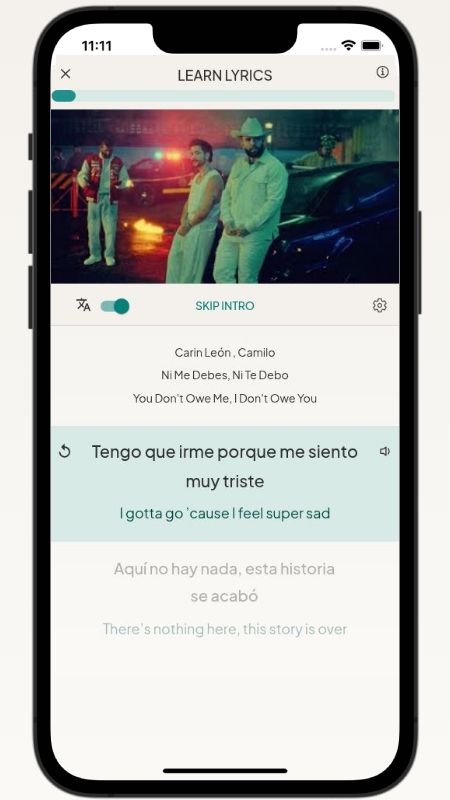
This song is the ultimate anthem for a clean-break breakup. Carin León and Camilo aren't shouting or angry; instead, they're laying out the sad, practical reasons a relationship has to end. The singer knows it's over, saying, "Aquí no hay nada, esta historia se acabó" (There's nothing here, this story is over). But he's also honest about how hard it is to leave, admitting that what's holding him back isn't love, but "la costumbre" (habit or routine). It's a really relatable feeling when you know something is finished, but the comfort of the familiar makes it difficult to walk away.
The whole point of the song is in the title: "Ni me debes ni te debo" (You don't owe me, and I don't owe you). He's wiping the slate clean. There are no debts, no blame, just an acceptance that "nada es eterno" (nothing is eternal). He wishes her luck, thanks her for both the good and the bad times, and makes it clear that if they ever meet again, there will be no strings attached. It's a mature, if heartbreaking, way to say goodbye.
























![La Boda Del Huitlacoche [Live] Lyrics Translation](https://img.youtube.com/vi/6AJ1H63KLWc/mqdefault.jpg)