CANDY Lyrics in English by ROSALÍA
Esclava literally translates to 'slave,' but in this context, it refers to a specific type of jewelry. In many Spanish-speaking countries, an esclava is a popular chain bracelet, often with a small plate for engraving a name.
ROSALÍA plays with this double meaning when she sings, "Llevaba tu esclava para pensarte" (I wore your bracelet to think of you). She suggests that this piece of jewelry, once a symbol of being 'enslaved' by her love, is now just part of a past she has moved on from.
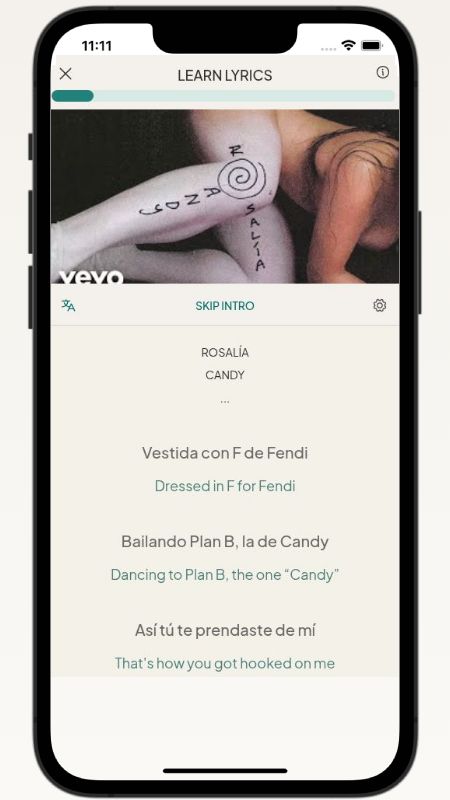
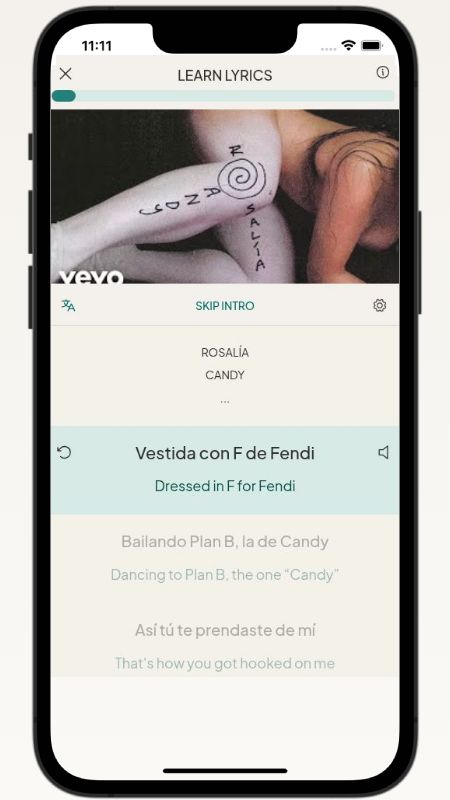
Spanish singer ROSALÍA drops you right into a specific night out: she is dressed in designer clothes, "Vestida con F de Fendi" (Dressed in F for Fendi), dancing to a classic 2000s reggaeton track by Plan B called "Candy" ("Bailando Plan B, la de Candy"). That is the exact moment an ex fell head over heels for her ("Así tú te prendaste de mí" [That's how you got hooked on me]). The catch? While she is totally convinced that he still cannot let her go ("Sé que tú / No me has olvidao'" [I know that you haven't forgotten me]), she has completely moved on. She used to wear his identification bracelet just to remember him ("Llevaba tu esclava para pensarte"), but now she brags that forgetting him became a fine art ("Pero de olvidarte yo ya hice un arte").
Her indifference is delightfully brutal. She literally cannot picture his face or his body anymore ("Ya no me acuerdo de tu cara / La forma de tu cuerpo ni aunque la pensara" [I don't remember your face anymore / Nor the shape of your body even if I thought about it]). By chanting "No queda na-na-na-na-na / Entre tú y yo" (There's nothing left between you and me), where "na" is everyday slang for "nada" (nothing), she makes it clear that the past is dead. Life moved along, even if it has a nasty bite: "La vida es bonita, pero es traicionera" (Life is pretty, but it's treacherous).