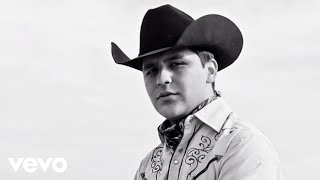
Un Cumbión Dolido Lyrics in English by Christian Nodal
Cumbión is a fantastic, energetic word you'll hear in Mexican music. It comes from cumbia, a popular Latin American music and dance genre, but adds the augmentative suffix -ón to mean "big" or "intense".
In "Un Cumbión Dolido," Christian Nodal isn't just dancing to any song; he's dancing a big cumbia to cope with his pain (dolido). This single word perfectly captures the song's theme of finding a powerful, lively escape from heartbreak on the dance floor.
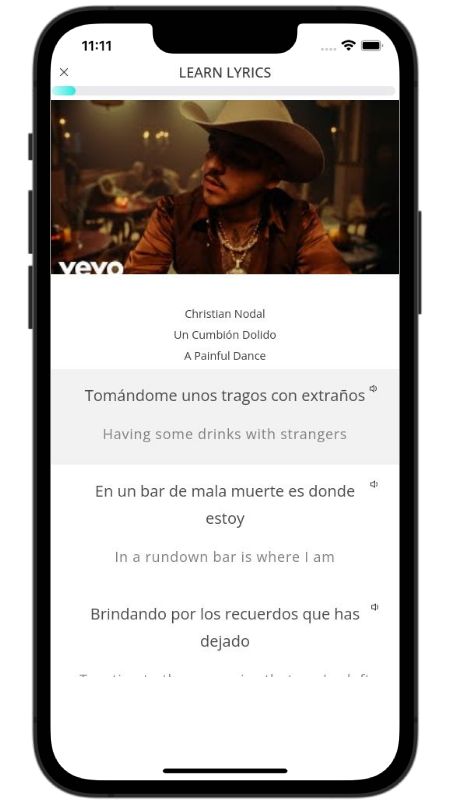
Mexican singer Christian Nodal finds himself in a sketchy dive bar, or "un bar de mala muerte", drinking with total strangers and screaming heartbreak anthems at the top of his lungs. Instead of wallowing alone in misery, he looks around and bonds with the guy next to him who also lost everything by loving blindly. His grandmother used to warn him that love can kill ("Lo decía mi nana, el amor puede matar"). It almost took him down this time, but since he survived, he chooses to dance the heartache away to a massive, upbeat cumbia rhythm.
Nodal admits his own bad habit: he always ignores red flags and falls for trouble, confessing "Les gusto a las malas que me gustan" [The bad girls I like end up liking me back]. His remedy is not finding a saint to fix him. Instead, he looks for a fellow "little devil" who is just as broken as he is ("una diablita pa' bailar / Que también esté rota para encajar") so their jagged pieces fit together. He turns collective suffering into a drinking party, raising a glass to life's rough patches with the upbeat motto that "al dolor lo sacamos a bailar" [we drag the pain out to dance].