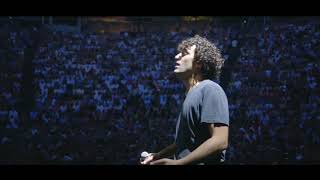
Derrière Le Soleil Lyrics in English by Terrenoire
Vaillamment means 'valiantly' or 'courageously'. It's an adverb that evokes a sense of bravery and strength in the face of adversity.
In the song, the artist uses this powerful word repeatedly to describe the passing of his father: "Vaillamment tombe l'arbre, Vaillamment tombe la nuit, Vaillamment est tombé mon père." This repetition emphasizes the dignity and strength with which his father faced his end, despite the pain of cancer, making it a poignant and memorable choice.
Terrenoire wrote this song for their father, who died of cancer. The opening line sets it up with a shrug: "Voilà une chanson de plus sur les papas" (here's another song about dads). Then it turns to the questions grief leaves behind: "La mort on sait pas où ça nous envoie" (death, we don't know where it sends us), and the singer keeps asking his father to tell him, "dis moi, dis moi" (tell me, tell me).
The chorus treats the death as a fall: "Vaillamment tombe l'arbre, vaillamment tombe la nuit, vaillamment est tombé mon père" (valiantly falls the tree, valiantly falls the night, valiantly fell my father). The father ends up in the place the title names, "derrière le soleil" (behind the sun), pictured "vers l'étoile position foetale" (towards the star, in a fetal position). Writing is how the singer copes: "J'écris, papa, pour pas mourir à mon tour" (I write, dad, so I don't die in turn).