Mi Vicio Lyrics in English by Eslabon Armado, T3R Elemento
Cobijo is a tender and somewhat uncommon verb that means "to shelter" or "to give refuge." It's a much more poetic and intimate choice than the everyday word proteger (to protect).
In this romantic song, the singer promises, "si tienes miedo con mi abrazo te cobijo" (if you are afraid, with my embrace I shelter you). This use transforms a simple hug into a profound and safe haven, showing a deep level of care and making it a beautifully memorable word.
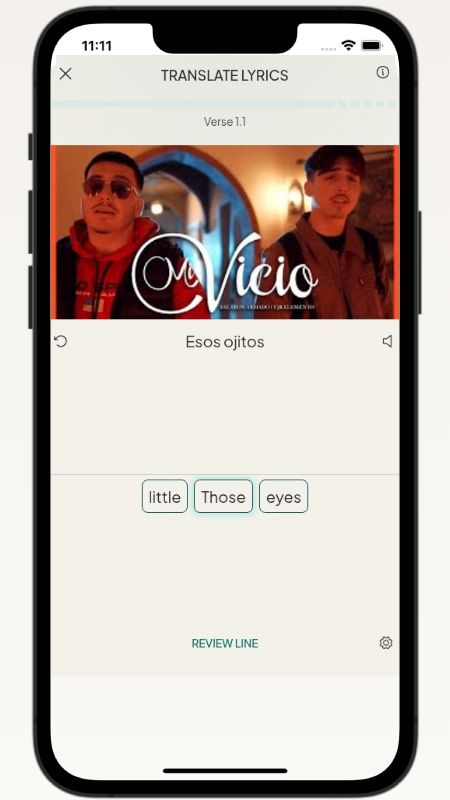
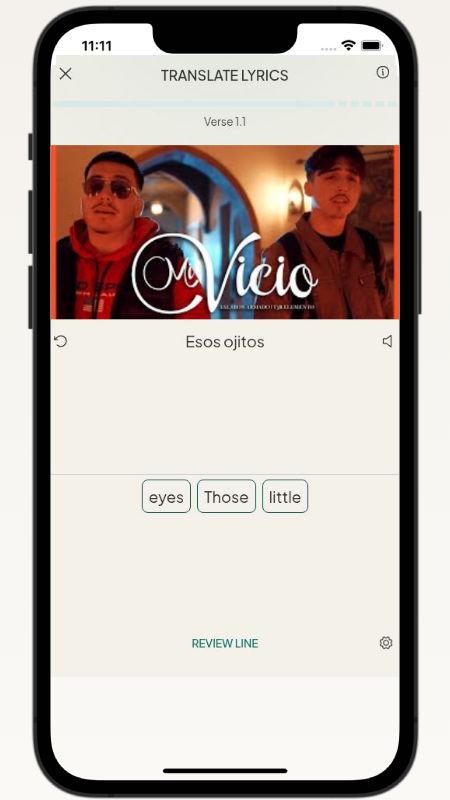
Eslabon Armado and T3R Elemento turn a love song into a list of body parts, and every one of them gets shrunk: "Esos ojitos" [Those little eyes], "Esa boquita, esa carita" [That little mouth, that little face], later "Esas manitas" [Those little hands]. That -ito/-ita ending is how Spanish makes something small and dear, so he is not describing her face so much as cooing at it. He is also sweet about the details. "Así me gustas ni un lunar te cambiaría" [I like you just like this, I wouldn't change even one mole on you] is a nicer compliment than any line about stars, though he goes there too with "Tu brillo es oro" [Your shine is gold].
Then the chorus jumps straight to "Eres mi droga perfecta, si no te tengo me muero" [You're my perfect drug, if I don't have you, I die], which is a lot, and the song knows it. Listen for "Déjame te digo" [Let me tell you] and "Déjame te robo un beso" [Let me steal a kiss]: textbook Spanish would say "déjame decirte" and "déjame robarte", but this Mexican way of putting a conjugated verb after "déjame" is how people actually talk. The middle break is pure regional-Mexican hype, "¿Qué pasó, papá?" [What's up, man?] and "Y puro T3R Elemento, viejo" [And it's all T3R Elemento, man], where "papá" and "viejo" mean "dude" here, not dad or old man.