Enfants Sauvages Lyrics in English by Claudio Capéo
Écorchés literally means "flayed" or "skinned", a strong and visceral word rarely found in everyday conversation or in most song lyrics, which is exactly what makes it stand out here.
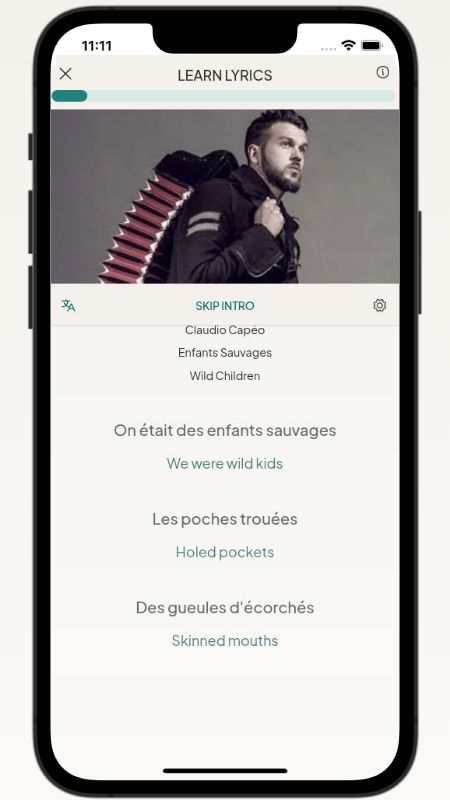
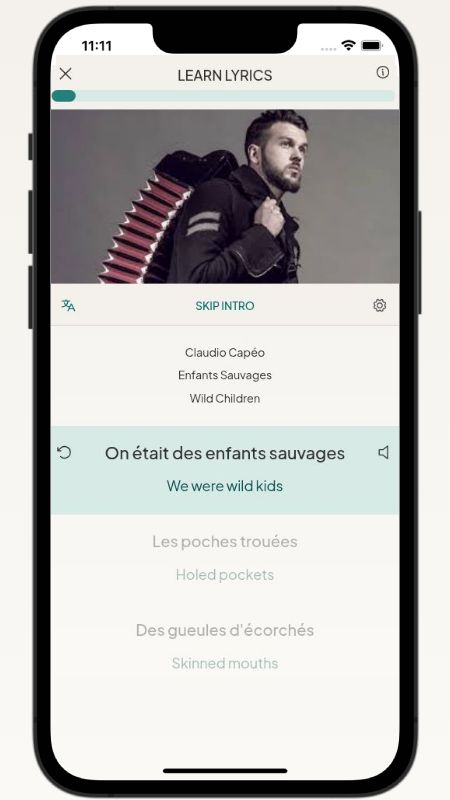
In the song, the line "Des gueules d'écorchés" (Skinned mouths) uses the word to paint a raw, almost painful image of people exposed and vulnerable, as if life itself had stripped away their protective layer.
"Enfants sauvages" is Claudio Capéo looking back at growing up rough around Strasbourg with a group of friends who called themselves "sales gosses," scruffy kids with holes in their pockets and scars to show for it.
The song isn't sad about it. It treats those bruises, the broken teeth, the fights, as proof of who they were and still are. Even grown up, the singer says they promised each other to stay those same scruffy kids at heart, carrying their old scars ("nos fractures et nos bosses") rather than smoothing them over.
There's a nod to Renaud, the French singer famous for writing about working-class street life, which places this crew squarely in that tradition: puddle-jumping in cul-de-sacs, a borrowed sound system, and a shared dream of getting out of the neighborhood and seeing the world, without ever really leaving who they were behind.