Agua Lyrics in English by Bomba Estéreo
Desangre comes from the verb desangrar, meaning "to bleed out" or "to drain of blood." It's a strong and evocative word that isn't commonly found in everyday song lyrics.
In "Agua," the lyric "De dejar que me desangre y que se seque mi mar" (Of letting me bleed out and my sea dry up) uses desangre metaphorically. It conveys a deep sense of emotional depletion and loss, connecting the physical act of bleeding to the drying up of one's vital essence, like a sea losing its water. This powerful imagery makes it a memorable and impactful word.
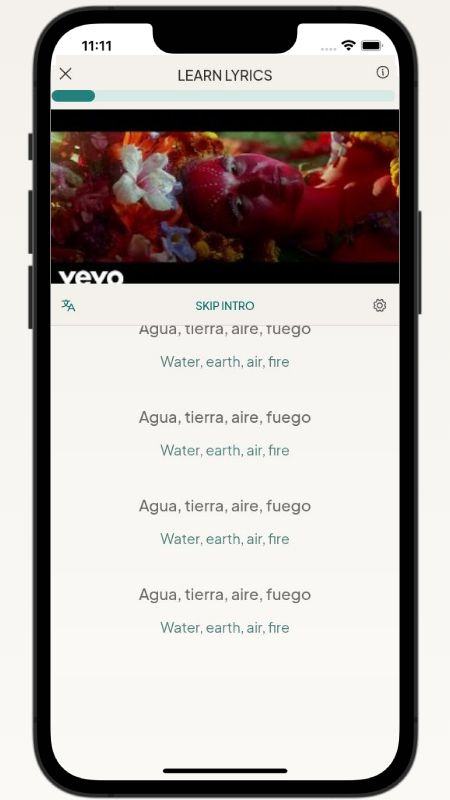
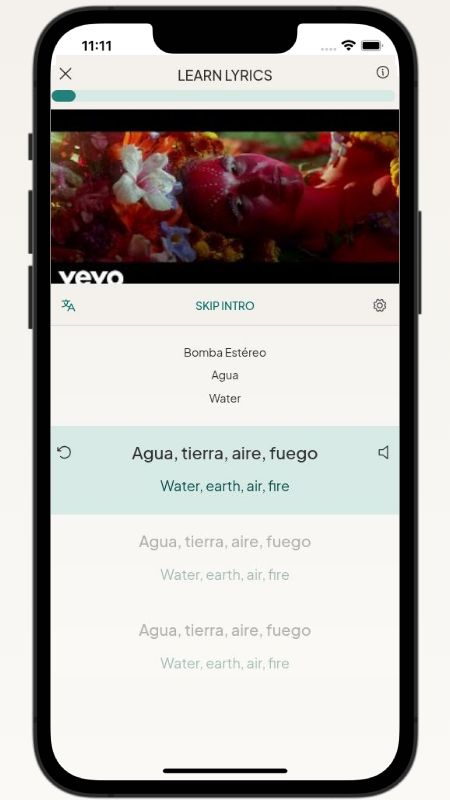
From the very first chant of "Agua, tierra, aire, fuego" (Water, earth, air, fire), Colombian band Bomba Estéreo roots this tropical track in the raw physical world. The singer declares herself a creature of the soil who plans to plant the roots of her own legs into the ground ("Las raíces de mis piernas en el suelo sembraré"). It is an earthy, full-body plea for survival where water flows right through her veins ("Agua, que me corre por las venas") while she begs for a drink to stay alive. She even describes having a creature in her spirit that sings at dawn and flies by night, calling out anyone rushing to drain her dry: "es más manso que tu afán / De dejar que me desangre y que se seque mi mar" (it is tamer than your urge / To let me bleed out and let my sea dry up).
As the rhythm pulls you in, nature starts speaking directly. Rivers sound, forests talk, jungles sing, and the sea literally screams ("Suena río, habla bosque, canta selva, grita mar"). The song shifts between dreaming of a mountain of green and gasping for breath as the ground turns toxic ("Tierra, que yo piso / Y me envenena" [Earth, that I step on / And it poisons me]). By the end, the lyrics turn intensely personal and contradictory. She demands to be left alone ("Déjame sola"), insists that nobody touch her ("No me toques"), and then immediately pleads "Cuídame" (Take care of me) followed by "Lo siento" (I am sorry). It feels like a feverish, protective plea for both human boundaries and the natural world around us.