La Llorona Lyrics in English by Natalia Lafourcade
Martirio literally translates to "martyrdom", but is used here to mean immense "torment" or "agony". It's a powerful, dramatic word that you won't hear every day.
In this classic folk song, the singer says, "El que no sabe de amores... No sabe lo que es martirio" (He who doesn't know of love... doesn't know what torment is). This line beautifully captures the song's deep sorrow by equating the pain of love and loss with the suffering of a martyr.
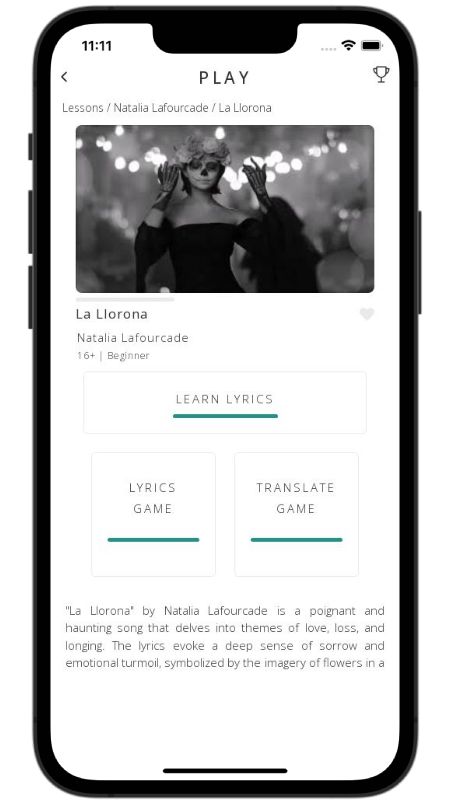
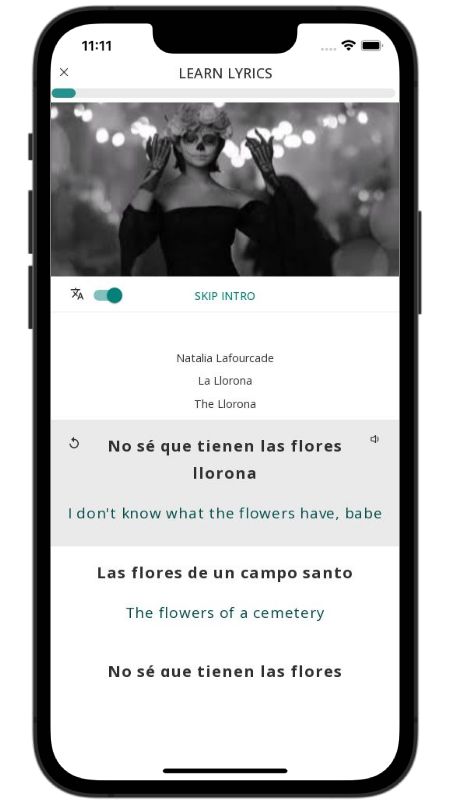
Mexican singer Natalia Lafourcade steps into the legendary folk song "La Llorona," turning it into a dramatic conversation with the famous weeping ghost. Instead of running away from her in terror, the speaker pleads with this shadowy figure, pouring out heartaches so heavy that even an iron crucifix wept upon hearing them: "A un Santo Cristo de fierro llorona / Mis penas le conté yo... Que el Santo Cristo lloró" [To an iron Holy Christ, Llorona, I told my sorrows... and the Holy Christ cried]. Death and desire blur together constantly. Cemetery flowers sway in the breeze as if they are crying, while the singer begs the ghost for shelter under her rebozo (a traditional Mexican shawl or wrap): "Tápame con tu reboso llorona / Porque me muero de frío" [Cover me with your shawl, Llorona, because I am dying of cold].
Yet right beside this gloomy, graveyard romance, the lyrics suddenly get cheeky and playful. The speaker brushes off insults about being dark-skinned with full confidence, declaring, "Yo soy como el chile verde llorona / Picante pero sabroso" [I am like green chili, Llorona: spicy, but tasty]. It is an incredible turn of phrase that proves this love is both a torture and an addiction. Loving someone this hard is pure misery—"El que no sabe de amores llorona / No sabe lo que es martirio" [He who knows nothing of love, Llorona, knows nothing of martyrdom]—and in the final lines, the singer calls out the lover's bottomless greed: after surrendering an entire life, what more could possibly be left to give?













![De Todas Las Flores [Live At Carnegie Hall] Lyrics Translation](https://img.youtube.com/vi/4FZwmmM-dLY/mqdefault.jpg)

![María La Curandera [Live At Carnegie Hall] Lyrics Translation](https://img.youtube.com/vi/nj0fMeeMLnI/mqdefault.jpg)