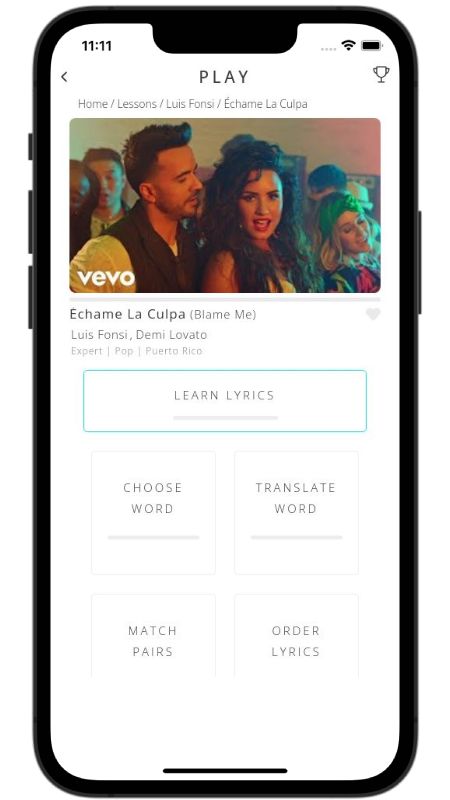
Échame La Culpa Lyrics in English by Luis Fonsi, Demi Lovato
Échame la culpa is a powerful phrase and the title of this hit song. It literally means "throw the blame on me," but is used idiomatically to say "blame me."
This phrase is the heart of the song's story. The singer is telling his partner that he is the one at fault for the relationship ending, urging her to put all the blame on him so she can move on. It's a dramatic and memorable expression that showcases the versatile Spanish verb echar, which has dozens of meanings.
We have all heard the classic breakup excuse "it's not you, it's me," but Luis Fonsi and Demi Lovato turn that exact cliché into a danceable pop track. Instead of arguing about who ruined the relationship, the singers rush to take the fall. Fonsi admits right away, "Que tú no eres la mala, que el malo soy yo" ("That you are not the bad one, that the bad one is me"), insisting that your only mistake was ever meeting him in the first place.
Demi jumps in tired of the drama, singing "I don't really, really wanna fight anymore" and dropping a clever English music reference: "Play me like The Beatles, baby, just let it be." Here, she plays on the famous Beatles song title Let It Be to say she wants to stop arguing and let things go. They repeat the Spanish title phrase "Échame la culpa" ("Put the blame on me") like a party chant, proving that even a mutual breakup can sound fun when both sides just agree to take the blame.













![La Paz [Banda Sonora Original De La Serie "Zorro"] Lyrics Translation](https://img.youtube.com/vi/PQO-gPYX3Xo/mqdefault.jpg)