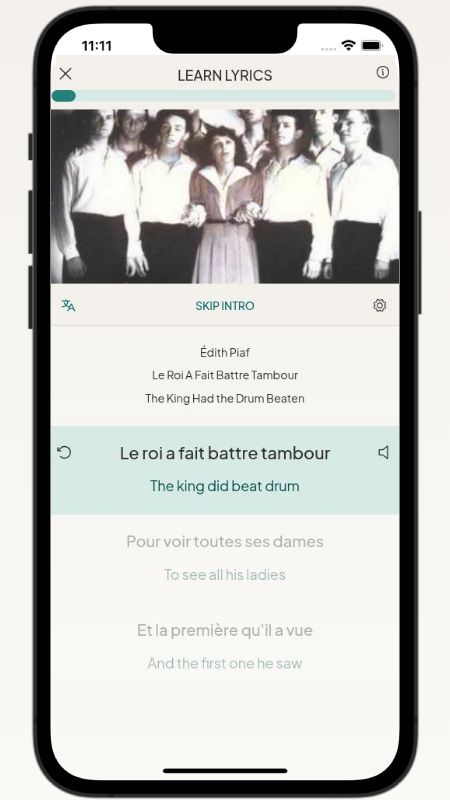
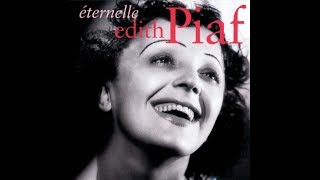
Le Roi A Fait Battre Tambour Lyrics in English by Édith Piaf
Tambour means "drum" in French. While it might seem like a simple word, its significance in this traditional folk song is quite profound.
In "Le Roi A Fait Battre Tambour," the beating of the drum is not just a musical element; it's a royal decree, a call to gather, and a symbol of the king's power and authority. It sets the stage for the entire narrative, where the king's desires lead to a dramatic tale of love, loyalty, and ultimately, tragedy. The drumbeat is the catalyst for all the events that unfold.
Le Roi a fait battre tambour is a traditional French folk ballad, far older than any single artist. This recording is Édith Piaf's version of a song people had been singing for generations before her.
The story is a small tragedy told in a handful of lines. A king spots a beautiful woman and asks his marquis who she is. She turns out to be the marquis's own wife. The king, wielding his royal power, tells the marquis to hand her over anyway, and to console him for the loss, offers to make him a marshal of France. Before she is taken away, she says a last farewell to her husband. The final verse jumps forward: the queen sends flowers, and the scent of that bouquet kills the marquise.
It reads almost like a fairy tale, but it carries a sharp, simple point: rank can force away what someone loves, and a title can never make up for what is actually lost.