DISINCANTO Lyrics in English by Madame
Disincanto means 'disenchantment' or 'disillusionment'. It's a powerful and evocative word that describes the state of being freed from illusions or false beliefs, often accompanied by a sense of disappointment or a loss of wonder.
In Madame's song, which shares its title with this word, she sings, "Ho gli occhi gonfi del mio disincanto" (My eyes are swollen with my disenchantment). This line perfectly captures the emotional weight of realizing the truth, even if it's a painful one, and embracing a new, more realistic perspective on life.
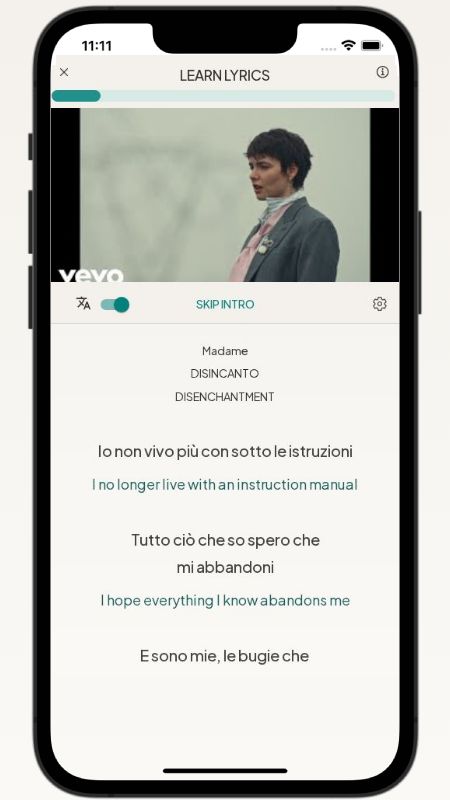
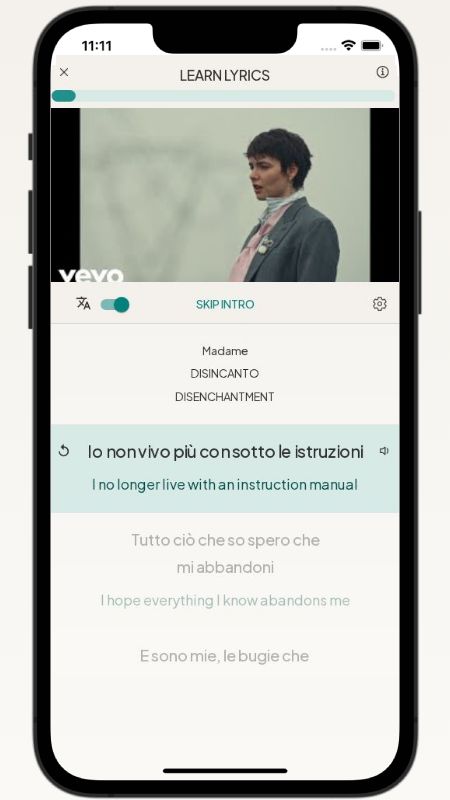
This song is a powerful declaration of independence from all the rules and ideas we're taught to believe in. Madame calls it her "disincanto" [disenchantment], and she's not afraid of it. She starts by saying she no longer wants to live by instructions and hopes to forget everything she knows. She even claims the lies she's been told as her own and dismisses good and evil as "solo fantasie" [just fantasies]. It's about wanting to experience life directly, even the painful parts. She has this amazing line where she says, "la realtà è un mobile con mille spigoli" [reality is a piece of furniture with a thousand sharp corners], and even though she gets bruised, it makes her laugh.
She takes this idea even further with some really bold statements. She flips the story of creation, saying God didn't create her from a rib, but instead "è nato dalla mia paura" [he was born from my fear]. And if she were Eve, she would have eaten the entire apple, core and all. This isn't about being happy; it's about being real. She feels like "Un'anima nel nulla" [A soul in the void] and admits her eyes are swollen from her disenchantment. It's a song about tearing everything down to see what's left and choosing to live without illusions, no matter the cost.