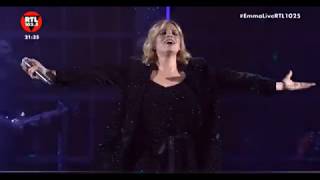
La Mia Felicità Lyrics in English by Emma
Diletti comes from the verb "dilettarsi," meaning to delight oneself, to take pleasure in, or to amuse oneself. It's a less common verb than simply saying "you like" or "you enjoy."
In the song, the singer uses it to describe her partner's detached planning: "Ti diletti programmando alla finestra / Un futuro, una famiglia, una proposta" (You delight yourself programming at the window / A future, a family, a proposal). This word choice subtly conveys a sense of the partner's self-indulgent and perhaps superficial engagement with their shared future, highlighting the emotional distance between them.
Emma's "La Mia Felicità" is such a relatable song if you've ever felt like you and your partner are on totally different pages. She sings about her partner pretending to understand her thoughts and desires: "E fai finta di capire i miei pensieri / Di comprendere i miei grandi desideri" [And you pretend to understand my thoughts / To understand my great desires]. But she just doesn't feel it, sensing instead that their story is running out, like a pen or pencil that can't write anymore: "Sento solo che una storia si è esaurita / Come l'estate, una penna, una matita / Che sul foglio bianco, non scrive più" [I only feel that a story has run out / Like summer, a pen, a pencil / That on the white page, no longer writes].
It’s a really honest look at that disconnect when one person is planning a future, a family, a proposal, while the other is left wondering, "Ma tu cosa ne sai / Del tempo che si porta via distratto / Tutto quello che ai" [But what do you know / Of the time that distractedly takes away / All that you have]? She feels such bitterness because she wanted to live her happiness with this person: "Quanta amarezza, la mia felicità / Volevo viverla / Volevo viverla / Con te" [How much bitterness, my happiness / I wanted to live it / I wanted to live it / With you]. It’s a powerful feeling of wanting something so badly with someone who just doesn't seem to get it.