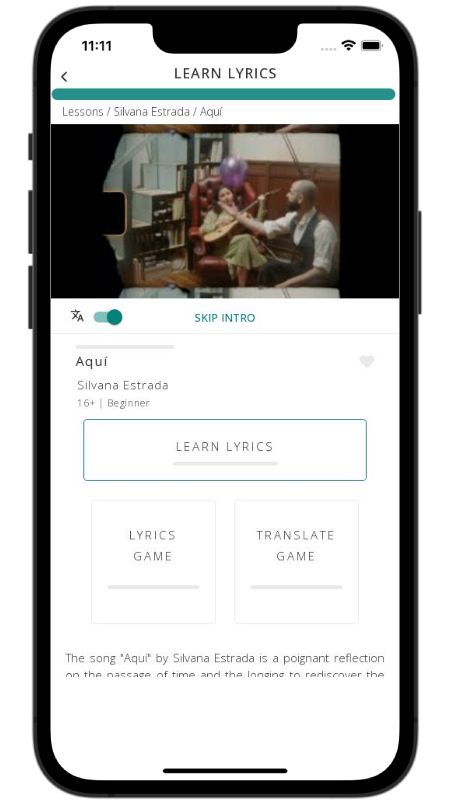
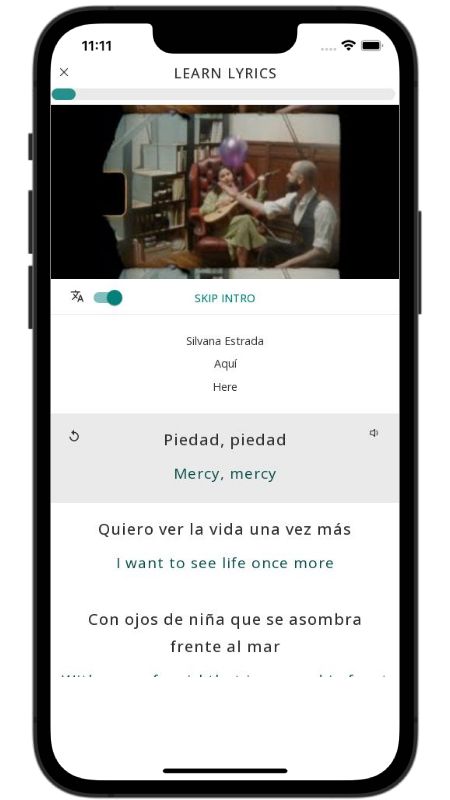
Aquí Lyrics in English by Silvana Estrada
Irremediablemente translates to "irremediably" or "incurably." It's a strong adverb that conveys a sense of being in a state that cannot be fixed or changed.
In Silvana Estrada's song, the speaker uses it to express a profound acceptance of her current state, singing "Pido por saberme irremediablemente así" (I ask to know myself irremediably this way) and "Pido por saberme irremediablemente aquí" (I ask to know myself irremediably here). It highlights a deep, unchangeable connection to her present self and place, making it a poignant and memorable word.
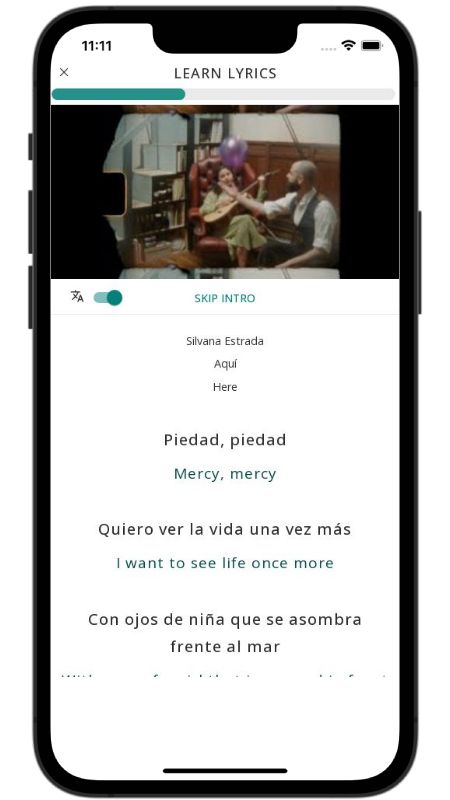
Silvana Estrada’s song "Aquí" feels like opening a window to the soul of someone who is both wide-eyed and weary. With each cry of piedad (mercy), she begs for the chance to see the world again through the innocent excitement of a child at the seashore. She longs for the small, everyday miracles hidden in a cup of coffee or the morning newspaper and hopes to accept herself irremediablemente — hopelessly, unchangeably — just as she is.
Yet behind the gentle melody lurks a quiet urgency; Estrada confesses she is running out of days to rescue the beauty she once overlooked. Time, personified as a relentless god tapping out unwanted rhythms, pushes her forward. In repeating "aquí" (here), she tries to anchor herself in the present moment, choosing wonder over regret. The result is a heartfelt meditation on growing up, letting go of fear and learning to cherish the ordinary sparks of magic that surround us every day.