Love Story Lyrics in English by Indila
d'antan is a beautiful, literary way to say "of yesteryear" or "of old." It's a word that evokes a deep sense of nostalgia and times gone by.
In the song, the story begins with a man looking at a photo d'antan (a photo from yesteryear) while he waits for his lost love. Using this word instead of a more common one like vieux (old) adds a layer of poetry and timeless romance to his devotion, perfectly setting the scene for this poignant love story.
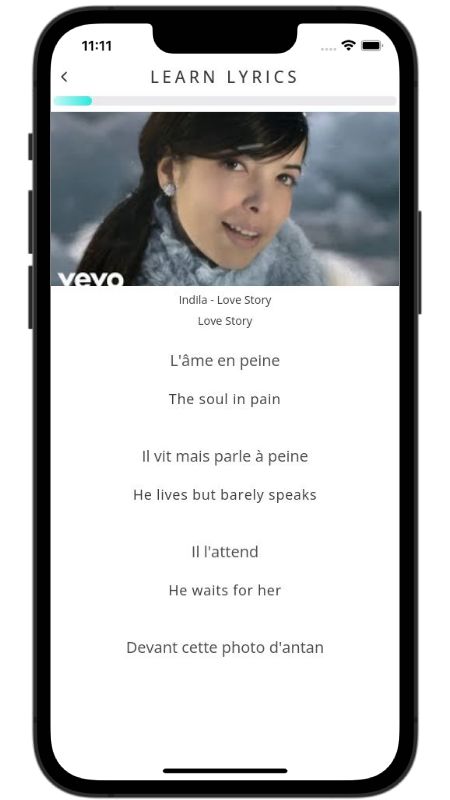
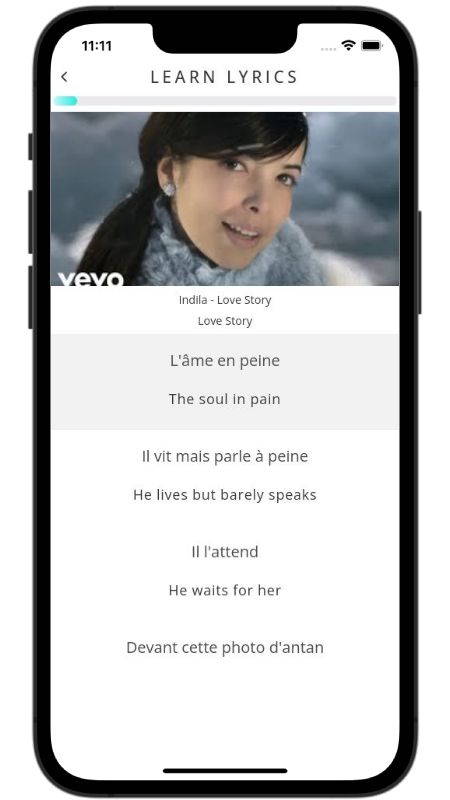
This song tells a dramatic story from two different points of view. First, we meet a man whose soul is in pain, "L'âme en peine". He barely speaks and waits for a woman he loves, staring at an old photograph and holding a single rose. The lyrics defend him against anyone who might judge him, insisting, "Il, il n'est pas fou / Il l'aime c'est tout" (He, he's not crazy / He just loves her, that's all). He sees her everywhere and waits for her, standing up, ready.
Then, the perspective flips. A woman's voice breaks in, full of regret. She asks him to take her hand and hold her tight, but admits she's made a mistake: "J'ai été trop bête" (I was too foolish). She feels she no longer knows how to love. The song builds to a powerful promise that love can make a "fou un roi" (a fool into a king) and that this story is worth fighting for, even if it means offering up her "dernier souffle de vie" (last breath of life).