Feuille D'automne Lyrics in English by Indila
Déraisonne is a powerful French verb that means 'to lose one's reason' or 'to act irrationally'. It's formed by adding the prefix dé- (un-) to the word raison (reason), creating a word you won't hear in everyday conversation.
In this melancholic song, Indila sings "Et si parfois je déraisonne, ton absence est mon seul hiver" (And if sometimes I lose my reason, your absence is my only winter). She uses this beautiful word to express how the pain of being separated from a loved one makes her feel like she's going mad, linking her emotional turmoil to the coldness of winter.
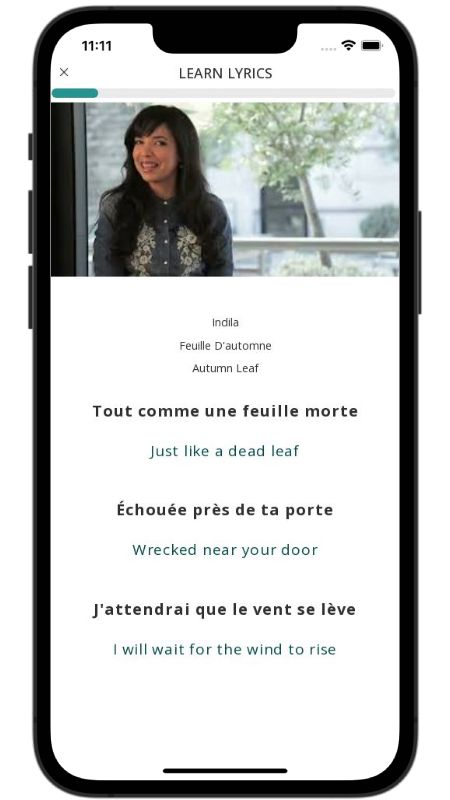
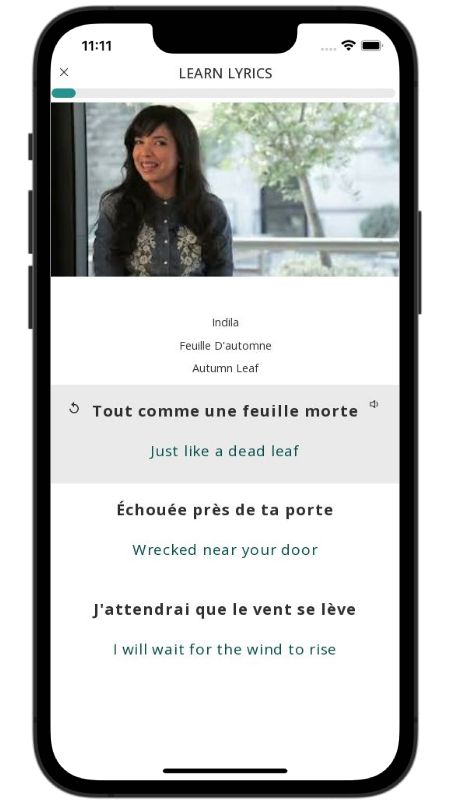
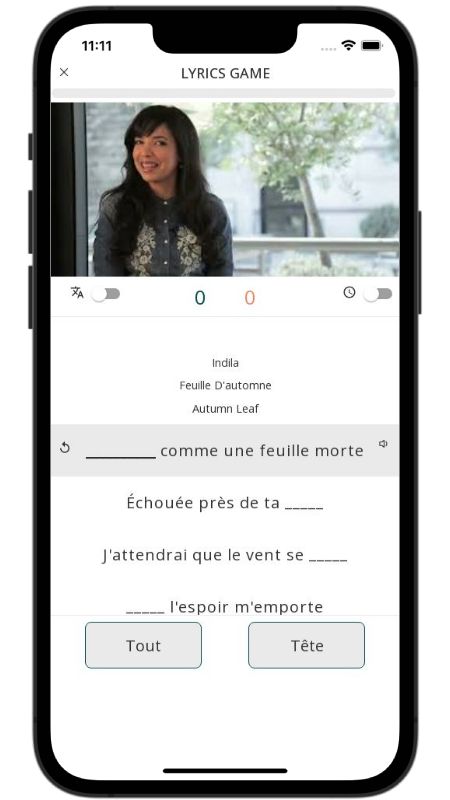
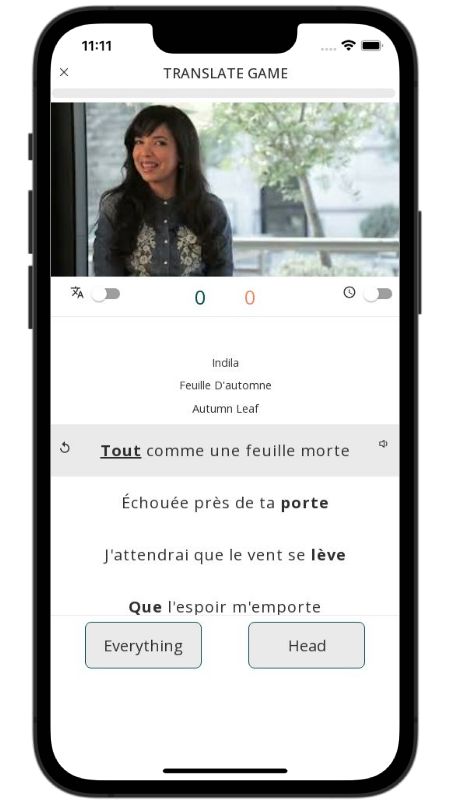
In this graceful French pop track, French singer Indila compares herself to a dried-up fallen leaf stranded right on someone's doorstep: "Tout comme une feuille morte / Échouée près de ta porte" (Just like a dead leaf / Washed up near your door). Instead of giving in to gloom, she sits beneath a weeping willow and patiently waits for a gust of wind to lift her up toward better days. She literally tracks her feelings through the weather. Coldness and autumn mirror being apart, spelled out in the striking line "Ton absence est mon seul hiver" (Your absence is my only winter). It is a clever twist: physical winter does not bother her half as much as an empty room.
There is also a sweet, whimsical side to her waiting game. She describes daydreaming with her head in the clouds, humming along whenever church bells chime: "Tête en l'air je fredonne / Quand les carillons sonnent" (Head in the clouds I hum / When the chimes ring). In French, the idiom avoir la tête en l'air literally means having your head in the air, meaning you are scatterbrained or daydreaming. As sunny days roll in, she greets her companion and decides that a whole lifetime feels as short as a single day on earth ("Toute une vie n'est qu'un seul jour sur terre"). By the final lines, she loses count of the hours under her willow tree, rocked until dawn because it simply feels warmer outside.