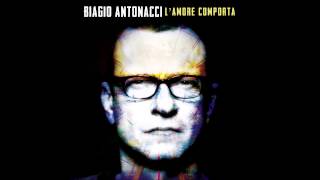
L'amore Muore Lyrics in English by Biagio Antonacci
Cero literally means "zero" in Italian, but in this context, it refers to a "candle" or "votive candle." This double meaning makes it an interesting word choice.
In the song, the line "Accendi un cero che l'amore muore" translates to "Light a candle, because love dies." It evokes the imagery of lighting a candle for a lost cause or a fading hope, adding a poignant layer to the theme of love's demise.
Biagio Antonacci builds this whole song around one blunt warning: "Non hai capito che l'amore muore" (You haven't understood that love dies). He repeats it so many times it stops sounding like a lyric and starts sounding like someone shaking you by the shoulders. The other refrain is darkly funny: "Accendi un cero che l'amore muore" (Light a candle, because love dies). Lighting a candle, accendere un cero, is what Italians do in church for someone, and it is also a jokey way of saying "say a prayer, you'll need it".
The verses are a list of reasons to be worried. There are "troppi detti inutili" (too many useless sayings) in bars "che fanno la politica" (that talk politics), "sempre poco sonno" (always too little sleep) and "sempre case in fiamme" (always houses on fire). Then he turns on the listener: "Hai fatto i conti simulando perdite" (you did the math pretending to have losses). That is a sharp line about someone who plays the victim to come out ahead.
The ending changes tone completely. It becomes a letter, "Come stai?" (How are you?), written "da quest'angolo di questo paradiso detto Africa" (from this corner of this paradise called Africa), where he says "ho ritrovato la mia anima" (I found my soul again) and talks to God "come con mio padre" (like with my father). After all that noise, the answer to love dying seems to be stepping far away from it.