Fils De Joie Lyrics in English by Stromae
Déshumanisent means "they dehumanize". It's a strong, evocative verb that you rarely encounter in pop songs, making it instantly stand out.
In this poignant song, Stromae uses déshumanisent to describe the cruel way society treats his mother, a sex worker, stripping her of her dignity and personhood. It captures the song's central theme of empathy and the painful gap between seeing someone as a person versus an object, turning a complex social issue into a single, powerful word.
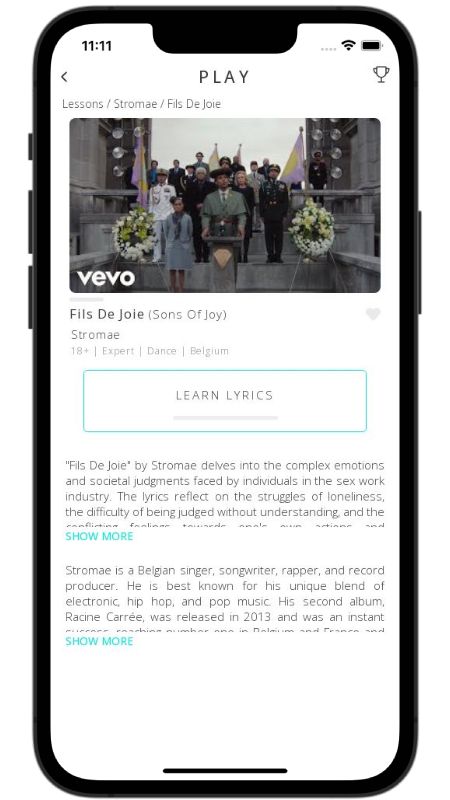
Stromae has a special talent for making you dance to some really serious topics, and "Fils De Joie" is a perfect example. The song is a fictional tribute to a sex worker, told from the perspectives of all the different people in her life, including her son. The title itself is a clever play on words: "fille de joie" is a French term for a prostitute, so "fils de joie" means "son of a prostitute." The son is the song's main voice, and he defends his mother fiercely. He sings, "J'suis un fils de pute, comme ils disent" (I'm a son of a whore, as they say), taking a common insult and turning it into a badge of honor for his mother, who he calls "un héros" (a hero).
Throughout the song, Stromae switches characters to show how society treats this woman. We hear from a dismissive client, a self-pitying pimp who complains, "Pourquoi tout l'monde me déteste? / Alors qu'c'est moi qui les nourris" (Why does everyone hate me? / When it's me who feeds them), and even a condescending police officer. Each character reveals their own hypocrisy, judging the woman while also depending on her. But the son's voice always cuts through, full of pride and love for the mother everyone else looks down on.