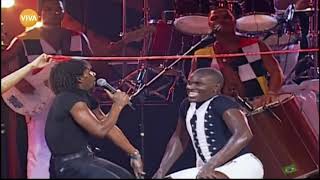
Ariga Tchan Lyrics in English by É O Tchan
Espada-shi is a playful, portmanteau word created by combining the Portuguese word "espada" (sword) with the Japanese suffix "-shi" (master or expert).
In the context of the song, which blends Brazilian and Japanese cultural references, it's used to refer to a "sword-master" or a skilled warrior, fitting the ninja and samurai themes. It's a unique and memorable word that highlights the song's fusion of cultures.
É O Tchan dress their usual axé-pagode dance formula in a Japan costume for "Ariga Tchan," and the joke sits right in the chorus: "A dança é fácil" ["The dance is easy"], "Não tem bicho papão" ["There's no boogeyman"], "Vem lá da Ásia" ["It comes from Asia"], "Vem das bandas do Japão" ["It comes from Japan"]. They rename the move "Todo mundo ligado na dança da gueixa" ["Everybody hooked on the geisha dance"], and the title itself is a pun on "arigatô" — sung straight through as "Arigatô, saionará" ["Arigatô, sayonara"].
The back half hands the mic to a "samurai" who "Samurai quer ver bumbum mexer" ["Samurai wants to see butts move"] and "Samurai quer sushi pra comer" ["Samurai wants sushi to eat"], right down to a partner threatened with becoming dinner: "Eu vou fazer um sushi de você" ["I'm going to make sushi out of you"]. None of it is meant literally — it's carnival-block novelty dressed in kimono imagery, built to get a crowd moving rather than to say anything about Japan.