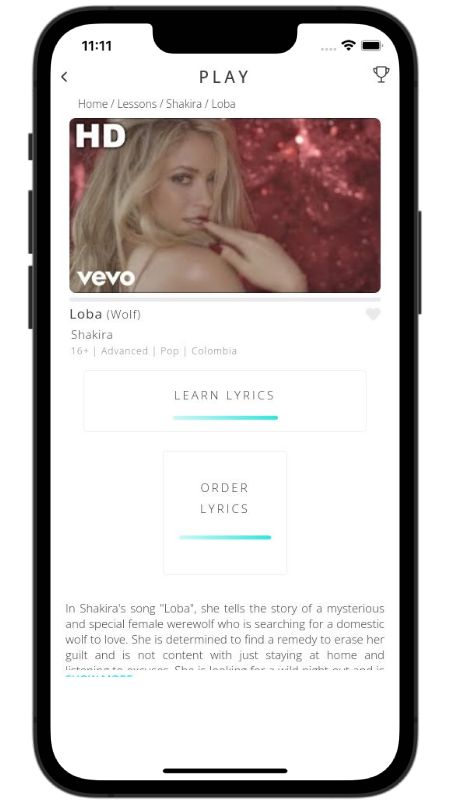
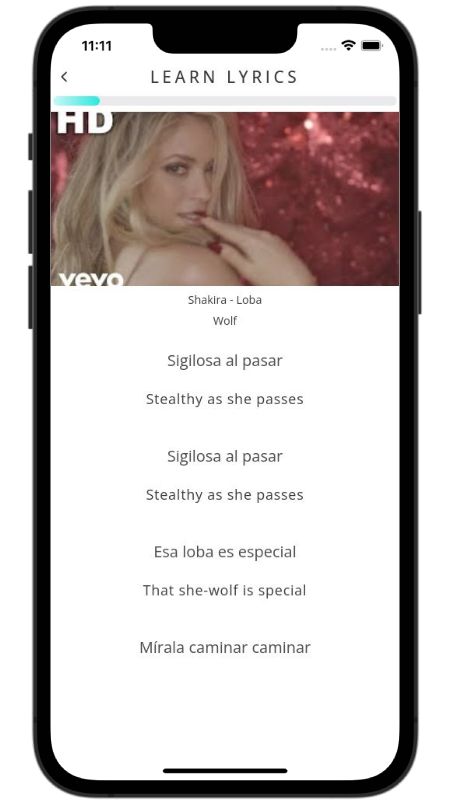
Loba Lyrics in English by Shakira
Licántropa is the female form of licántropo, meaning 'werewolf' or 'lycanthrope'. It's a rare and powerful word that draws from ancient myths of human-to-wolf transformation, making it a unique find in a pop song.
In "Loba," Shakira elevates the central metaphor of the 'she-wolf' to a mythical level by singing "Quién no ha querido a una diosa licántropa" (Who hasn't wanted a werewolf goddess?). This word perfectly captures the song's theme: a woman embracing her wild, primal instincts and mysterious nocturnal power, making her both desired and untamable.
Shakira trades domestic boredom for a night out on the hunt in this high-energy pop track. She is completely done sitting on the sofa watching TV and accepting half-hearted apologies: "La vida me ha dado un hambre voraz / Y tu apenas me das caramelos" ("Life has given me a ravenous appetite / And you barely give me candy"). Instead of settling for scraps, she unleashes her inner she-wolf to roam the neighborhood, armed with high heels and a mission to find someone exciting before going to sleep.
Her humor shines all over the lyrics. She jokes about carrying a special radar to spot single men, plus the fire department's phone number ("el número de los bomberos") just in case things get too wild. She is not after handsome snobs or wealthy spoiled boys; she bluntly announces her plan to "pasarla muy bien y portarme muy mal" ("have a great time and behave very badly"). It is a playful, bold story about taking control, stepping out of the shadows, and hunting down some fun on your own terms.









![Waka Waka (Esto Es Africa) [K-Mix] Lyrics Translation](https://img.youtube.com/vi/fSNxuAxjBCg/mqdefault.jpg)