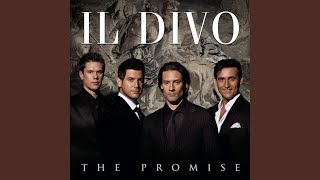
Hola Lyrics in English by Il Divo
Más allá literally means "beyond" or "further on." However, in this song, it takes on a much deeper, more poignant meaning, referring to "the afterlife" or "the great beyond."
The singer is calling out from what seems to be the afterlife, trying to connect with someone he's lost. Phrases like "Hola desde el más allá" (Hello from the beyond) and "No hay tiempo más allá" (There is no time beyond) give the song a haunting and ethereal quality, making this common phrase uniquely impactful here.
Have you ever wanted to reach out to someone from your past, even if you know it's probably too late? That's exactly what Il Divo's "Hola" is all about. The singer is calling out to an old love, starting with a simple "¿Qué tal? Soy yo" [How are you? It's me]. He wonders if they could meet again to "hablar del ayer" [talk about yesterday], even though he admits he doesn't know what to think about the saying that time heals everything.
It's a really emotional song, as he confesses to living "envuelto en un sueño de un pasado más feliz" [wrapped in a dream of a happier past]. He even apologizes, saying "Perdóname si yo te rompí el corazón" [Forgive me if I broke your heart]. The distance between them now feels like "más de mil años luz" [more than a thousand light-years], and he's calling from "el más allá" [the beyond], not knowing where she is, and getting no answer. It's a powerful look at regret and longing for a connection that might be lost forever.