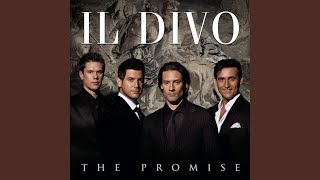
Historia De Un Amor Lyrics in English by Il Divo
Adorarte means "to adore you." While amar (to love) is common, adorar elevates the feeling to a level of deep reverence and devotion, almost spiritual in its intensity.
In "Historia De Un Amor," the singer declares, "Adorarte para mi fue religión" (To adore you was a religion for me). This powerful metaphor highlights the profound, almost sacred, nature of his love, making it a captivating and memorable word choice that goes beyond simple affection.
Il Divo take on one of the most recorded boleros in Spanish-language music, and their version leans into the drama with a full orchestra behind it. The song is a monologue to someone who's already gone. It opens with "Ya no estas mas a mi lado corazón" ("You're no longer by my side, my heart"), and from there the singer keeps circling back to one question: why love someone this much only to lose them?
The title comes from the hook: "Es la historia de un amor" ("It's the story of a love"), followed by "Como no hay otra igual" ("Like no other"). The song backs up that claim by piling on the pain. "Que le dio luz a mi vida" ("That gave light to my life"), then "Apagándola después" ("Then put it out"). That's the whole song in one image: love as a light somebody switched off. By the time he repeats "Adorarte para mi fue religión" ("Adoring you was religion to me"), it doesn't sound like exaggeration anymore. That's what a bolero is for: singing heartbreak like it's the biggest thing that has ever happened.