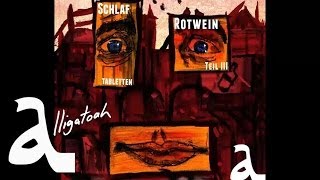
Musik Ist Keine Lösung Lyrics in English by Alligatoah
Wunderknabe literally translates to "wonder boy" or "prodigy". It's a somewhat old-fashioned and evocative term that isn't commonly found in everyday song lyrics, making it stand out.
In the context of Alligatoah's satirical song, the word is used sarcastically. The narrator challenges the aspiring protest singer, asking, "Wenn du alles soviel besser weißt, du Wunderknabe, warum sitzt du nicht im Bundestag, hm?" (If you know everything so much better, you wonder boy, why aren't you in parliament, hm?). This highlights the cynical tone of the song, questioning the effectiveness and sincerity of activism through music.
Alligatoah's "Musik Ist Keine Lösung" [Music Is No Solution] is a really clever, cynical take on the idea that music can change the world. He's basically telling off an imaginary artist, Kaliba, who thinks their critical songs can fix things. Alligatoah argues that powerful forces, with their "Monopol der Macht" [monopoly of power] and "Korruption" [corruption], are just too strong. He sarcastically dismisses the idea of a modern-day David versus Goliath, saying that's just from a "Märchenbuch voller erlogenem Quatsch" [fairy tale book full of made-up nonsense].
He even pokes fun at famous protest songs, asking if an "Anti-Kriegs-Klangerzeugnis" [anti-war sound product] is really "ganz was Neues" [something completely new], reminding us that "John Lennon hat das schon in den 70ern gemacht" [John Lennon already did that in the 70s]. Alligatoah's blunt message is that while people might feel hopeful at a festival, they'll "morgen wachen sie in ihrer Kotze auf" [wake up in their puke tomorrow]. He believes people are more interested in arguing about who's known the artist longer than actually taking the song's message to heart. Ultimately, he suggests that artists like Kaliba actually need the world's problems to have something to sing about, concluding with the harsh truth: "Die Menschen sind nicht böse, die Menschen sind nur dumm" [People aren't evil, people are just dumb].