LA PAURA DEL BUIO Lyrics in English by Måneskin
Brinderò comes from the verb brindare, meaning "to toast" or "to make a toast". It's a celebratory word, often associated with raising a glass to someone or something.
In this song, Måneskin uses it with a dark twist. The lyrics say, "Puoi darmi del pazzo, bastardo, malato / Io ci brinderò sopra col vino" (You can call me crazy, bastard, sick / I will toast to it with wine). This shows a defiant attitude, toasting even to insults, which makes the word particularly interesting and memorable in this context.
"La paura del buio" means "the fear of the dark", and the dark here is other people's judgement.
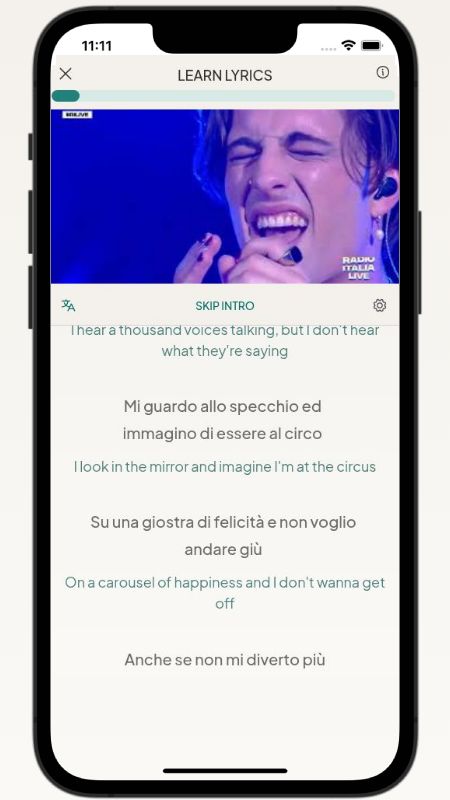
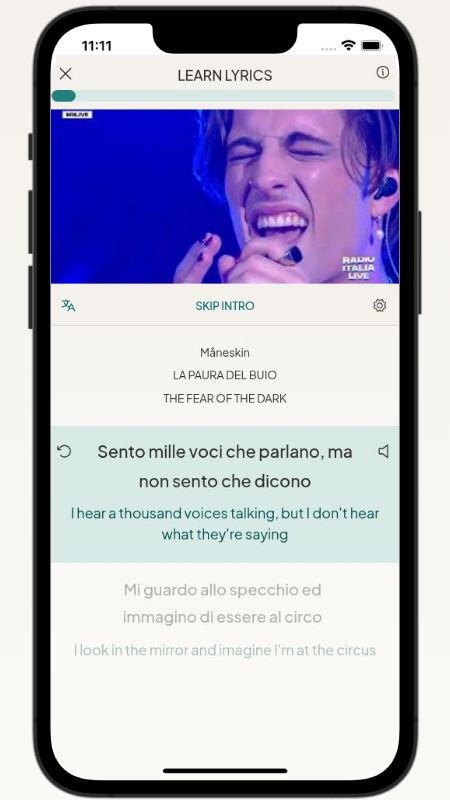
The song opens inside that noise. A thousand voices are talking and the singer cannot make out a word of it. He looks in the mirror and sees a circus act, spinning on a carousel of happiness he does not want to step off, even though it stopped being fun a while ago. Some days he feels like a miracle, some days ridiculous, and the two feelings arrive without warning.
Then the chorus turns it into a dare. Take me, bite me, spit on me, buy me, sell me, do whatever you want. None of it will make him afraid of the dark, not even flat on the ground and wrecked. The line he keeps returning to flips the accusation around: you are the one who is scared of the dark, not us. He has been rehearsing his waltz with the devil since he was small, so calling him crazy or sick lands as a compliment he will raise a glass to. He knows the people who hated him will end up singing his name anyway.
The last section drops the volume and speaks to one person instead of a crowd. She will come back tired, with marks on her arms and on her face, left alone on the boat. She will come back with her hands clasped, which is the posture of asking. He repeats it until it sounds less like a prediction and more like something he needs to believe.
For learners, this song is a good place to meet Italian imperatives with attached pronouns. "Prendimi", "mordimi", "sputami", "comprami" and "vendimi" all pack the verb and the object "me" into a single word, which is how commands usually sound in everyday Italian.