Wenn Du Liebst Lyrics in English by Clueso, Kat Frankie
Bodenlose translates to "bottomless" or "abysmal." It's a striking and evocative word that immediately grabs attention.
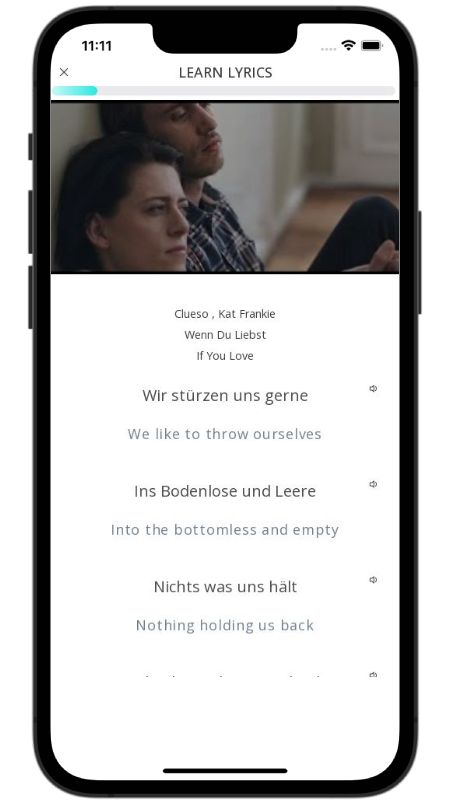
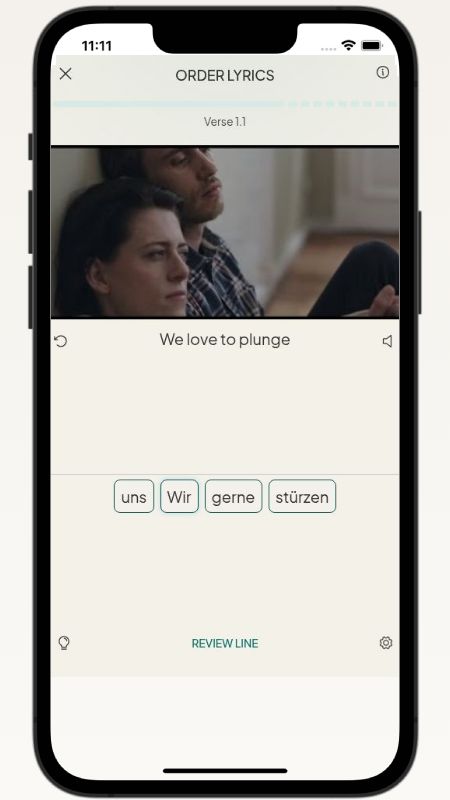
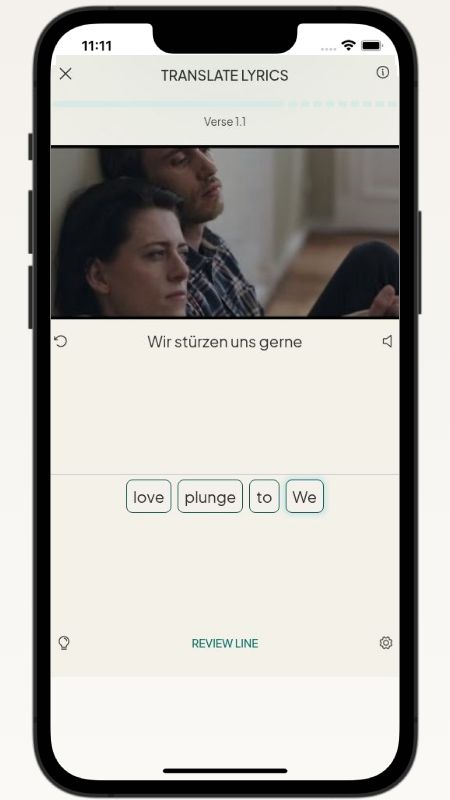
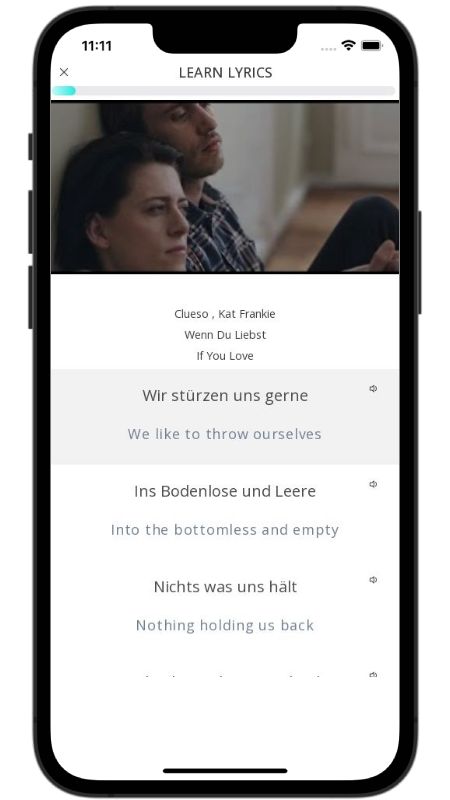
In the song, Clueso sings, "Wir stürzen uns gerne ins Bodenlose und Leere" (We like to plunge into the bottomless and empty). This powerful imagery suggests a willingness to dive headfirst into the unknown, into a void, highlighting a sense of recklessness and passion in love. It's a word that conveys depth and a touch of danger, making it very memorable.
This song describes a relationship that feels amazing but is probably doomed. Clueso and Kat Frankie sing about a love that thrives on chaos. They like to throw themselves "Ins Bodenlose und Leere" (into the bottomless and empty) and find beauty only in things that are "kaputt ist / Und keinem gefällt" (broken / and that nobody likes). Their connection is most intense when things are dramatic; as they put it, "Nur wenn es brennt sind wir zusammen" (Only when it's burning are we together).
They see their love as a piece of music without a chorus: "Wir sind lebendige Strophen / ... Und es gibt keinen Refrain" (We are living verses / ... And there is no chorus). It's all beautiful, complex moments, but there's no stable, repeating part to hold it together. Despite this, it's easy for them to believe in the relationship and ignore the problems. But a quiet voice inside keeps whispering the classic, painful advice: "Wenn du sie liebst / Dann lass sie gehen" (If you love her / Then let her go). It's a conversation between two people who know their intense, fiery connection might be unsustainable, even if they don't want to admit it.