Learn English With Bob Marley with these 23 Song Recommendations (Full Translations Included!)
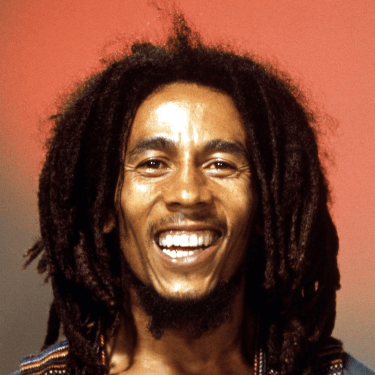
Bob Marley fue uno de los artistas más influyentes de la historia del reggae y una figura clave de la música jamaicana. Sus canciones combinaron ritmos inolvidables con mensajes de paz, amor, esperanza y justicia social.
Con clásicos como No Woman, No Cry, One Love y Three Little Birds, su música sigue inspirando a millones de personas en todo el mundo. Aprender inglés con sus letras es una excelente forma de descubrir expresiones cotidianas mientras disfrutas de un estilo musical único.
¡Seguro que has escuchado el estribillo de este clásico del reggae jamaiquino! Hay una confusión muy común con el título: «No, woman, no cry» [No, mujer, no llores] no significa «si no hay mujer, no hay llanto», sino que es la forma en que Bob Marley le dice con cariño a una mujer que no derrame lágrimas («Here little darling, don't shed no tears» [Aquí, pequeña querida, no derrames lágrimas]). En lugar de borrar las dificultades, la canción viaja al pasado para recordar los días duros en Trenchtown, un barrio humilde de Kingston, donde la gente se reunía en los patios comunitarios («In the government yard in Trenchtown» [En el patio del gobierno en Trenchtown]) viendo a la gente buena mezclarse con los hipócritas.
Lo que hace especial a esta letra son sus detalles cotidianos y reales. Bob nos habla de amigos que se quedaron en el camino, pero también de momentos cálidos y sencillos: un amigo llamado Georgie encendiendo fuego con madera de palo de tinte («Georgie would make the fire light / As it was / Logwood burnin' through the nights» [Georgie encendía el fuego / mientras la madera de campeche ardía durante las noches]) y la comida compartida preparando gachas de maíz («cook cornmeal porridge» [cocinar gachas de maíz]). Sin lujos y caminando a pie («My feet is my only carriage» [Mis pies son mi único carruaje]), la promesa final se siente honesta y reconfortante: «Ev'rything's gonna be alright» [Todo va a salir bien].
¿Listo para cantar un clásico del reggae? Desde Jamaica, Bob Marley nos trae "One Love", un llamado directo y sin rodeos a la unidad. El estribillo lo deja claro desde el primer segundo con "One love, one heart / Let's get together and feel alright" [Un amor, un corazón / Unámonos y sintámonos bien]. A pesar del ritmo alegre y relajado, la letra no ignora el dolor del mundo: Marley pide escuchar el llanto de los niños con "Hear the children crying" [Escucha a los niños llorar] e insiste en responder a la maldad agradeciendo a Dios con "Give thanks and praise to the Lord" [Den gracias y alaben al Señor].
Marley también se pone serio y lanza una pregunta bien directa: "Is there a place for the hopeless sinner / Who has hurt all mankind just to save his own?" [¿Hay un lugar para el pecador sin esperanza que ha herido a toda la humanidad solo para salvar lo suyo?]. Habla de prepararse para el juicio final cuando dice "fight this holy Armageddon" [luchar en este Armagedón sagrado] y advierte que nadie puede esconderse del Creador ("There ain't no hidden place from the father of creation"). Es una canción espiritual, optimista y desafiante al mismo tiempo, perfecta para practicar tu vocabulario en inglés mientras disfrutas del ritmo.
Marley no promete una mansión. Promete una cama. "We'll share the shelter, of my single bed" (Compartiremos el refugio de mi cama individual) es la línea que sostiene la canción entera: una cama de una plaza, un techo, y se acabó la lista. La siguiente la remata sin adornos, "For Jah provide the bread" (porque Jah da el pan), y ahí queda dicho que del resto se encarga la fe. Es una canción de amor escrita desde la pobreza, y por eso convence.
Lo raro es que el estribillo no afirma nada, pregunta. "Is this love that I'm feelin'?" (¿Es esto amor lo que estoy sintiendo?) vuelve una y otra vez hasta que uno entiende que él no está seguro, o que todavía no quiere decirlo en voz alta. Luego insiste, "I got to know, got to know, got to know now" (tengo que saber, y ahora). Y cuando por fin se decide, lo dice como un jugador de cartas: "So I throw my cards on your table" (así que pongo mis cartas sobre tu mesa). Le tomó media canción.
O refrão parece um cartão de boas-festas: "One love, one heart" (um amor, um coração), "Let's get together and feel alright" (vamos nos juntar e ficar de boa). Mas Bob Marley escreveu isso numa Jamaica dividida por violência política, e a letra não finge que está tudo bem. Logo no começo ele pede para você "Hear the children crying" (ouvir as crianças chorando), e a resposta dele às fofocas é dar de ombros: "Let them all pass all their dirty remarks" (deixa eles passarem com todos os comentários maldosos). Repare no "a-get" de "Let's a-get together and feel alright": é um jeito jamaicano de esticar o verbo para caber no ritmo, não um erro.
A parte mais dura é uma pergunta, e ele não responde: "Is there a place for the hopeless sinner" (existe lugar para o pecador sem esperança), aquele que machucou todo mundo para se salvar. Depois vem a fé rastafári, com o "holy Armageddon" (santo Armagedom), a batalha final do bem contra o mal, e um pedido bem concreto: "Have pity on those whose chances grow thinner" (tenha pena daqueles cujas chances ficam cada vez menores). Para quem estuda inglês, vale notar o "ain't" de "There ain't no hidden place" (não existe lugar escondido): é a negação informal, e a dupla negativa aqui reforça a ideia em vez de cancelar.
Название этой песни часто понимают неправильно. На ямайском патуа фраза «No, woman, no cry» на самом деле означает «Женщина, не плачь». Это нежная песня-воспоминание. Боб Марли обращается к женщине, утешая её и вспоминая их общую юность в Тренчтауне, бедном районе Кингстона на Ямайке. Он поёт о том, как они сидели во дворе государственного жилья и наблюдали за людьми: «Oba, ob-serving the hypocrites / As they would mingle with the good people we meet» («Наблюдая за лицемерами, / Как они смешиваются с хорошими людьми, которых мы встречаем»). Это воспоминания о прошлом, в котором были и потери, и дружба: «Good friends we've had, good friends we've lost / Along the way» («Хорошие друзья у нас были, хороших друзей мы потеряли / На нашем пути»).
Несмотря на трудности, эти воспоминания полны тепла и чувства общности. Марли описывает очень конкретные детали их жизни, например, как их друг разжигал огонь, чтобы они могли приготовить еду: «Then we would cook cornmeal porridge / Of which I'll share with you» («Потом мы готовили кашу из кукурузной муки, / Которой я поделюсь с тобой»). Он говорит о своей бедности и решимости двигаться вперёд с помощью строки «My feet is my only carriage / So I've got to push on through» («Мои ноги — моя единственная повозка, / Так что я должен продолжать идти»). В конечном счёте, это песня надежды. Это обещание, что, несмотря на все трудности, «Everything's gonna be alright» («Всё будет хорошо»).
¡Qué temazo para empezar el día con buena energía! El jamaiquino Bob Marley nos regala un mensaje directo y sin rodeos: no te preocupes por nada. La escena empieza muy temprano con "Rise up this morning / Smiled with the rising sun" (Me levanté esta mañana / Le sonreí al sol naciente). De repente, tres pajaritos se posan en la puerta ("Three little birds / Pitch by my doorstep") y se ponen a cantar melodías puras. En inglés jamaiquino, el verbo pitch aquí significa simplemente posarse o asentarse en un lugar.
Todo el tema gira alrededor de una promesa superpegajosa: "Don't worry / About a thing / 'Cause every little thing / Gonna be all right" (No te preocupes / Por nada / Porque cada pequeña cosa / Va a estar bien). Fíjate en la palabra gonna, que es la forma informal y hablada de going to (va a). Marley canta como si esos pájaros le estuvieran dictando la letra directamente al oído para que nos llegue a nosotros. Es imposible escuchar este estribillo y no sentir que las cosas van a salir bien.
Mach dir keine Sorgen! Das ist die einfache, aber kraftvolle Botschaft in Bob Marleys weltberühmtem Song „Three Little Birds“. Der legendäre Reggae-Künstler aus Jamaika schenkt uns hier eine Hymne des Optimismus. Der Song fühlt sich an wie eine warme Umarmung und erinnert uns daran, dass am Ende alles gut wird, mit der berühmten Zeile: 'Cause every little thing gonna be all right'. Es ist die perfekte Melodie, um den Tag mit einem Lächeln zu beginnen und alle Sorgen loszulassen.
Die Inspiration für diesen Song ist wunderschön und einfach. Marley singt davon, wie er morgens aufwacht und von drei kleinen Vögeln an seiner Haustür begrüßt wird. Diese Vögel sind nicht nur einfach da, sie singen ihm „süße Lieder“ und überbringen ihm eine Botschaft der Beruhigung. Es ist eine Erinnerung daran, auf die kleinen, schönen Dinge im Leben zu achten und darauf zu vertrauen, dass das Universum für uns sorgt.
„One Love“ von Bob Marley aus Jamaika ist der ultimative Reggae-Klassiker, der dich sofort mitreißt. Die Botschaft ist direkt und ohne Schnickschnack: Marley ruft nach weltweiter Einheit mit der einfachen Zeile „One love, one heart / Let's get together and feel alright“ („Eine Liebe, ein Herz / Lasst uns zusammenkommen und uns gut fühlen“). Doch hinter dem entspannten Rhythmus steckt echter Ernst. Wenn Marley singt: „Hear the children crying“ („Hört die Kinder weinen“), erinnert er daran, dass die Welt voller Not ist und dass Zusammenhalt die einzige Antwort darauf bleibt.
Besonders spannend wird der Text, wenn Marley klare Kante zeigt. Er fragt direkt heraus: „Is there a place for the hopeless sinner / Who has hurt all mankind just to save is own?“ („Gibt es einen Platz für den hoffnungslosen Sünder, der der ganzen Menschheit geschadet hat, nur um seine eigene Haut zu retten?“). Er ruft dazu auf, sich gemeinsam der Endzeit zu stellen: „Let's get together to fight this holy Armageddon“ („Lasst uns zusammenkommen, um dieses heilige Armageddon zu bekämpfen“). Mit „Armageddon“ meint er die biblische Entscheidungsschlacht, also den ultimativen Kampf zwischen Gut und Böse. Am Ende bleibt sein Rat simpel und kraftvoll: Schlechtes Gerede ignorieren, zusammenhalten und „Give thanks and praise to the Lord“ („Dem Herrn danken und ihn preisen“).
¿Alguna vez has sentido una calma tan perfecta que te da miedo moverte para no arruinarla? De eso va este tema del jamaiquino Bob Marley. Comienza con una advertencia simpática y muy directa: «Please don't you rock my boat» (Por favor, no muevas mi bote). En inglés, la expresión «rock the boat» significa alterar el orden o causar problemas cuando todo marcha bien, pero aquí Bob la usa casi como una súplica cariñosa. Las cosas están en su punto exacto («I like it like this» [Me gusta así]), y lo único que pide es que nadie altere esa paz que le llena por dentro.
Esa serenidad da paso a una alegría tremenda cuando canta «You satisfy my soul» (Satisfaces mi alma). Bob no se complica con rodeos poéticos extraños y recurre a una metáfora genial: encontrarse con esa persona al dar la vuelta a la esquina lo hace sentir como un «sweepstake winner» (ganador de la lotería o de un sorteo). Es una comparación cotidiana y muy visual: la pura emoción de quien acaba de ganar un premio gordo sin esperarlo. Todo responde a una ley básica de causa y efecto, como él mismo dice: «To every little action there's a reaction» (A cada pequeña acción hay una reacción). La reacción, en su caso, es pura felicidad tanto por la mañana como por la noche.
Esta canção do jamaicano Bob Marley é como um abraço caloroso. É uma daquelas músicas que você coloca para tocar quando precisa de um lembrete gentil de que, no final, as coisas vão dar certo. A mensagem principal é repetida várias vezes, quase como um mantra para acalmar a alma: "Don't worry / About a thing / 'Cause every little thing / Gonna be all right" [Não se preocupe / Com nada / Porque toda coisinha / Vai ficar bem].
De onde vem essa mensagem de otimismo? A letra nos conta que o cantor acordou de manhã, "Smiled with the rising sun" [Sorriu com o sol nascente], e encontrou "Three little birds / Pitch by my doorstep" [Três passarinhos / Pousaram na minha porta]. Esses passarinhos não estão apenas cantando qualquer canção; eles estão entregando uma mensagem divina e pura, dizendo diretamente: "This is my message to you" [Esta é a minha mensagem para você]. É uma cena simples e poderosa, a natureza falando diretamente conosco para nos tranquilizar.
¿Alguna vez has sentido que te piden demasiada paciencia mientras esperas que las cosas mejoren por arte de magia? Bob Marley escribió este tema directamente para sacudirte los hombros y decirte que no te duermas. El mensaje central no se esconde: "Get up, stand up, stand up for your rights" [Levántate, ponte de pie, defiende tus derechos]. Marley le habla sin rodeos al predicador con "Preacher man, don't tell me heaven is under the earth" [Predicador, no me digas que el cielo está bajo la tierra], criticando esa idea de aguantar injusticias hoy a cambio de una recompensa prometida tras la muerte. Para él, si valoras tu vida, toca pelear por ella aquí y ahora: "look for yours on earth" [busca lo tuyo en la tierra].
El tema se pone todavía más directo cuando denuncia los trucos de quienes dividen a la gente: "sick and tired of your 'ism schism' game" [hartos de su juego de divisiones y doctrinas]. Marley inventa ahí la frase 'ism schism', un juego de palabras genial para burlarse de todas las ideologías e instituciones que fragmentan a las personas. Además, suelta una verdad como un puño con "You can fool some people sometimes, but you can't fool all the people all the time" [Puedes engañar a algunos a veces, pero no puedes engañar a todos todo el tiempo]. En resumen: ponte de pie, no te tragues promesas vacías y defiende lo que te pertenece.
„One Love“ на ямайския реге изпълнител Боб Марли е като топла покана да забравим различията и да се съберем в едно цяло. Основното послание звучи веднага с призива „One love, one heart / Let's get together and feel alright“ („Една любов, едно сърце / Нека се съберем и да се почувстваме добре“). Марли чува плача на децата („Hear the children crying“) и предлага простичко духовно спасение: благодарност към Създателя с думите „Give thanks and praise to the Lord“ („Благодарете и славете Господа“).
Песента обаче не е само безгрижен ритъм, тя има и доста директна, бойна страна. Боб Марли открито пита дали има място за безпощадния грешник, който наранява човечеството само за своя изгода („Is there a place for the hopeless sinner / Who has hurt all mankind just to save his own?“). Той говори за духовен сблъсък с фразата „Let's get together to fight this holy Armageddon“ („Нека се обединим, за да се борим в този свещен Армагедон“) и напомня, че никой не може да се скрие от очите на Твореца. Текстът съчетава ясен зов за мир с твърдо предупреждение към хората, които сеят раздор.
„No Woman, No Cry“ ist eines der bekanntesten Lieder von Bob Marley. Der Titel ist jamaikanisches Patois und bedeutet nicht, was man vielleicht denkt! Es heißt nicht „keine Frau, kein Weinen“, sondern ist eine liebevolle Aufforderung: „Nein, Frau, weine nicht“. Marley singt zu einer Freundin oder Partnerin und versucht, sie zu trösten, indem er sie an ihre gemeinsame Vergangenheit im Viertel Trenchtown in Jamaika erinnert.
Er erinnert sich an die guten und die schlechten Zeiten. Sie saßen zusammen im „government yard in Trenchtown“ [Regierungshof in Trenchtown] und beobachteten die Heuchler. Aber es gab auch wunderschöne Momente der Gemeinschaft, wie als ihr Freund Georgie ein Feuer machte, um „cornmeal porridge“ [Maisbrei] zu kochen, den sie alle teilten. Trotz der Armut, die er mit Zeilen wie „My feet is my only carriage“ [Meine Füße sind mein einziges Gefährt] beschreibt, ist die Botschaft des Liedes voller Hoffnung. Er versichert ihr, dass alles gut werden wird: „Everything's gonna be alright“ [Alles wird gut werden].
Sabe aquele clássico do reggae que todo mundo já cantarolou pelo menos uma vez? Muita gente ouve o jamaicano Bob Marley cantar "No, woman, no cry" e acha que ele está dizendo "sem mulher não há choro". Nada disso! No inglês coloquial jamaicano (patois), a frase significa literalmente "Não, mulher, não chore". Ele está consolando uma companheira e lembrando os dias difíceis que passaram juntos em Trenchtown, um bairro humilde de Kingston onde as pessoas moravam em conjuntos habitacionais chamados de "government yard" [pátio do governo].
As memórias dele são simples e cheias de afeto. Ele lembra de observar a vizinhança, ver os hipócritas se misturarem com gente boa e lamentar os parceiros que ficaram pelo caminho: "Good friends we've had, good friends we've lost along the way" [Bons amigos nós tivemos, bons amigos nós perdemos pelo caminho]. Também lembra do amigo Georgie acendendo uma fogueira com lenha de logwood para fazer mingau de fubá compartilhado: "cook cornmeal porridge of which I'll share with you" [cozinhar mingau de farinha de milho que vou dividir com você]. Marley diz que precisa seguir em frente a pé ("My feet is my only carriage" [Meus pés são minha única carruagem]), mas pede para ela enxugar as lágrimas porque tudo vai ficar bem.
Priprav sa na poriadnu dávku pohody s Bobom Marleym! V piesni "Satisfy My Soul" nám Bob jasne hovorí: "Please, don't you rock my boat, 'Cause I don't want my boat to be rockin'" [Prosím, nekývaj mojou loďou, pretože nechcem, aby sa moja loď kývala]. Je to taká milá prosba, aby sme ho nechali v pokoji a neničili mu tú jeho vnútornú harmóniu. On to má rád presne takto, ako to je: "I like it, like it this, I like it like this" [Mám to rád takto, takto to mám rád].
Vieš, čo je na tom najlepšie? Keď sa objaví tá správna osoba, ktorá mu tú dušu uspokojí. Vtedy sa cíti ako "sweepstake winner" [výherca lotérie]! A to je pocit, ktorý chce zažívať "in the morning" [ráno] aj "in the evening" [večer]. Je to taká jednoduchá, ale silná pieseň o nájdení pokoja a radosti v prítomnosti niekoho, kto ťa robí šťastným. Naozaj krásne!
Bereit für eine Dosis pure Inspiration? "Get Up, Stand Up" von der jamaikanischen Reggae-Legende Bob Marley ist mehr als nur ein Lied, es ist eine kraftvolle Hymne für Gerechtigkeit und Selbstbestimmung. Der Song ist ein direkter Aufruf, nicht passiv zu bleiben und auf Hilfe von oben zu warten. Marley fordert uns auf, aufzustehen und aktiv für unsere Rechte zu kämpfen.
Er kritisiert die Idee, dass man auf ein besseres Leben im Jenseits hoffen sollte, während man auf der Erde leidet. Stattdessen betont er, dass das wahre Leben hier und jetzt stattfindet. Die Botschaft ist klar und universell: Erkenne deinen eigenen Wert, lass dich nicht von leeren Versprechungen täuschen und gib den Kampf für eine bessere Welt niemals auf. Ein echter Motivations-Klassiker!
Mach die Lichter aus und zieh die Vorhänge zu! In diesem gefühlvollen Reggae-Klassiker lädt uns Bob Marley in einen sehr intimen und romantischen Moment ein. Der Song ist eine zärtliche Bitte an eine geliebte Person, eine private und gemütliche Atmosphäre zu schaffen, in der nur das Mondlicht von Jah (Gott in der Rastafari-Kultur) hereinscheint. Es ist die perfekte Kulisse für eine lang erwartete Liebeserklärung.
Marley singt davon, dass er diese Botschaft schon lange für seine Liebste aufbewahrt hat (It's been a long, long time) und nun endlich der richtige Zeitpunkt gekommen ist, seine Liebe zu offenbaren. Der wiederholte Wunsch, ihr good, good lovin' zu geben, ist mehr als nur ein physisches Verlangen. Es ist ein Ausdruck tiefer Zuneigung und einer emotionalen Verbindung, die durch den spirituellen Segen des Mondlichts von Jah noch verstärkt wird. Der Song ist eine wunderschöne Ode an die Liebe, Intimität und den perfekten Moment.
“One Love” di Bob Marley è molto più di una semplice canzone reggae dalla Giamaica. È un vero e proprio inno globale! Il ritornello, “One love, one heart / Let's get together and feel alright” (“Un solo amore, un solo cuore / Stiamo insieme e sentiamoci bene”), è un invito universale all'unità e alla pace. Ma non lasciarti ingannare dalla melodia rilassata. Marley sta facendo un appello serio e profondo a tutta l'umanità.
La canzone ha una forte radice spirituale. Marley ci ricorda di ringraziare il Signore per sentirci bene: “Give thanks and praise to the Lord / And I will feel alright” (“Rendi grazie e lode al Signore / E mi sentirò bene”). Allo stesso tempo, pone domande difficili sulla condizione umana, chiedendosi se ci sia perdono per il “hopeless sinner / Who has hurt all mankind just to save is own” (“peccatore senza speranza / che ha ferito l'intera umanità solo per salvare se stesso”). È un appello a unirsi per combattere un “santo Armageddon” e ad avere pietà per chi ha meno opportunità. È una canzone che chiede amore, ma anche riflessione e azione.
Esta é uma daquelas canções que toda a gente conhece! "One Love" do lendário Bob Marley é muito mais do que uma simples melodia reggae da Jamaica; é um verdadeiro hino à união. A mensagem principal é super clara e direta: "One love, one heart / Let's get together and feel alright" (Um amor, um coração / Vamos juntar-nos e sentirmo-nos bem). É um convite para deixarmos as diferenças de lado e encontrarmos um terreno comum na paz e no amor.
No entanto, a canção não ignora os problemas do mundo. Marley pergunta diretamente se há perdão para os que causam sofrimento para benefício próprio: "Is there a place for the hopeless sinner / Who has hurt all mankind just to save is own?" (Haverá lugar para o pecador sem esperança / Que magoou toda a humanidade só para se salvar a si mesmo?). Ele ouve as "children crying" (crianças a chorar) e apela à união para lutar contra o "holy Armageddon" (sagrado Armagedão), uma batalha final contra o mal. No fundo, é um apelo poderoso à humanidade para se unir, ter compaixão e encontrar a paz através da fé e do amor partilhado.
¿Alguna vez te has quedado sin palabras al ver a alguien que te gusta? De eso va este tema tan pegadizo. El cantante ve a una chica sonreír desde el otro lado de la habitación, pero cuando intenta acercarse, los nervios le ganan: «My emotions start running wi-hild, my tongue gets tied» (Mis emociones se descontrolan, se me traba la lengua). Es una situación súper humana con la que cualquiera se identifica, aunque la timidez le dura poco. Al mirar fijamente sus «big brown eyes» (grandes ojos marrones), pierde la vergüenza por completo.
A partir de ahí, la letra deja las dudas atrás y se vuelve directa y descarada. Pasa a una propuesta llena de calor y energía física pura: «Girl I want to make you sweat, sweat 'till you can't sweat no more» (Chica, quiero hacerte sudar, sudar hasta que no puedas sudar más). Entre el juego de palabras rítmico del coro «A lalalala long» y esa promesa tan atrevida de bailar o entregarse por completo hasta el cansancio, la canción transmite pura diversión y coquetería sin rodeos.
Le titre de cette chanson est souvent mal compris ! Bob Marley ne dit pas que sans femme, il n'y a pas de larmes. C'est tout le contraire. Il s'adresse directement à une femme et lui dit de ne pas pleurer : "No, woman, no cry" (Femme, ne pleure pas). C'est un message de réconfort et d'espoir, même quand les temps sont durs. Marley se souvient de sa vie passée dans le quartier de Trenchtown en Jamaïque, un endroit bien réel. Il se rappelle des moments simples, assis avec ses amis dans la cour d'un logement social, "in the government yard in Trenchtown" (dans la cour du gouvernement à Trenchtown).
Il évoque des souvenirs très précis : les feux de camp que son ami Georgie allumait, l'odeur du bois qui brûlait toute la nuit et le porridge de maïs qu'ils partageaient. C'étaient des moments de communauté et de solidarité, malgré la pauvreté. Il le dit clairement avec la phrase "My feet is my only carriage" (Mes pieds sont mon seul moyen de transport). Mais même en se souvenant des amis perdus en chemin, "good friends we've lost / Along the way" (de bons amis que nous avons perdus / en cours de route), le message reste positif. Il promet que tout ira bien, en répétant comme un mantra : "Ev'rything's gonna be alright" (Tout ira bien).
In "Satisfy My Soul" singt die jamaikanische Reggae-Legende Bob Marley über ein Gefühl von tiefem Glück und Zufriedenheit. Mit der berühmten Zeile "Don't you rock my boat" (Bring mein Boot nicht ins Wanken) bittet er darum, seinen Frieden nicht zu stören. Sein Leben ist gerade in einem perfekten, ruhigen Zustand, und er möchte auf keinen Fall, dass irgendetwas dieses Gleichgewicht durcheinanderbringt. Es ist ein Lied über das Finden von Stabilität und Harmonie in einer Beziehung.
Der Grund für dieses Glück ist eine ganz besondere Person, die seine Seele erfüllt ("you satisfy my soul"). Ihre Anwesenheit und ihre Liebe geben ihm ein so unglaubliches Gefühl, dass er sich wie ein Lottogewinner (sweepstake winner) fühlt, jedes Mal, wenn er sie trifft. Es ist eine einfache, aber kraftvolle Ode an die Person, die sein Leben vom Morgen bis zum Abend mit reiner Freude erfüllt und vollkommen macht.
Знаеш ли, че заглавието всъщност не означава „Няма жена, няма плач“? В ямайския креолски изразът „No, woman, no cry“ означава просто „Не, жено, не плачи“. Боб Марли пее на любима жена от гетото Тренчтаун в Кингстън, за да я успокои в труден момент. Той си спомня как са седели в правителствения двор („In the government yard in Trenchtown“) и са гледали как лицемерите се месят сред добрите хора. Животът там е беден, но пълен с общност: приятелят му Джорджи пали лагерен огън с дърва („Georgie would make the fire light / Logwood burnin' through the nights“) и заедно варят обикновена царевична каша („cornmeal porridge“), която да споделят.
Марли знае, че бъдещето изисква движение напред, дори когато единственият транспорт са собствените му крака: „My feet is my only carriage / So I've got to push on through“ („Краката ми са единственото ми превозно средство, така че трябва да продължа напред“). Той си тръгва, но оставя уверението, че всичко ще бъде наред. Песента не бяга от загубата на добри приятели по пътя („Good friends we've had, good friends we've lost“), но избира да избърше сълзите, вместо да потъне в тях.

