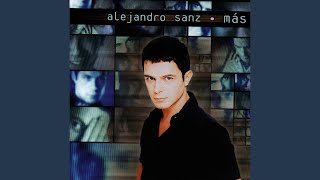
Ese Último Momento Lyrics in English by Alejandro Sanz
Enredar literally means "to entangle" or "to complicate." It's a versatile word that can describe physical tangles or more abstract complications.
In this song, Alejandro Sanz uses it to express the desire to avoid further emotional entanglement or making things more complicated in a relationship. He sings, "Por no enredar ya ves," suggesting a weariness of adding more layers to an already complex situation. This makes it an interesting word to explore the nuances of emotional complexity in Spanish.
"Ese Último Momento" is Alejandro Sanz's portrait of a breakup neither person can bring themselves to say out loud. He opens by asking for one honest talk — "Ahora que tengo la ocasión, quiero que hablemos los dos" [Now that I have the opportunity, I want us to talk] — then immediately undercuts it: they'll both stay silent instead, "por no enredar ya ves" [so as not to complicate things, you see]. The verses keep circling one instruction he gives her: leave without a scene. "Sal de noche, sal a oscuras / Sal descalza y de puntillas" [Leave at night, leave in the dark / Leave barefoot and on tiptoes] — he'd rather lose her quietly than sit through the goodbye itself.
By the second half he's arguing with his own instructions. He wishes he'd had time "para escribir unos versos de cuando aquellos besos" [to write some verses about those kisses], and the same voice that told her to vanish now begs the opposite, no explanation required: "Niña vuelve, que no hacen falta razones" [Girl, come back, no reasons are needed]. The title phrase returns as a kind of countdown, each time weighed against a lifetime — "con un siglo habrá bastante" [a century will be enough] — the song's whole case that one last moment can outweigh everything that comes after it.