Morena Lyrics in English by Neton Vega, Peso Pluma
The word esclavas literally translates to "(female) slaves," which can be a surprising word to hear in a song about jewelry!
However, in Mexico and other parts of Latin America, esclava is the common name for a thick chain-link bracelet, often made of gold or silver. In the song, the line "Dos esclavas en la muñeca" means "Two bracelets on my wrist," referring to this popular style of accessory. It's a fascinating example of how one word can have a completely different, everyday meaning in a specific culture.
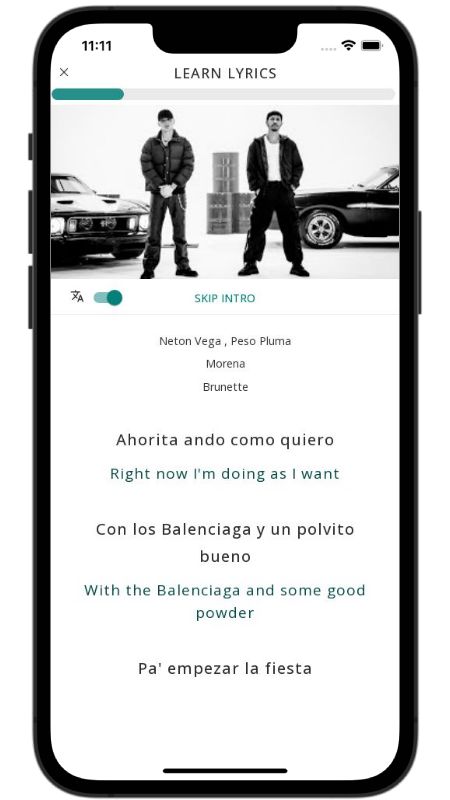
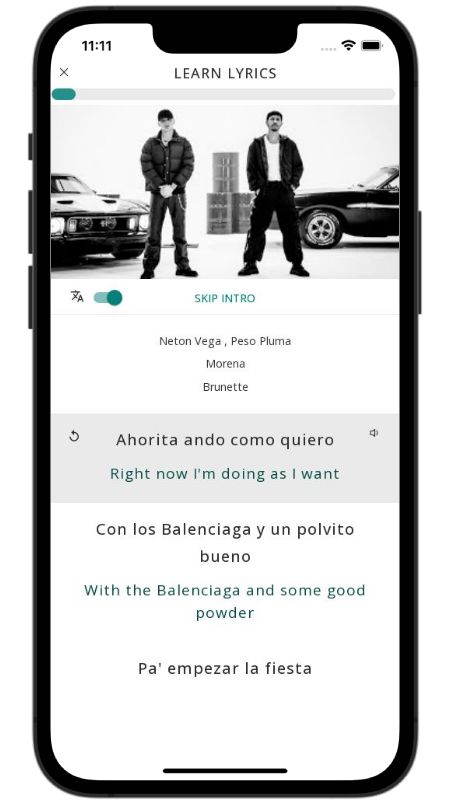
Morena is all about living in fast-forward during an all-night party. Mexican artist Neton Vega teams up with Peso Pluma to drop you straight into a VIP haze filled with luxury gear and late-night vice. From the start, they brag about wearing designer shoes ("Con los Balenciaga" [With Balenciagas]) and sipping high-end tequila ("Clase Azul el tequilita" [Clase Azul, the little tequila]) until sunrise. Between party drugs described bluntly as "la nariz helada" [the frozen nose] and heavy smoke making their eyes droop ("Los ojos tumbados por el humo blanco" [Drooping eyes from the white smoke]), the scene is loud, chaotic, and completely over the top.
What makes the track stick is the candid, street-level storytelling. Neton talks about being totally hooked on a girl because she asks for nothing ("No me pide nada... Y eso me apendeja" [She asks me for nothing... and that makes a fool out of me]). He promises to spoil her anyway, admiring her style with lines like "Por un lado la plebita, la falda cortita / Chula la morena" [By my side the young girl, the short skirt / Pretty dark-haired girl]. Regional slang gives the song its bite: plebita is northern Mexican slang for a young woman, while esclavas refers to heavy ID-style chain bracelets on his wrist, worn right alongside a protective religious charm ("el escapulario" [the scapular]). Then comes the funny, classic excuse for missing her calls: his phone died and he has no clue where he was ("traía el cel sin carga / Ella no me cree nada" [my phone had no charge / She doesn't believe me at all]).