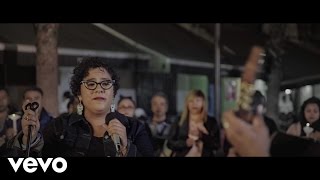
Me Verás Lyrics in English by La Santa Cecilia
Derrumbarse means "to collapse" or "to fall apart." It's a strong and dramatic verb that goes beyond simply "falling."
In the context of "Me Verás," the lyric "Tú sabes que sin mí esto ha de derrumbarse" (You know that without me, this has to collapse) suggests a critical situation where something significant, perhaps a relationship or a system, cannot stand without the speaker's presence. It implies a complete and irreversible breakdown, making it a powerful and memorable word in the song.
La Santa Cecilia turns an accusation into a vow. The singer opens under suspicion, judged by people who "Creen todo lo que miran" ["They believe everything they see"] and call her supposed betrayal something inherently "femenina" ["female"]. Instead of pleading her case, she answers with a promise: "Me verás a la luz del día" ["You'll see me in the daylight"], "Cuando el mundo esté de rodillas" ["When the world is on its knees"].
The second verse turns patience into leverage. "La verdad no se esconde, ella espera el momento" ["The truth does not hide, it waits for the moment"], and she warns her accusers plainly: "Tú sabes que sin mí esto ha de derrumbarse" ["You know that without me this has to collapse"]. The chorus keeps returning to the same line, "Lucharé hasta el final de mi último día" ["I will fight until the end of my last day"], so the repetition reads less like desperation than resolve.