Meu Ex-Amor Lyrics in English by Amado Batista, Jorge
Saudade is a famous Portuguese word that lacks a perfect English equivalent. It describes a profound, melancholic longing for an absent person, place, or feeling that one loves.
In "Meu Ex-Amor", the singer describes a beautiful past love that now kills "com sabor de saudade" (with a taste of saudade). This powerful, poetic phrase captures the bittersweet pain of remembering a lost love, making saudade a key concept for understanding the heart of Brazilian music and culture.
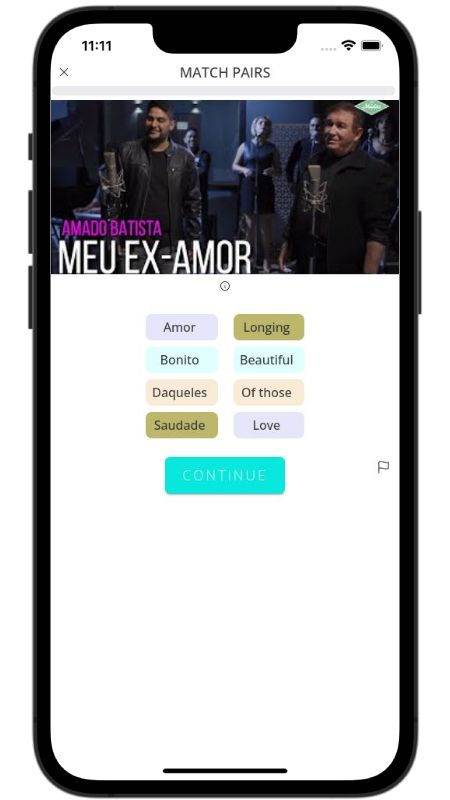
If you want pure Brazilian romantic heartbreak, Amado Batista and Jorge hit the nail on the head here. The track is all about looking back at a past relationship that was wonderful while it lasted, but left behind a heavy sting. The narrator describes it as “Amor tão bonito / Daqueles que matam / Com sabor de saudade” ("A love so beautiful / The kind that kills / With the taste of longing"). Notice that word saudade; it is a famous Portuguese term for that deep, bitter-sweet ache you feel when missing someone or something you loved.
Even though he misses this person, there is no bitterness or anger directed at them. Instead, he admits “você não merece / Tanta dor” ("you don't deserve / So much pain"), acknowledging that moving on was probably for the best. The real dramatic kick comes at the end of each verse with the sharp contrast between his past and his present: “Fui rico de amor / E hoje estou tão só” ("I was rich in love / And today I am so alone"). It is simple, completely unashamed of its own melodrama, and makes for a great way to learn everyday emotional phrases in Portuguese.