Fuera Lyrics in English by RBD
Halagos translates to "flattery" or "compliments." It's a more nuanced word than simple praise, often implying insincere or excessive compliments given to gain favor.
In the song, the speaker is firmly rejecting a past lover, declaring, "No necesito más de ti y halagos" (I don't need any more of you and your flattery). This word is interesting because it suggests the ex-partner might be trying to win them back with empty words, highlighting the speaker's resolve and the depth of their hurt.
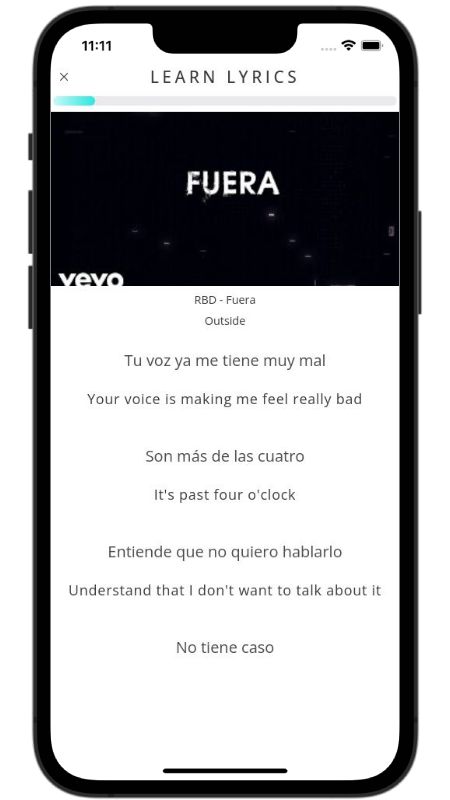
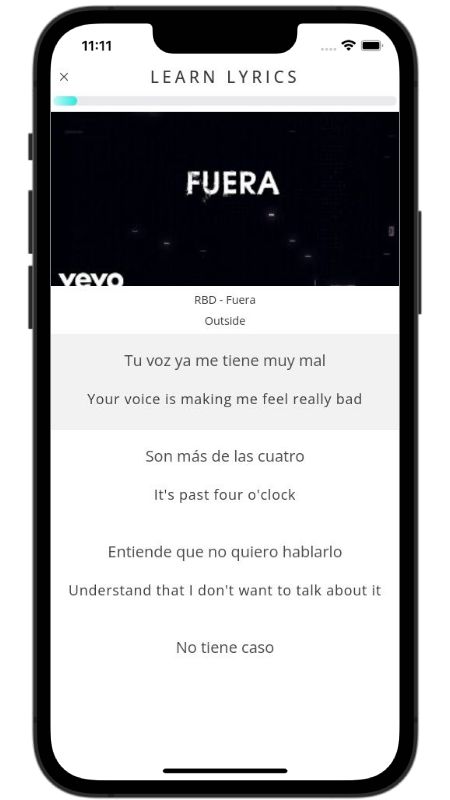
It opens with a phone ringing in the middle of the night: "Son más de las cuatro" (It's past four o'clock), and the person on the other end is the ex. RBD give the reply zero patience. "Ya cuelga o te voy a colgar" (Hang up now or I'll hang up on you) is a great line to learn, because it uses the same verb, colgar, twice: once as a command and once as a threat. A few lines later comes "Te odio demasiado" (I hate you so much), which is about as subtle as a slammed door.
The chorus is mostly one word, "Fuera" (Get out), and it hits harder because of what sits next to it: "Te amé como nunca a nadie he amado" (I loved you like I've never loved anyone). Listen for the idiom in "Mejor cortemos por la paz y en sano" (It's better we end things peacefully). Por la paz y en sano means walking away without a fight, which is funny coming from someone who has spent the whole song yelling. The kicker saves the pettiest reason for last: "Hay alguien que me está esperando" (There's someone waiting for me). Al fin y al cabo, the phrase right before it, just means "after all", and you'll hear it everywhere in Spanish.