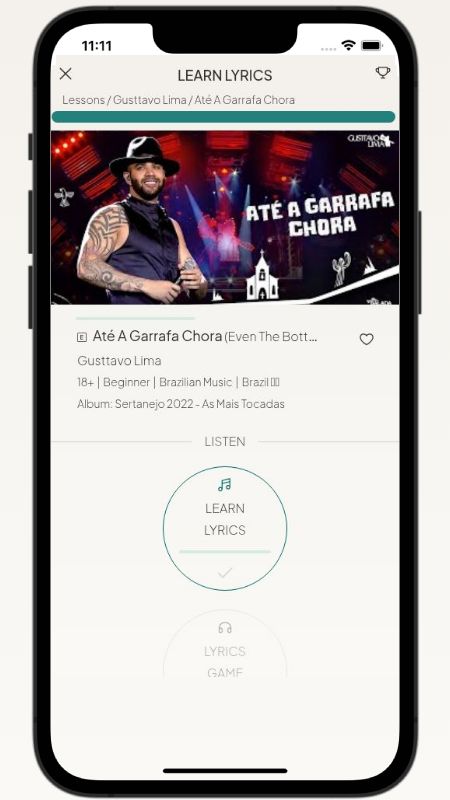
Até A Garrafa Chora Lyrics in English Gusttavo Lima
Manguaça is a Brazilian Portuguese slang term that refers to heavy drinking or a state of drunkenness. It's a vivid and somewhat informal word that paints a picture of excessive alcohol consumption.
In "Até A Garrafa Chora," the singer uses manguaça to describe his state of profound sadness and abandonment after being left by his partner. He sings, "Cheirando a cachaça, sozinho na manguaça," emphasizing his deep despair and how he's drowning his sorrows in alcohol. This word captures the raw, emotional core of the song.
"Até A Garrafa Chora" is a heartbreak song in the Brazilian sertanejo style. The singer has just been left by a woman who walked out on him, and he compares himself to an abandoned dog on the street.
He ends up alone in a bar, hungover and drowning his sorrows in cachaça (a Brazilian sugarcane spirit). The chorus leans into that self-pity: even the bottle seems to cry along with him when it sees how much he's suffering.
It's a classic sad-song-with-a-drink theme, sung big and dramatic the way sertanejo ballads usually are, ending with him saying he can't take another heartbreak like this one.