Klavier Lyrics in English Rammstein
Todkrank literally translates to "deathly ill" or "mortally ill." It's a strong and dramatic compound word that immediately conveys a sense of extreme suffering and impending doom.
In the context of Rammstein's "Klavier," this word is particularly striking. The narrator states, "Dass ich todkrank von Kummer und Gestank" (That I am deathly ill from sorrow and stench). This powerful imagery suggests a profound emotional and perhaps even physical decay, making it a memorable and intriguing word for learners.
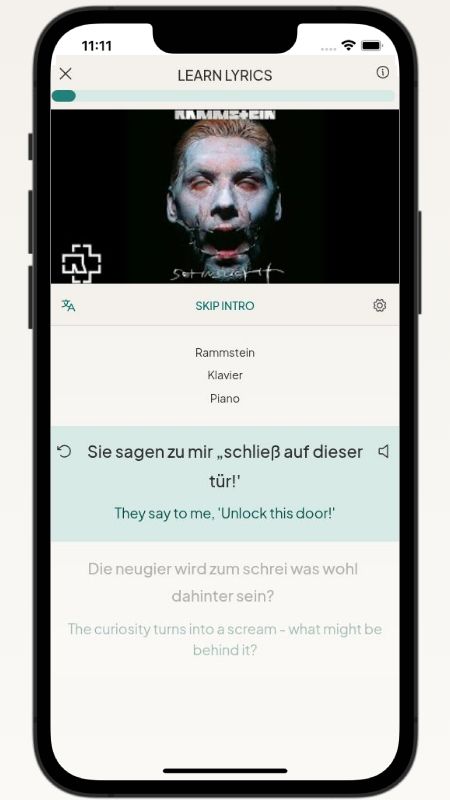
What "Klavier" is about
"Klavier" ("Piano") is a dark story song. Behind a locked door sits a piano, dusty and out of tune, and a woman who used to play it. The narrator listens to her from outside, holding his breath every time her playing starts.
She promises she'll always stay with him, but he learns it was a lie: she played for others too. In a jealous rage, he kills her and locks the door, telling anyone who asks that she's simply gone.
Eventually the door is opened. Her mother pleads, her father attacks him, and she is carried away from the piano while no one believes his grief. In the final verse the roles reverse: now it's the narrator sitting at the piano, and it's her turn to listen, holding her breath as his playing begins.
It's one of Rammstein's murder ballads, told from inside the killer's head rather than from a safe distance, and its closing twist leaves it open whether that's guilt, a haunting, or a strange kind of justice.