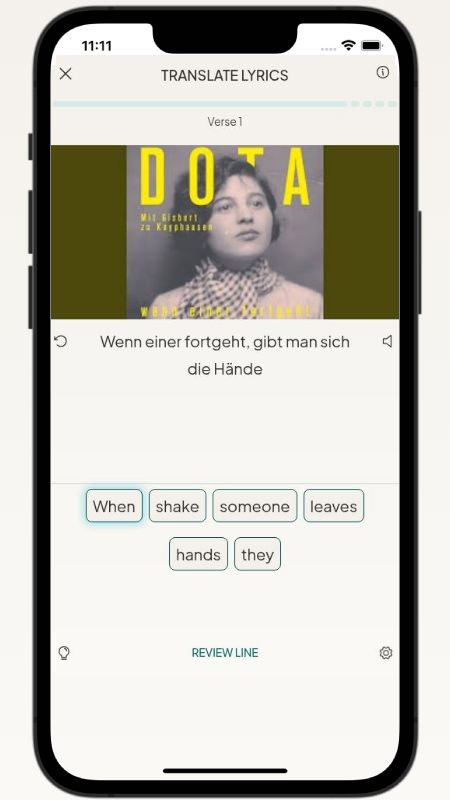
Wenn Einer Fortgeht Lyrics in English by Dota Kehr, Gisbert zu Knyphausen
Sehnsucht is a deeply evocative German word that translates to "longing" or "yearning." It's more profound than a simple desire, often carrying a sense of wistful melancholy for something distant, lost, or unattainable.
In "Wenn Einer Fortgeht," the lyrics mention "uns'rer Sehnsucht Außenstände" (the outstanding debts of our longing), personifying this powerful emotion and suggesting that unfulfilled yearnings can be swept away like material possessions. This word beautifully captures the emotional core of departure and the feelings left behind.
This song is a step-by-step guide to the quiet misery of a train station goodbye. Dota Kehr and Gisbert zu Knyphausen sing about the awkward moment when someone leaves, and you have to force a smile: "Am Bahnhof lächelt man so gut es geht" (At the train station, you smile as best you can). The song describes the feeling of watching the person your world revolves around just sit inside the train, and thinking about all the things you could have said to change everything, but now it's too late.
The lyrics get into the physical feeling of this kind of sadness. Your heart feels like it has left with them, wandering around alone. You lose your appetite because, as the song says, "Man wird so leicht von Tränenschlucken satt" (You get full so easily from swallowing tears). The song ends with a very clever, almost nerdy observation about the words themselves: waiting is a "schweres Verbum" (a heavy verb), and "farewell" is a "Schluss-Imperativ" (a final command), a blunt and painful end to the conversation.