Sozusagen Grundlos Vergnügt Lyrics in English by Dota Kehr
Neunmalklugen literally translates to "nine-times-clever ones" and is a colloquial term for "know-it-alls" or "smart alecks". It's a wonderfully unique and slightly humorous compound word that isn't commonly found in everyday songs.
In the context of the song, it refers to people who think they understand everything with their intellect but miss the deeper, simpler joys of life. The singer suggests that some things, like the simple pleasure of existence, cannot be understood by these "Neunmalklugen" who rely solely on logic, making it a memorable and insightful word choice.
A song about being cheerful for no particular reason, and then finding reasons everywhere anyway.
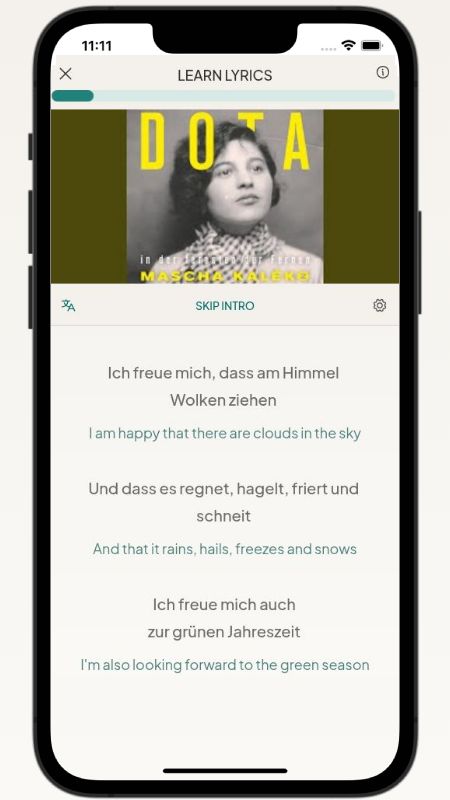
The singer lists what makes her glad, and almost all of it is ordinary. Clouds crossing the sky. Rain, hail, frost and snow. Wild roses and elder blossom in the green season. Blackbirds whistling, bees humming, mosquitoes biting, red balloons drifting up into the blue. Nothing is picked because it is pretty: sparrows chatter and fish keep quiet, and both belong on the list.
Then the list widens out. The moon stays up there, the sun rises again every day, autumn follows summer and spring follows winter. She likes that, and she thinks there is a sense behind it, even if the know-it-alls cannot see it. You cannot understand everything with your head.
The last verse turns inward. Inside her everything is tidy and bright, the floor is gleaming, the fire is lit. On a day like that a person climbs the ladder that leads from the earth to the sky, and loves their neighbour because they love themselves. What she is gladdest about is that she has never quite got used to beauty, or to wonder, so everything stays astonishing and new. She is happy, she says, that she is happy.