La Luna Che Non C'e Lyrics in English by Andrea Bocelli
Scaglierò comes from the verb scagliare, meaning to hurl, throw, or fling with force. It's a strong, evocative verb that isn't used in everyday conversation as frequently as simpler verbs for 'to throw'.
In the song, Andrea Bocelli sings, "Io lo prenderò e lo scaglierò lontano" (I will take it and I will hurl it far away). This powerful imagery conveys a sense of protection and determination, promising to cast away the burdens or negativity of a loved one. It's a memorable word that adds dramatic flair to the lyrics.
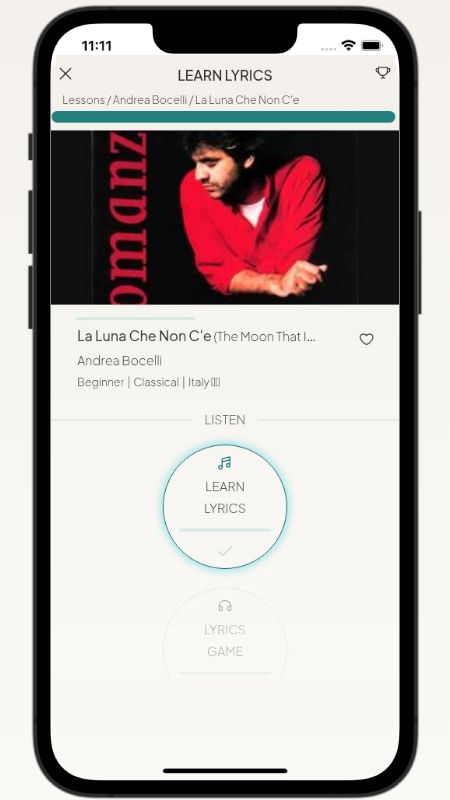
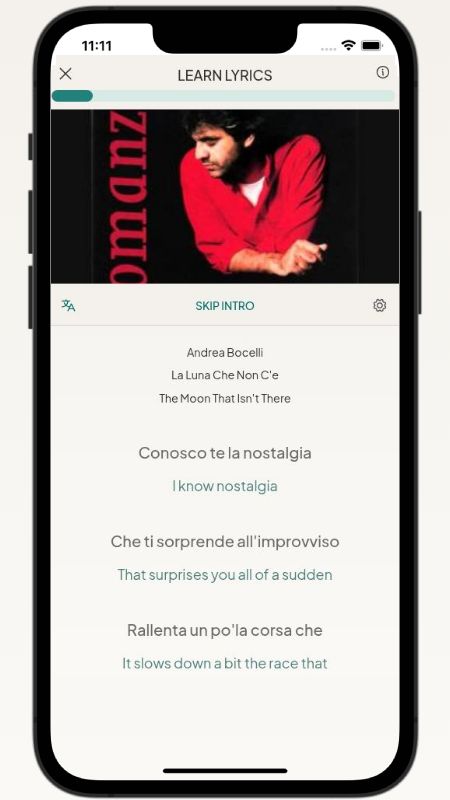
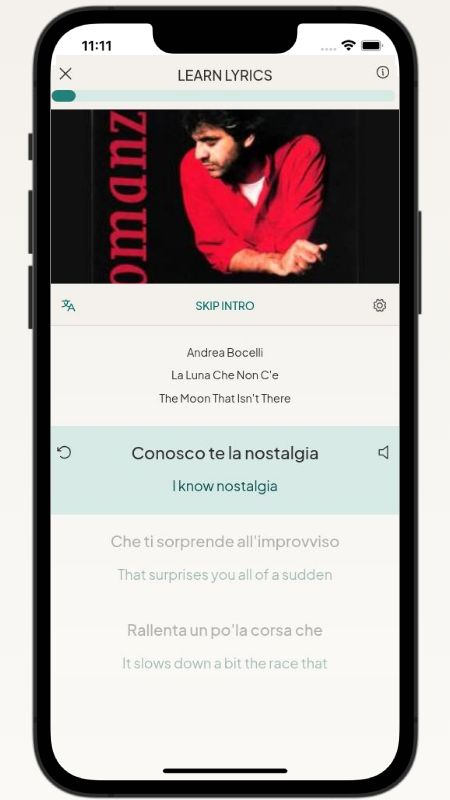
"La luna che non c'è" ("The Moon That Isn't There") is Andrea Bocelli's tender promise to someone going through a hard time. The song opens with a wave of nostalgia catching the listener off guard, the kind of ache that steals your breath before you're ready for it. Rather than offering advice, Bocelli offers his presence.
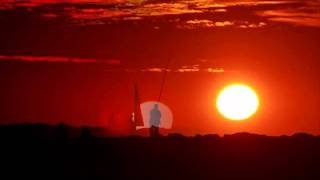
The title image is the heart of the song: when the sky feels too big and the world doesn't fit, he promises to be the moon that isn't there, a steady light in the dark even on nights when the real moon can't be seen. It's a love song about being someone's comfort and constant, especially at night, when fears and old ghosts feel closest.
The verses widen out into questions about how vast the sky is and how much room there is inside a person to hold it all, before settling into a soft, repeated chorus. It ends on a simple, quiet vow: now that you want me like this, so do I.