Learn French With Stromae with these 23 Song Recommendations (Full Translations Included!)
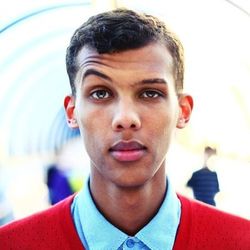
Paul Van Haver, known by his stage name Stromae, is a Belgian singer, rapper, songwriter, and record producer born in 1985 in Brussels. His unique sound blends hip-hop and electronic music, captivating audiences across Europe and beyond. Stromae rose to international fame with his 2009 hit "Alors on danse," which topped charts in several countries.
His 2013 album Racine carrée was a major success, featuring hit singles like "Papaoutai" and "Formidable," and selling millions of copies. Renowned for his artistic music videos and thoughtful lyrics, Stromae stands out as a creative force in modern Francophone music. He continues to innovate while drawing on diverse influences, from hip-hop to electronic and world music.
Have you ever loved someone so intensely that being around them feels dangerous? In "Ma Meilleure Ennemie", Belgian artist Stromae teams up with Pomme to drop an infectious dance track all about toxic, magnetic love. Right from the jump, the lyrics clash violently: "Je t'aime, je te hais" ("I love you, I hate you"). They describe this partner as both "la pire des bénédictions" ("the worst blessing") and "la plus belle des malédictions" ("the most beautiful curse"). It is messy, chaotic, and completely relatable when a relationship turns into an emotional battlefield.
What makes the song fun is how it plays with famous French sayings. There is a well-known French proverb: "Mieux vaut être seul que mal accompagné" (Better to be alone than in bad company). But here, they flip it on its head to admit their dependency: "Plutôt qu'être seul, mieux vaut être mal accompagné" ("Rather than being alone, it's better to be in bad company"). They even twist the classic rule about keeping your enemies close, bluntly declaring "ma meilleure ennemie, c'est toi" ("my best enemy is you") before begging each other to run away with "Fuis-moi, le pire, c'est toi et moi" ("Run away from me, the worst thing is you and me"). It is a tragic tug-of-war that ends on the sharpest note possible: "Je t'aime, je te quitte" ("I love you, I'm leaving you").
В этой песне Stromae и Pomme исследуют сложные, противоречивые отношения, которые балансируют на грани любви и ненависти. С самого начала они задают тон строчкой «Je t'aime, je te hais» [Я люблю тебя, я ненавижу тебя]. Это не просто мимолетное раздражение; это глубокий конфликт, где один и тот же человек является одновременно «la meilleure chose qui m'est arrivée» [лучшим, что со мной случалось] и «la pire chose» [худшим].
Песня полна таких резких контрастов, описывая этого человека как «La pire des bénédictions / La plus belle des malédictions» [Худшее из благословений / Прекраснейшее из проклятий]. Вместо того чтобы просто уйти, герой цинично размышляет, что «Plutôt qu'être seul, mieux vaut être mal accompagné» [Лучше быть в плохой компании, чем одному]. В припеве эта идея кристаллизуется в фразу «ma meilleure ennemie, c'est toi» [мой лучший враг — это ты], признавая, что их союз разрушителен. Песня заканчивается так же неоднозначно, как и началась: «Je t'aime, je te quitte» [Я люблю тебя, я ухожу от тебя], оставляя слушателя с ощущением неразрешенного внутреннего конфликта.
Belgian artist Stromae takes the dark spiral of everyday adult life and turns it straight into a relentless dance track. The song lays out a chain reaction of stress: school leads to work, love leads to kids, and forever leads to divorce. He packs the verses with French slang like taf [job] and thunes [cash], tracing how a paycheque quickly turns into credit, debt, and eventually a visit from the huissier [bailiff]. His lyrics are brutally blunt: Lui dit assis dans la merde [He says sitting in deep trouble, literally: sitting in the shit]. Even global issues like famine and the tiers-monde [Third World] pile onto the weight of waking up exhausted from the day before.
Instead of offering a fake solution, Stromae's answer is pure escapism: Alors on sort pour oublier tous les problèmes [So we go out to forget all the problems] and Alors on danse [So we dance]. He knows the relief is temporary. Just when you think you are finally out of trouble, Et ben y en a encore [Well, there is still more]. The beat takes over your guts (les tripes) and your head (la tête), making you yell and dance through the chaos simply because you have no other choice.
Belgian artist Stromae wraps a heavy subject inside an energetic dance beat with "Papaoutai". The title itself is a clever play on words: it sounds like one word, but it contracts the phrase "Papa, où t'es?" ("Dad, where are you?"). Throughout the track, a child looks for an absent father, repeating the excuses adults give: "Maman dit qu'il n'est jamais très loin / Qu'il part très souvent travailler" ("Mom says he is never very far / That he leaves very often to work"). The kid is literally left waiting and counting fingers ("Ça doit faire au moins mille fois / Que j'ai compté mes doigts" - "It must be at least a thousand times / That I've counted my fingers"), hoping for a dad who magically knows what is wrong without saying a word.
Stromae gets bluntly philosophical in the second verse, moving from a child's confusion to grown-up anxiety. He points out a stark truth: "Tout le monde sait comment on fait des bébés / Mais personne ne sait comment on fait des papas" ("Everyone knows how to make babies / But nobody knows how to make dads"). He even mocks people who act like parenting wisdom is innate by asking "Il faut le sucer de son pouce ou quoi?" (an idiom asking if you just "suck it out of your thumb," meaning to magically invent or guess something out of thin air). It turns an infectious club rhythm into an honest confrontation about absent parents and the fear of repeating their mistakes.
¡Prepárate para una montaña rusa de emociones con esta canción del artista belga Stromae y la cantante Pomme! La letra explora una relación increíblemente complicada y contradictoria. Desde el principio, nos lanzan directamente al conflicto con la línea "Je t'aime, je te hais" [Te amo, te odio]. No hay término medio aquí. La persona de la que cantan es descrita como "la meilleure chose qui m'est arrivée / Mais aussi la pire chose" [lo mejor que me ha pasado / pero también lo peor], una mezcla de bendición y maldición.
La canción utiliza dichos populares para justificar por qué se quedan en esta situación tan tóxica. Por ejemplo, citan la famosa idea de que "plutôt qu'être seul, mieux vaut être mal accompagné" [mejor mal acompañado que solo]. El título lo resume todo: "Ma Meilleure Ennemie" [Mi mejor enemiga]. Es una lucha constante entre el amor y el deseo de escapar, que culmina en la simple pero devastadora frase final: "Je t'aime, je te quitte" [Te amo, te dejo].
Бельгийский артист Stromae придумал гениальный трюк: замаскировал песню о беспросветной рутине под бодрый танцевальный трек. Он начинает с жесткой цепочки причин и следствий взрослой жизни. Учеба ведет к работе, работа приносит деньги (thunes — разговорное словечко для денег), а деньги тут же улетают на расходы и долги. Дальше еще мрачнее: любовь оборачивается разводом («Qui dit amour dit les gosses / Dit toujours et dit divorce» — «Кто говорит любовь, говорит дети, говорит навечно и говорит развод»), а за долгами приходит судебный пристав (huissier), оставляя героя в полной заднице («assis dans la merde»).
Когда наваливается мировой кризис, голод и усталость от звона будильника, выход остается ровно один: выйти в клуб и забыться под ритм. Stromae буквально кричит: «Alors on danse» («Тогда мы танцуем»). Он описывает тупик, когда кажется, что хуже уже только смерть, но проблемы не кончаются («Quand y en a plus / Et ben y en a encore» — «Когда кажется, что всё, появляется еще»). Музыка и стресс бьют по мозгам одинаково сильно, и все, что остается телу, — заглушить этот кошмар танцем и криком.
Belgian artist Stromae delivers a sharp, funny dance track that takes aim at relationship clashes. Singing from a frustrated partner's point of view, he calls men "macho mais cheap" (macho but cheap) and "mauviettes infidèles" (unfaithful wimps). The narrator threatens to pack up and leave, telling their partner to look at their backside one last time while it is right beside their luggage ("Mate une dernière fois mon derrière / Il est à côté de mes valises"). Things backfire hilariously when the guy agrees to break up too, leaving the narrator shocked: "Moi je le disais pour te faire réagir seulement / Toi t'y pensais" (I only said it to get a reaction out of you, but you were actually thinking it!).
Stromae uses plenty of everyday French slang to bring the argument to life. The narrator complains about being dismissed as "gnangnan" (corny or sappy) and talks about "ragnagnas", an informal French slang term for menstrual periods. There is also a clever line about beauty standards: "Il n'y a que Kate Moss qui est éternelle" (Only Kate Moss is eternal), referencing the famous supermodel to mock false compliments about aging gracefully. Between arguments about who will raise future kids and endless cycles of bickering, the song turns relationship exhaustion into an energetic dance beat.
Willkommen zu einem der größten Dance-Hits der 2010er Jahre! Stromae, ein Künstler aus Belgien, hat mit „Alors On Danse“ einen Song geschaffen, den du wahrscheinlich schon einmal gehört hast. Aber hast du jemals auf den Text geachtet? Die Musik lädt zum Tanzen ein, doch die Worte erzählen eine ganz andere Geschichte. Stromae beschreibt eine endlose Kette von Problemen, die das Leben mit sich bringt. Alles ist miteinander verbunden: „Qui dit étude dit travail“ (Wer Studium sagt, sagt Arbeit), Arbeit führt zu Geld, Geld zu Ausgaben und schließlich zu Schulden: „Qui dit dette te dit huissier“ (Wer Schulden sagt, sagt Gerichtsvollzieher). Sogar die Liebe ist nicht sicher und führt von „les gosses“ (den Kindern) zum „divorce“ (Scheidung).
Was also tun, wenn die Probleme einfach nicht aufhören? Wenn du denkst, es ist vorbei, „Et ben y en a encore“ (Nun, dann gibt es noch mehr). Stromaes Antwort ist einfach und direkt im Titel zu finden. Anstatt sich von den Sorgen erdrücken zu lassen, gibt es nur einen Ausweg: die Flucht in die Musik und den Tanz. Er singt: „Alors on sort pour oublier tous les problèmes“ (Also gehen wir aus, um alle Probleme zu vergessen). Die Lösung ist nicht, die Probleme zu lösen, sondern sie für einen Moment zu ignorieren und einfach zu tanzen. „Alors on danse“ (Also tanzen wir).
In „Tous Les Mêmes“ schlüpft der belgische Künstler Stromae in die Rolle einer Frau, die von Männern die Nase voll hat. Der Song ist eine witzige und scharfe Abrechnung mit männlichen Klischees. Sie wirft ihrem Partner vor: „Vous les hommes êtes tous les mêmes / Macho mais cheap“ (Ihr Männer seid alle gleich / Macho, aber billig) und nennt Männer eine „Bande de mauviettes infidèles“ (Bande von untreuen Weicheiern). Es ist eine Liste von Beschwerden, die viele aus Streits kennen könnten.
Der Refrain ist besonders clever. Mit der Zeile „Rendez-vous au prochain règlement“ (Wir sehen uns bei der nächsten Auseinandersetzung) und dann „Rendez-vous sûrement aux prochaines règles“ (Wir sehen uns sicher bei der nächsten Periode) spielt Stromae mit der Doppeldeutigkeit des Wortes „règles“. Es bedeutet sowohl „Regeln“ als auch „Periode“ und deutet an, dass ihre Konflikte so regelmäßig wie ein Zyklus sind. Der Song zeigt aber auch die Komplexität der Situation: Als sie droht zu gehen, sagt sie ihm: „Mate une dernière fois mon derrière / Il est à côté de mes valises“ (Schau dir ein letztes Mal meinen Hintern an / Er ist neben meinen Koffern). Doch als er dem Ende der Beziehung zustimmt, gibt sie zu, dass sie ihn nur provozieren wollte. Es ist also nicht nur eine einseitige Anklage, sondern zeigt die Dynamik eines komplizierten Streits.
¿Alguna vez has sentido que un problema lleva a otro y a otro, en una cadena sin fin? De eso va esta canción del artista belga Stromae. Con un ritmo que te obliga a moverte, la letra describe una serie de conexiones bastante deprimentes. Empieza con la idea de que los estudios llevan al trabajo, el trabajo al dinero, el dinero a los gastos, los gastos al crédito y el crédito a las deudas. La cosa se pone seria cuando dice: "Qui dit dette te dit huissier / Lui dit assis dans la merde" [Quien dice deuda, te dice agente judicial / Él te dice: sentado en la mierda]. ¡Qué directo!
Y no se detiene ahí. El amor lleva a los hijos y luego al divorcio. Los seres queridos te recuerdan el duelo. La crisis te hace pensar en el hambre en el mundo. Es un ciclo agotador. Pero, ¿cuál es la solución de Stromae a toda esta negatividad? El estribillo nos lo dice claramente: "Alors on sort pour oublier tous les problèmes / Alors on danse" [Así que salimos para olvidar todos los problemas / Así que bailamos]. Es un himno para todos los que han querido simplemente bailar y olvidarse de todo, aunque solo sea por una noche. La música es el escape.
Belçikalı sanatçı Stromae, dans ritimleriyle dolu Tous Les Mêmes şarkısında kadın ve erkek arasındaki bitmek bilmeyen tartışmaları iki tarafın gözünden de masaya yatırıyor. Şarkı, kadınların dilinden düşmeyen klasik bir sitemle açılıyor: "Vous les hommes êtes tous les mêmes" (Siz erkekler hepiniz aynısınız). Karakterimiz partnerine hem "macho mais cheap" (maço ama ucuz) diyerek yükleniyor hem de kapıyı çarpıp gitmekle tehdit ediyor: "Mate une dernière fois mon derrière / Il est à côté de mes valises" (Kıçımı son kez dikizle / Valizlerimin hemen yanında duruyor).
Şarkının asıl eğlenceli ve sivri tarafı, günlük konuşma dilindeki iğnelemeleri hiç çekinmeden kullanması. Erkeklerin adet dönemine taktığı kaba lakap olan "ragnagnas" lafını yüzlerine vuruyor; "Il n'y a que Kate Moss qui est éternelle" (Sadece Kate Moss ölümsüzdür) diyerek kadınlar üzerindeki kusursuz güzellik baskısıyla ve ünlü model Kate Moss ile dalga geçiyor. Ayrılık resti çekip karşı taraf "tamam, bitti" deyince "C'est le monde à l'envers!" (Dünya tersine döndü!) diye panikleyen, çocuk yapmaya gelince var olup büyütmeye gelince kaçan partnerleri tiye alan bu parça, ilişkilerdeki klişeleri ve atışmaları tam bir dans pisti enerjisiyle anlatıyor.
Belgian artist Stromae turns an electronic dance track into a messy, drunken monologue on the street. The title is a clever pun on the chorus: "Tu étais formidable, j'étais fort minable" ("You were wonderful, I was very pathetic"). By splitting the word formidable into fort (very) and minable (pathetic, pitiful), he contrasts his ex-partner's brilliance with his own rock-bottom state. Freshly single since yesterday ("J'suis célibataire, depuis hier"), he wanders around slurring to random passersby that he is polite, courteous, and "un peu fort bourré" ("a bit heavily drunk").
Instead of keeping his misery to himself, he lashes out at everyone he sees. He mocks a married man by telling him a wedding ring is just a ring ("Mais ç'est qu'un anneau, mec") and predicts his wife will dump him eventually. He even lectures a child ("gamin") with harsh truths about parents cheating and growing old, before turning on the staring crowd and yelling at them: "Bande de macaques!" ("Bunch of monkeys!"). It is cynical, loud, and brutally honest about what a bad breakup looks like when you lose your filter in public.
Belgian artist Stromae brings an irresistible dance groove to a subject most party tracks completely ignore: the people working while everyone else has fun. Instead of toasting the partygoers, he raises his glass "À ceux qui n'en ont pas" [To those who don't have one], dedicating the beat to the staff behind the scenes. He shouts out Rosa who cleans up the mess ("quand on fout l'bordel, tu nettoies"), Albert who collects empty glasses, Céline dealing with coats at the cloakroom, and Arlette stuck working in the restrooms. He also takes hilarious, sharp jabs at obnoxious party guests, like the rude customer complaining that two drinks are taking three hours and threatening the waiter's job with "Appelle-moi ton responsable" [Call me your manager].
Stromae cleverly plays with French idioms on the dance floor. When he chants "tu pourras toujours te brosser", he relies on the slang meaning of se brosser (literally "to brush yourself"), which means "you can forget about it!" He then broadens his toast beyond the club to everyone on terrible shifts: nurses, bakers, truck drivers, flight attendants, and exhausted new parents soothed only by crying babies ("bercés par les pleurs"). It turns a classic club banger on its head by partying for the people who are simply too tired or busy to celebrate.
Бельгиец Stromae умеет упаковать тяжелейшие темы в ритмичную танцевальную музыку, и трек «L'enfer» («Ад») бьет наотмашь с первых секунд. Песня начинается с горького наблюдения: «J'suis pas tout seul à être tout seul» («Я не один такой одинокий»). Казалось бы, мысль о том, что миллионы людей переживают то же самое, должна приносить облегчение («Ça fait déjà ça d'moins dans la tête» — «Уже на одну проблему в голове меньше»), но герой признается: легче не становится. Дальше он рубит правду без всяких прикрас: «J'ai parfois eu des pensées suicidaires / Et j'en suis peu fier» («У меня иногда были суицидальные мысли, и я этим совсем не горжусь»). Это предельно прямолинейный крик о том, как внутренние демоны превращают жизнь в сущий ад, заглушить который порой кажется невозможным.
Мне особенно нравится здесь метафора с телевизором: Stromae с сарказмом спрашивает, включен ли только у него «la chaîne culpabilité» («телеканал чувства вины»). Попытки просто отвлечься тоже не работают: стоит включить фоновый шум чуть сильнее или задуматься, как рой мыслей возвращается с новой силой («Sinon ça r'part vite dans la tête» — «Иначе это быстро снова вспыхивает в голове»). В финале трека звучит почти комичный, но страшный по сути диалог с самим собой: «Justement, réfléchir / C'est bien l'problème avec toi» («Вот именно, думать — в этом-то и есть твоя проблема»). Текст идеален для изучения живого французского: Stromae постоянно сокращает слова в разговорной манере («j'suis» вместо «je suis», «j'comptais», «l'problème») и вставляет любимое разговорное «du coup» («в итоге» / «так что»), делая монолог максимально личным.
Belgian artist Stromae pairs a driving dance beat with brutal honesty in "L'enfer" (Hell). Right from the opening lines, he looks at loneliness from a surprisingly rational angle: "J'suis pas tout seul à être tout seul" (I'm not the only one who is alone). He tells himself that knowing millions of other people feel the exact same misery should make him feel better ("Ça fait déjà ça d'moins dans la tête" [That's at least one less thing in my head]). Yet, logic fails against a spiraling mind. In the end, knowing everyone suffers changes nothing: "Mais malgré tout, je m'sens tout seul / Du coup" (But despite everything, I feel alone / So).
He doesn't sugarcoat the darkest corners of that spiral. In the chorus, he confesses plainly: "J'ai parfois eu des pensées suicidaires / Et j'en suis peu fier" (I've sometimes had suicidal thoughts / And I'm not very proud of it). He describes suicidal ideation as a desperate attempt to silence mental torment ("faire taire / Ces pensées qui nous font vivre un enfer" [silence / These thoughts that make us live through hell]). Stromae also points out the endless loop of overthinking with biting self-awareness. He jokes about having the guilt channel playing on his TV ("la chaîne culpabilité"), and stages an internal dialogue in the bridge where his own brain scolds him: "Justement, réfléchir / C'est bien l'problème avec toi" (Precisely, thinking / That is your whole problem).
¿Alguna vez te has fijado en quién limpia los vasos mientras todos bailan de fiesta? El belga Stromae pone el foco exactamente ahí en este tema de pista de baile. El título, "Santé" (que significa "salud" al brindar), es un homenaje directo a los trabajadores invisibles: los que recogen el desastre de la pista («Rosa, Rosa, quand on fout l'bordel, tu nettoies» [Rosa, Rosa, cuando armamos lío, tú limpias]), los que atienden en el baño o los que recogen abrigos en el guardarropa. En vez de celebrar al que se divierte, Stromae pide un brindis por quienes están trabajando duro: «Et si on célébrait ceux qui n'célèbrent pas» [¿Y si celebráramos a los que no celebran?].
El tema también se burla sin piedad de los clientes arrogantes que tratan mal al personal con frases como «Elle est payée pour le faire» [Le pagan para hacer esto] o «Appelle-moi ton responsable» [Llama a tu encargado]. Más adelante, amplía el brindis a todos los que tienen horarios imposibles («champions des pires horaires»), desde camioneros, pilotos y enfermeras hasta panaderos, padres con bebés que no paran de llorar o personas con el corazón roto. Es un temazo bailable con un mensaje de respeto clarísimo: a quien no respeta al trabajador, que le den («tu pourras toujours te brosser», una expresión francesa que significa algo así como "te puedes ir olvidando").
Belgický umelec Stromae v tanečnom hite Tous Les Mêmes rozoberá večný boj medzi partnermi s poriadnou dávkou irónie a humoru. Text stavia do pozície ženy, ktorá má plné zuby mužských výhovoriek a stereotypov. Hneď v úvode spieva: "Vous les hommes êtes tous les mêmes / Macho mais cheap" (Vy muži ste všetci rovnakí / Macho, ale lacní). Vyčíta partnerovi neveru, zbabelosť a to, že o deťoch hovorí len vtedy, keď ich treba robiť, no pri výchove zrazu chýba: "Ah oui pour les faire, là, tu es présent / Mais pour les élever y aura des absents" (Aha, pri ich robení si prítomný / Ale pri ich výchove bude absencia).
Stromae sa v texte nebojí použiť hovorové výrazy a slovné hračky. V refréne spája partnerské vyrovnávanie účtov s menštruáciou: "Rendez-vous au prochain règlement / Rendez-vous sûrement aux prochaines règles" (Stretneme sa pri ďalšom vyúčtovaní / Stretneme sa určite pri ďalších krámoch). Využíva tu slangové slovo ragnagnas (menštruácia, ženské dni) aj narážku na svet módy s riadkom: "Il n'y a que Kate Moss qui est éternelle" (Len Kate Moss je večná), ktorým poukazuje na nereálne nároky na ženský vzhľad a starnutie. Skladba vtipne zachytáva hádku, kde padajú vyhrážky o odchode s kuframi pri dverách, no pritom ide o nekonečný cyklus, z ktorého niet úniku.
Stromae turns a deeply personal struggle into art that sticks in your head and your heart. In “Quand C’est ?”, the Belgian hit-maker plays on the near-homophone of the title and the word cancer, transforming the disease into a shadowy character he confronts face-to-face. With sharp, almost conversational lyrics, he reminds us how this invisible enemy creeps from one family member to another, from “ses seins” to “du poumon à mon père,” never satisfied, always hunting for its next victim. The repeated plea “Dis-moi quand c’est” (“Tell me, when is it?”) captures that helpless wait for bad news that so many people know too well.
Behind the pulsing beat lies a raw commentary on mortality, addiction, and resilience. Stromae mocks the hypocritical “innocent” warning on cigarette packs while acknowledging how tobacco feeds the very monster he is denouncing. By personifying cancer as an uninvited guest who refuses to take a holiday—“Quand c’est que tu pars en vacances?”—he exposes both fear and defiance, turning the song into a cathartic shout for anyone touched by the illness. It is a danceable yet sobering reminder that life is fragile, urging us to cherish every healthy moment before the chorus asks again, almost breathlessly: “Qui est le prochain?”—Who’s next?
En «Summertime», Stromae, artista belga, convierte unas vacaciones soleadas en algo bastante menos relajado de lo que promete el título. El narrador por fin llega a su destino: «Ça y est j’y suis» [Ya está, aquí estoy]. Se levantó temprano para quedar deslumbrado por el sol y, con humor bastante negro, habla de «mon cancer de la peau» [mi cáncer de piel]. Además, trabajó mucho para poder pagar el viaje y ahora suda porque siente que tiene que aprovecharlo: «Là je sue car il faut en profiter» [Ahora sudo porque hay que disfrutarlo]. El estribillo repite «Summertime» una y otra vez, como una canción de anuncio veraniego, mientras él se preocupa por que cualquier cosa arruine sus vacaciones.
La escena se vuelve más incómoda cuando mira alrededor: «Le ciel est bleu, ou plutôt gris bleu» [El cielo es azul, o más bien azul grisáceo]. Después piensa en viajar más y en quienes están muy cerca, a solo cien metros, pero luchan por sobrevivir: «À cent mètres à peine, certains survivent» [A apenas cien metros, algunos sobreviven]. Esa distancia pequeña hace que su descanso pagado parezca difícil de disfrutar sin pensar en los demás. Entre el sol, el sudor, el dinero gastado y la culpa, «Summertime» suena como una celebración de verano con una preocupación pegada a cada repetición.
Sabe aquele tipo de relação em que você não consegue viver com a pessoa, mas também não vive sem ela? É exatamente sobre essa confusão que o belga Stromae e a cantora Pomme cantam nesta faixa dançante. Logo de cara, a letra joga a real com o verso "Je t'aime, je te hais" (Eu te amo, eu te odeio), chamando a pessoa amada de "la pire des bénédictions / la plus belle des malédictions" (a pior das bênçãos / a mais bela das maldições). É um cabo de guerra emocional sem fim, onde o próprio nome do outro já machuca só de ser lembrado.
O mais divertido é como eles distorcem ditados populares para justificar essa loucura. Em francês, o provérbio clássico diz que é melhor ficar sozinho do que mal acompanhado, mas aqui a letra inverte tudo com ironia pura: "Plutôt qu'être seul, mieux vaut être mal accompagné" (Em vez de ficar sozinho, é melhor estar mal acompanhado). Eles também brincam com a frase clássica sobre manter os inimigos por perto ao decretar: "Mais ma meilleure ennemie, c'est toi" (Mas a minha melhor inimiga é você). No fim das contas, entre mandar fugir com "Fuis-moi, le pire, c'est toi et moi" (Fuja de mim, o pior somos você e eu) e admitir a derrota, a música termina com a frase mais direta e contraditória possível: "Je t'aime, je te quitte" (Eu te amo, eu te deixo).
Kennst du dieses absolute Gefühlschaos, wenn du jemanden gleichzeitig liebst und verabscheust? Genau darum geht es in "Ma Meilleure Ennemie" von Stromae und Pomme. Der belgische Musiker packt das Thema toxische Bindung in einen tanzbaren Beat und bringt den inneren Konflikt direkt auf den Punkt: „Je t'aime, je te hais“ (Ich liebe dich, ich hasse dich). Die andere Person ist gleichzeitig das Beste und das Schlimmste, was ihm je passiert ist („la pire des bénédictions, la plus belle des malédictions“ – der schlimmste Segen, der schönste Fluch). Statt Vernunft regiert hier die pure Zerrissenheit.
Besonders spannend ist, wie die beiden mit bekannten Redewendungen spielen. Stromae verdreht ein französisches Sprichwort komplett ins Gegenteil: Normalerweise heißt es, man sei lieber allein als in schlechter Gesellschaft. Hier heißt es aber trotzig: „Plutôt qu'être seul, mieux vaut être mal accompagné“ (Lieber in schlechter Begleitung als allein sein). Auch der Rat, seinen Feinden besonders nah zu sein, bekommt einen bitteren Dreh, denn der größte Gegner ist hier die geliebte Person selbst („ma meilleure ennemie, c'est toi“ – meine beste Feindin bist du). Am Ende bleibt nur die harte Einsicht: „Fuis-moi, le pire, c'est toi et moi“ (Lauf vor mir weg, das Schlimmste sind du und ich).
¿Alguna vez le has contado tus planes a alguien y se ha burlado en tu cara? En "Riez", el maestro belga Stromae pone la lupa sobre los deseos humanos y nos invita a mirar cómo cambian nuestras metas según dónde empezamos.
La canción avanza a través de cuatro perspectivas distintas. Primero, un soñador descarado que quiere ganar un Grammy y casarse con una gran actriz ("Pourquoi rêver petit?" [¿Por qué soñar en pequeño?]). Luego, alguien que solo busca escapar de un apartamento pésimo para tener un todoterreno y un "salaire d'un cadre" (el sueldo de un ejecutivo de oficina). Después viene quien prefiere una vida sencilla con huerto, bicicleta y familia. Al final, la canción da un giro brutal con una voz que solo pide comer todos los días y tener sus documentos en regla ("tant qu'j'ai les papiers" [mientras tenga los papeles]). Stromae canta con ironía ese repetitivo "Riez, riez" [Rían, rían], dejando claro que lo que para unos es motivo de risa, para otros es simplemente sobrevivir.
El artista belga Stromae tiene la costumbre de hacerte bailar mientras te suelta verdades incómodas en la cara. En "L'enfer", envuelta en ritmo de música dance, habla de la soledad y la salud mental sin rodeos. Empieza buscando consuelo en la idea de que otros pasan por lo mismo con "J'suis pas tout seul à être tout seul" (No soy el único que está solo), usando la contracción informal J'suis por je suis. Pero el alivio dura poco; de inmediato remata con un directo "Mais malgré tout, je m'sens tout seul / Du coup" (Pero aun así, me siento solo / Por lo tanto), admitiendo que saberlo no quita el vacío.
La parte más fuerte llega cuando confiesa "J'ai parfois eu des pensées suicidaires / Et j'en suis peu fier" (A veces he tenido pensamientos suicidas / Y no estoy nada orgulloso), describiendo esas ideas como un tormento constante para el que a veces parece haber una sola salida. Stromae recurre a una metáfora genial al preguntarse si solo él sintoniza "la chaîne culpabilité" (el canal culpa) al ver la tele, antes de cerrar con una discusión consigo mismo: "Justement, réfléchir / C'est bien l'problème avec toi" (Exactamente, pensar / Es justamente el problema contigo). Es un tema directo, oscuro y honesto que contrasta de lleno con su base electrónica.

