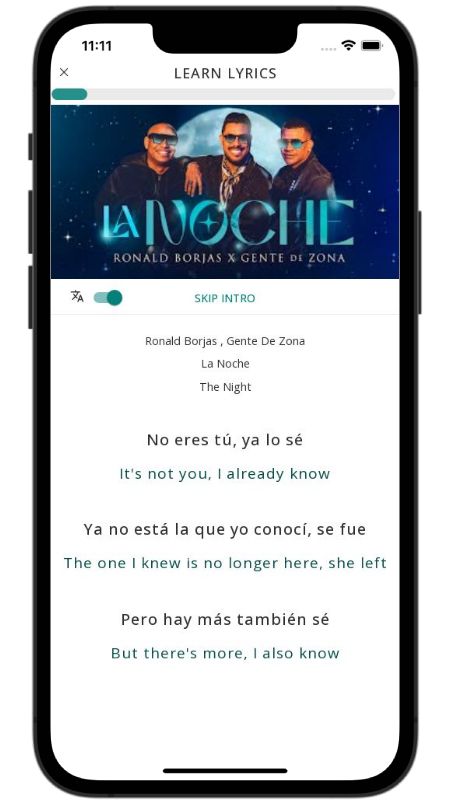
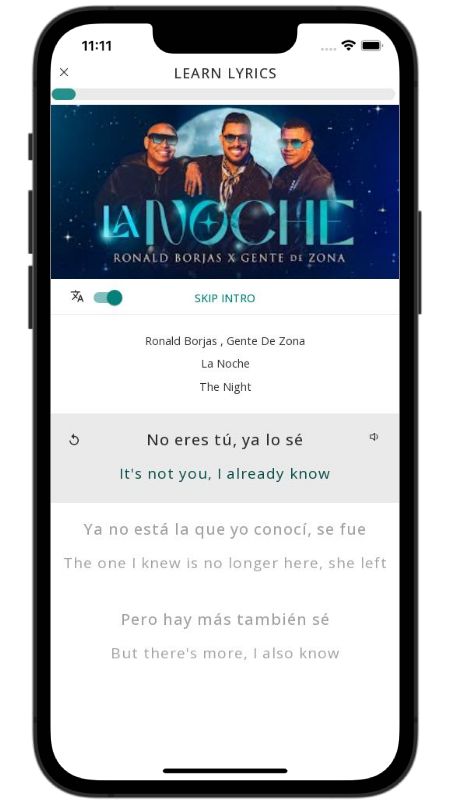
La Noche Lyrics in English by Ronald Borjas, Gente De Zona
Monarca translates to "monarch" or "sovereign". It's an interesting and somewhat unexpected word to find in a reggaeton/salsa song, making it stand out.
In the context of the lyrics, the singer refers to himself as "El monarca", implying he is the king or a dominant figure, especially in the realm of music or the dance floor. It adds a touch of swagger and confidence to his persona, suggesting he reigns supreme.
La Noche bursts onto the dance floor as a tropical handshake between Venezuela and Cuba, pairing Ronald Borjas’s silky salsa-pop with Gente de Zona’s urban swagger. From the very first beat the song insists that nighttime is made for movement, not for pillows, setting a contagious, party-ready mood that invites listeners to raise their hands and let the rhythm take control.
Beneath the festive horns and playful ad-libs lies a bittersweet story: the singer recognizes that the woman in front of him is not the tender soul he once knew. Heartbreak has turned her into a fierce, independent “fiera” who hides her pain behind nightlife escapades. Even so, he knows she has not erased him from her memory. The chorus—“La noche se hizo pa’ bailar, no se hizo pa’ dormir”—becomes both a rallying cry for celebration and a reminder that the past still pulses under the strobe lights. The result is a song that mixes empowerment, nostalgia, and irresistible groove, inviting learners to feel the language as much as understand it.